Gucci's AI Campaign Triggers Intense Online Debate Ahead of Milan Fashion Week
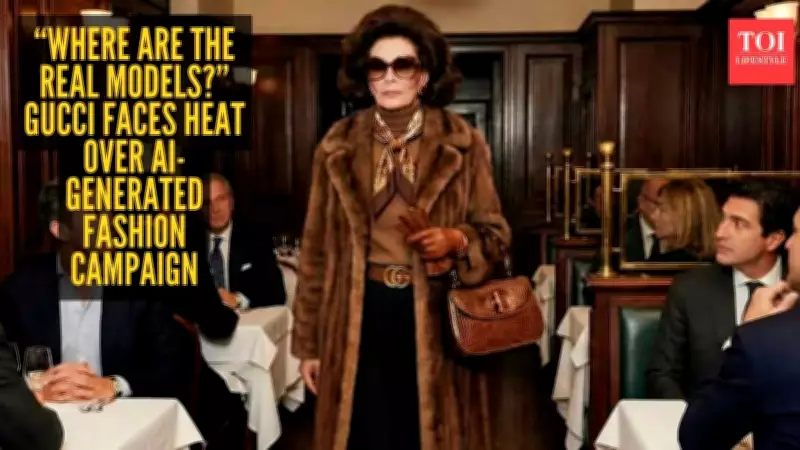
Gucci, the iconic luxury fashion house, has unexpectedly become the focal point of a significant online controversy following its release of AI-generated visuals to promote its upcoming show at Milan Fashion Week, as reported by the BBC. The brand shared a series of images on social media platforms, clearly labeled as AI-created, but this transparency did little to mitigate the swift and vocal backlash from users and fashion enthusiasts alike.
Critics Question Alignment with Craftsmanship and Heritage
Many users quickly raised pointed questions about how Gucci's reliance on artificial intelligence aligns with its long-standing messaging around craftsmanship, heritage, and human creativity. The brand frequently celebrates Italian artistry, making the use of AI particularly jarring for some. One comment that gained substantial traction online encapsulated the prevailing sentiment: "Bleak days when Gucci can’t find a real Milanese grandmother to model a 1976 outfit." This remark directly referenced one of the AI visuals, which depicted an elegant older Italian woman dressed in vintage-style Gucci attire.
Symbolism and the Soul of Luxury Fashion
For critics, the issue extends beyond mere technology; it delves into deep symbolism. Luxury fashion has traditionally leaned heavily on real people—including models, photographers, stylists, and artisans—all contributing to the rich storytelling behind campaigns. When a heritage label like Gucci replaces this human ecosystem with algorithms, some fans argue that the very soul of fashion becomes diluted. Despite the images being labeled as AI-generated, several users dismissed them as "AI slop," an internet term increasingly used to describe the flood of synthetic content saturating social media feeds. Others questioned why a brand operating at luxury price points would opt for what they perceive as cost-cutting technology in its marketing efforts.

Timing Amid Creative Director's Debut
The debate emerges at a pivotal moment, as Gucci's creative director Demna Gvasalia prepares to unveil his first runway vision for the house in Milan. This timing has only amplified the conversation, with many interpreting the AI campaign as a potential signal of where the brand—and perhaps the entire luxury fashion industry—might be heading in the future.
Gucci's History with AI and Industry Trends
This is not Gucci's initial foray into artificial intelligence. The brand has previously collaborated with digital artists on virtual visuals that were later auctioned as NFTs through Christie's. Additionally, late last year, Gucci released an AI-generated video featuring a model walking a runway while photographers comically tumbled over each other in an attempt to capture her. Gucci is not alone in this exploration; other labels such as Valentino and H&M have also been testing generative AI for social campaigns and digital storytelling, often framing these efforts as creative experimentation rather than outright replacement of human roles.
Expert Insights on Balancing Innovation and Authenticity
Experts caution that luxury brands must navigate a delicate balance. Dr. Priscilla Chan from Manchester Metropolitan University's Fashion Institute noted that while new technology can generate significant buzz, it can just as easily trigger negative attention if audiences perceive that authenticity is being compromised. For luxury labels, brand image holds as much importance as innovation, making this a critical consideration.
Mixed Reactions and Broader Implications
Not all responses have been negative. Some social media users felt that Gucci's visuals still captured a certain "Milano glamour," arguing that experimentation has always been an integral part of fashion's evolution. Photographer Tati Bruening, known online as illumitati, expressed a nuanced view: she is not entirely opposed to AI in fashion but believes its role should remain limited. Using AI for minor edits, retouching, or mood boards feels acceptable to her; however, fully generating campaign imagery crosses into more complicated territory because it replaces rather than supports creative workers.

Bruening also suggested an alternative perspective: perhaps the campaign is intentionally designed to provoke discussion. Instead of merely selling luxury in the traditional sense, it could be questioning what luxury even means in an era increasingly shaped by artificial intelligence.
Conclusion: A Debate Between Innovation and Authenticity
The conversation now sits at a crossroads between innovation and authenticity, efficiency and artistry. Gucci may have launched a marketing campaign, but what it has truly initiated is a debate that the fashion industry can no longer avoid. As brands continue to explore the boundaries of technology, the tension between preserving human touch and embracing digital advancement will likely remain a central theme in the evolving landscape of luxury fashion.