

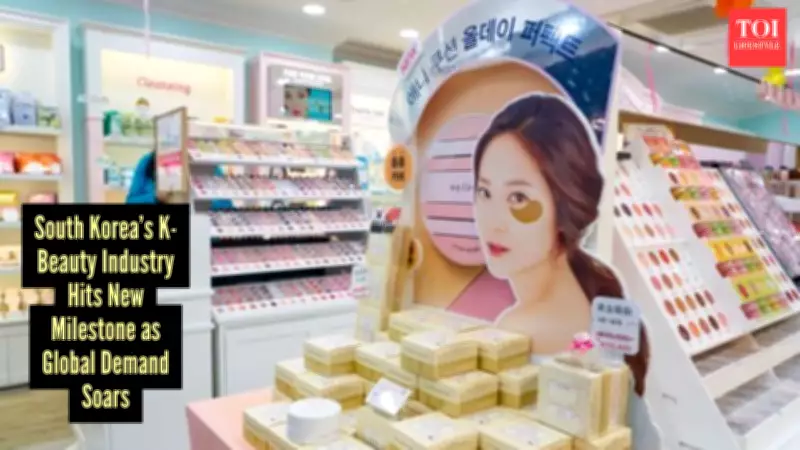
South Korea Emerges as the World's Second-Largest Beauty Market
If you look inside your bathroom cabinet right now, chances are you have at least one Korean skincare product sitting there. Maybe it is a sheet mask. Maybe it is that viral snail mucin everyone on TikTok will not stop talking about. Well, that global obsession has officially tipped the scales. South Korea just dethroned the United States to become the world's second-largest cosmetics exporter in 2025. The country now trails only France. This marks a significant shift in the global beauty landscape.
Skincare is the True MVP
So, what exactly is driving this multibillion-dollar boom? The answer is skincare. It is not even a contest. Basic skincare products raked in over $8.5 billion, making up a massive 75 percent of all exports. Masks and face packs saw the highest domestic production growth, shooting up by 28 percent. Consumers are also purchasing more color cosmetics, specifically lipsticks and lip balms. Behind the scenes, legacy giants like LG H&H and Amorepacific continue to lead production. However, there are remarkable success stories too, such as the brand APR, which rocketed from 21st place all the way to 4th in just one year. Top manufacturing companies like Cosmax and Kolmar Korea are also seeing billions in production value. For a long time, Korean beauty was viewed as a fun, affordable, and slightly quirky trend. But the narrative has completely changed. As one industry insider noted, the market has moved past the phase of fleeting trends. Consumers in the United States and Europe are showing serious, long-term brand loyalty. K-beauty is no longer a passing fad; it has become a global empire, and it appears to be here to stay.
The Ten-Billion Dollar Glow Up
According to the latest data from Korea's Ministry of Food and Drug Safety, this is not just a minor victory. It is an absolute landslide. K-beauty exports skyrocketed by 11.8 percent last year, hitting a record-shattering $11.4 billion. The profits are even more impressive. For the very first time, the country's cosmetics trade surplus crossed the $10 billion mark. To put that into perspective, the beauty industry alone brought in nearly 13 percent of South Korea's total national trade surplus. The country started with a humble $90 million surplus back in 2012. In just over a decade, it has multiplied that figure by more than a hundred.

Goodbye China, Hello America
Historically, China was the undisputed kingmaker for Korean beauty brands. That is no longer the case. The landscape has completely flipped. For the first time ever, the United States became the largest buyer of K-beauty. Americans purchased $2.2 billion worth of Korean cosmetics, making up nearly a fifth of all Korean beauty exports. Meanwhile, exports to China actually declined by 19 percent, pushing China down to second place. Japan sits comfortably in third position.
Taking Over Europe (Yes, Even France!)
This massive geographical shift did not happen by accident. Korean brands saw the writing on the wall and pivoted aggressively to Western markets. They flooded Amazon, dominated shelves at Sephora and Ulta Beauty, and rode the massive wave of viral fame on Instagram and TikTok. This strategy worked wonders in Europe. Poland's imports of Korean cosmetics exploded by 115 percent. But the most striking example is France. Yes, the historical birthplace of luxury beauty and the world's number one exporter is actually importing K-beauty at record rates. Shipments to France jumped by 71.5 percent last year, crossing the $100 million threshold. It is now possible to walk into Paris's legendary Galeries Lafayette department store and browse a dedicated K-beauty zone packed with brands like COSRX, Beauty of Joseon, Banila Co, and Dr.Jart+.

