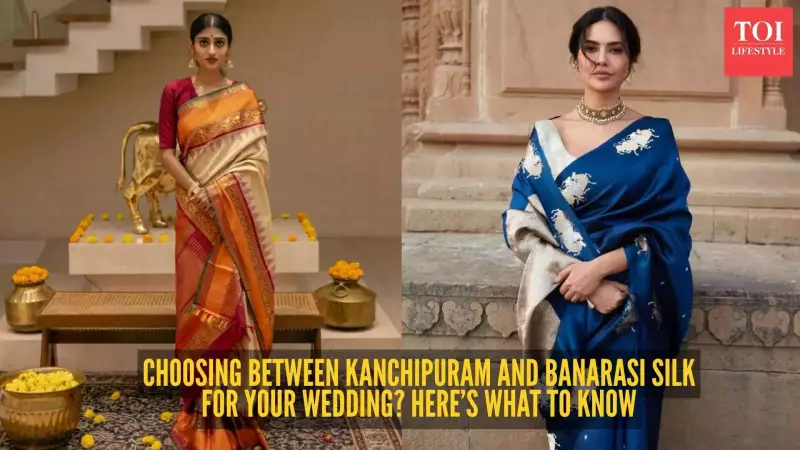
Kanjeevaram vs Banarasi Silk: Choosing Your Perfect Wedding Saree
Two legendary silk sarees dominate Indian weddings. Kanjeevaram and Banarasi represent the pinnacle of craftsmanship and heritage. Women across the country drape these exquisite weaves for bridal ceremonies and special occasions. But which one truly suits your wedding day? The answer depends on your personal style, regional traditions, and budget. Let us explore both options in detail.
The Royal Banarasi Saree: Opulence from Varanasi
Banarasi sarees originate from Varanasi in Uttar Pradesh. This ancient city boasts one of the world's oldest silk weaving traditions. Artisans create these sarees using pure silk, katan silk, organza, georgette, and tissue fabrics. They feature intricate Mughal-inspired motifs like floral vines, jaal patterns, paisley designs, and shikargarh scenes.
The signature zari brocade and meenakari art lend a timeless opulence. Banarasi sarees typically feel heavy and luxurious. They shimmer with a royal vibe perfect for grand celebrations. North Indian brides often choose Banarasi sarees for their wedding receptions and pre-wedding events. These sarees also make cherished wedding gifts.

The Majestic Kanjeevaram Saree: Heritage from Kanchipuram
Kanjeevaram sarees come from Kanchipuram in Tamil Nadu, known as India's Silk City. Weavers use thick mulberry silk and lavish gold zari borders. Temple-inspired designs define these sarees. Common motifs include temple gopuram borders, checks, stripes, peacocks, and coins.
Kanjeevaram sarees possess a structured, majestic appearance. They offer a regal and bold statement for the wearer. South Indian women frequently prefer Kanjeevaram for temple weddings and auspicious rituals. These sarees boast exceptional durability, often lasting decades. Many families treat high-quality Kanjeevarams as precious heirlooms passed through generations.
Why Both Sarees Remain Evergreen Favorites
Both Kanjeevaram and Banarasi sarees embody graceful luxury. They cater to women who desire easy drapes with a rich, sophisticated vibe. Each weave tells a unique story of regional artistry and cultural values.
Kanjeevaram sarees excel in traditional grand draping and temple aesthetics. Their heirloom quality makes them investments for future generations. Banarasi sarees shine in bridal trousseaus and anniversary celebrations. Their Mughal-inspired elegance appeals to those seeking timeless opulence.
Making Your Final Choice: Key Comparison Points
Neither saree is objectively better than the other. Your decision should consider several practical factors.
- Cultural Preference: South Indian brides often choose Kanjeevaram for temple ceremonies. North Indian brides frequently select Banarasi for reception events.
- Fabric and Weaving: Kanjeevaram uses thick mulberry silk with temple motifs. Banarasi employs various silks with Mughal-inspired patterns.
- Weight and Drape: Both sarees are heavy, but Kanjeevaram offers more structure while Banarasi provides flowing elegance.
- Durability: Kanjeevaram sarees typically last longer and maintain their beauty for decades.
Understanding the Price Range
Budget plays a crucial role in your selection. Kanjeevaram sarees generally command higher prices due to their gold zari and heirloom quality.
Banarasi sarees start around Rs 5,000 and can reach Rs 80,000 for premium pieces. Handmade masterpieces may cost approximately Rs 1 lakh. Kanjeevaram sarees begin at Rs 8,000 and go up to Rs 1 lakh for standard varieties. Exceptional heirloom Kanjeevarams can cost around Rs 2 lakh or more.
Consider your wedding theme, personal style, and financial plan. Both sarees offer unparalleled beauty and craftsmanship. Your perfect wedding saree awaits - whether it's the temple-inspired grandeur of Kanjeevaram or the Mughal opulence of Banarasi.