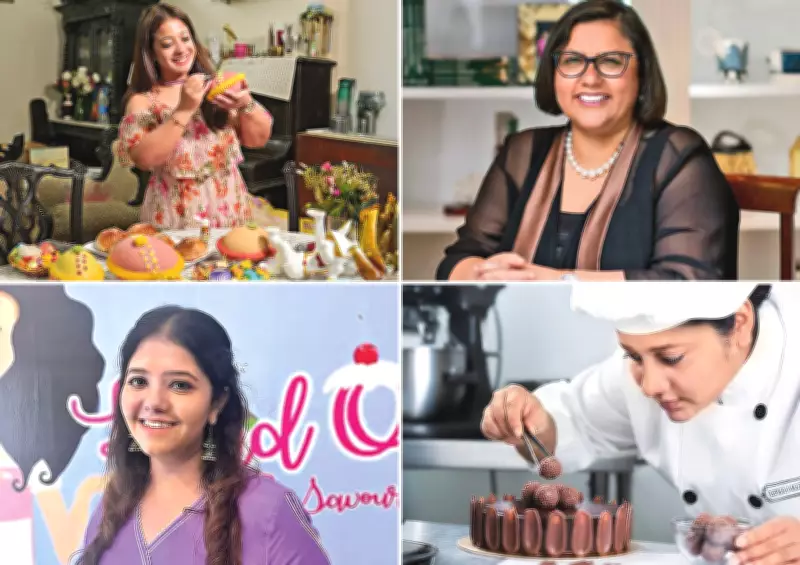
Women-Led Bakeries Transform Kolkata's Sweet Scene Beyond Traditional Mishti
Kolkata's legendary sweet tooth is experiencing a delicious evolution. No longer confined to the classic rosogolla and sandesh, the city's dessert landscape is being dramatically reshaped by a wave of innovative bakeries, many of which are proudly led by women entrepreneurs. From century-old family institutions to contemporary artisanal patisseries, these establishments are expanding the city's confectionery vocabulary far beyond the traditional mishti counter.
The Rise of Female Bakery Pioneers in Kolkata
Across Kolkata, women are turning their passion for baking into successful commercial ventures. Many began their journeys in modest home kitchens, gradually scaling their operations into full-fledged brands through dedication and word-of-mouth recognition. Others are custodians of multi-generational family businesses, skillfully blending time-honored recipes with contemporary culinary techniques. Together, they are adding fresh layers of texture, flavor, and ambition to Kolkata's rich dessert culture, proving that the city's sweet scene extends well beyond its traditional offerings.
Kookie Jar: Four Decades of Chocolate, Tarts, and Resilience
Few bakeries in Kolkata carry the emotional resonance of Kookie Jar, a beloved institution built through four decades of passion and persistence by founder Lovey Kapur. What began in 1985 as a teenager's home kitchen experiment gradually grew through family and friend networks before expanding citywide. The journey saw ovens moving from kitchen to garage before the first formal shop opened on Rawdon Street, establishing what would become a Kolkata culinary landmark.

"We had to rebuild everything from scratch after facing challenges like staff poaching, store damage, and recipe theft," shares Kapur. "But maintaining hands-on quality control has been our constant through every obstacle." Despite changing food trends, Kookie Jar has remained committed to authentic taste over gimmickry, serving loyal patrons through generations of celebrations.
"Seeing travelers at Kolkata airport carrying our dessert boxes to cities across India made me realize we had become more than just a local brand—our flavors now belong to the entire country," reflects Kapur on the bakery's expanding reach.
Saldanha Bakery: A Four-Generation Legacy of Festive Baking
For Alisha Alexander, growing up at Saldanha Bakery meant being surrounded by the aromas, textures, and celebrations of a family business founded in the 1930s. Now leading the fourth generation of this women-operated institution, Alexander recalls the pre-festival bustle—rolling pins clattering, fresh cakes scenting the air, and customers who felt like extended family.
The bakery's time-honored recipes for Christmas plum cakes, Easter marzipan, and coconut macaroons carry memories across generations. "Inheriting this legacy means maintaining consistent quality while balancing tradition with thoughtful innovation," explains Alexander, who credits her great-grandmother Ubelina Saldanha, grandmother Mona Saldanha, and mother Debra Alexander for building the foundation she now continues.
"Baking is in my genes," she acknowledges. "I owe my journey to three remarkable women whose legacy I proudly carry forward with both respect and creative evolution."
Little Pleasures Patisserie: From Home Kitchen to Strategic Enterprise
"Watching my grandmother create desserts as a child revealed my true calling," says Shripriya Gupta, co-founder and head chef of Little Pleasures Patisserie. Her journey from home baker to business owner began with meticulous market research into Kolkata's dessert landscape—analyzing gaps, preferences, pricing, and scalability before opening her first commercial location.
The transition brought new challenges: managing larger production volumes, vendor negotiations, team coordination, and maintaining daily consistency. "Home baking requires immense skill and discipline," Gupta emphasizes. "Moving to commercial operations was both an emotional milestone and a strategically planned step."

Early collaborators from her home-baking days helped ease the transition, creating continuity that built organizational trust. "My grandmother remains my greatest inspiration," she shares. "Watching her transform simple ingredients into magical mithais sparked my lifelong love for sweets and entrepreneurship."
Modge: Navigating Gender Barriers While Building a National Brand
For Megha Sarayan, founder of Modge, entrepreneurship has meant navigating both creative and systemic challenges. Starting with a cloud kitchen in Baguihati, the 26-year-old has expanded to cafés in Kolkata and Hyderabad while confronting gender-specific obstacles in the business world.
"Systems remain generic and not designed for women entrepreneurs," notes Sarayan. "Financial structures are particularly conservative, with most loans still expecting male collateral." Despite these barriers, she remains focused on building Modge as a distinctive brand rather than just another dessert label.
"Entrepreneurial skill isn't defined by gender," she asserts. "I aim to be remembered as the brand that started in Kolkata but ultimately caters to sweet lovers across India, challenging expectations at every step."
The Future of Kolkata's Evolving Dessert Culture
Together, these women-led bakeries represent a significant shift in how Kolkata indulges its famous sweet tooth. They demonstrate that the city's dessert culture is becoming increasingly diverse, sophisticated, and entrepreneurial. From Kookie Jar's forty-year legacy to Modge's cross-city expansion, these establishments prove that Kolkata's love for sweets now embraces both tradition and innovation, with women entrepreneurs leading the delicious charge into new culinary territories.