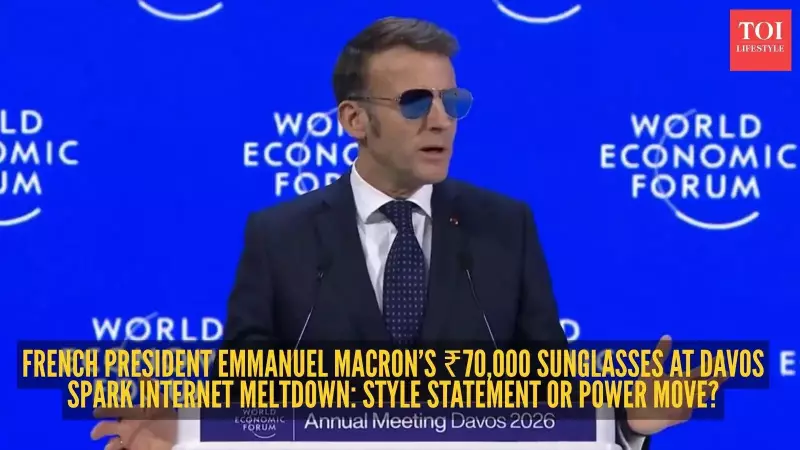
In an era where global tensions among Western nations dominate headlines, a surprising fashion statement has captured worldwide attention. Amidst the serious diplomatic and economic discussions at the recent World Economic Forum in Davos, French President Emmanuel Macron managed to divert focus with a simple accessory: a pair of aviator sunglasses.
The €659 Eyewear That Upstaged Diplomacy
While the Davos meeting was expected to center on critical issues like stock market fluctuations and international diplomacy, President Macron's choice of eyewear became the unexpected talking point. The sunglasses in question are the Henry Jullien Pacif S 01 model, carrying a substantial price tag of €659, which translates to approximately Rs 70,000 in Indian currency.
This luxury eyewear piece, worn during Macron's high-profile engagements, somehow managed to overshadow the substantive policy discussions that typically characterize such global forums. The visual impact was immediate and far-reaching, demonstrating how personal style choices can sometimes resonate more powerfully than political rhetoric in today's media landscape.

Immediate Market Impact and Brand Surge
The commercial repercussions of Macron's fashion statement have been nothing short of remarkable. Following his Davos appearance, sales of the specific Henry Jullien model have experienced a dramatic increase. The French luxury eyewear brand has reported receiving a surge in customer inquiries and purchase requests from around the world.
More significantly, the parent company of Henry Jullien, Italian firm iVision Tech, witnessed its shares rise by approximately 6% in the aftermath of the Davos appearance. This market response highlights how celebrity endorsements, even when unintentional, can directly influence corporate valuations in the luxury goods sector.
Digital metrics further confirm the phenomenon, with Google Trends data showing a dramatic spike in searches for the exact sunglasses model. Consumers across continents have been actively seeking information about where to purchase the eyewear that captured global attention at one of the world's most prestigious economic forums.
Social Media Frenzy and Cultural References
The internet's reaction to Macron's Davos look has been particularly enthusiastic and creative. Social media platforms have erupted with comparisons between the French president and iconic Hollywood characters, most notably drawing parallels to Tom Cruise's persona in the classic film Top Gun.
Users have flooded platforms with humorous observations and memes, with one popular tweet questioning: "Top Gun or Terminator?" Another social media comment noted: "French President Emmanuel Macron is out there in Davos looking like he's trying out for the next Top Gun movie! I mean... those are cool shades."
The cultural references have extended beyond simple comparisons, with some users suggesting the entire episode demonstrates how real-world events can sometimes mirror cinematic aesthetics. One particularly creative post observed: "This is not AI... Macron watched Top Gun last night... Been there."
Brand Strategy and Gifting Controversy
Adding another layer to the story, Henry Jullien has reportedly claimed that they gifted the sunglasses to President Macron back in 2024. This revelation raises interesting questions about brand placement strategies and how luxury companies leverage high-profile figures for visibility.
The incident demonstrates how carefully orchestrated brand relationships with public figures can yield unexpected dividends when those figures appear in globally televised settings. While the company maintains the sunglasses were a gift, the commercial benefits have been substantial and immediate.
This episode at Davos serves as a case study in how personal style, celebrity culture, and brand marketing intersect in today's media environment. What began as a simple fashion choice has evolved into a global conversation about luxury consumption, political image-making, and the unpredictable ways in which public attention can be captured and monetized in the digital age.