

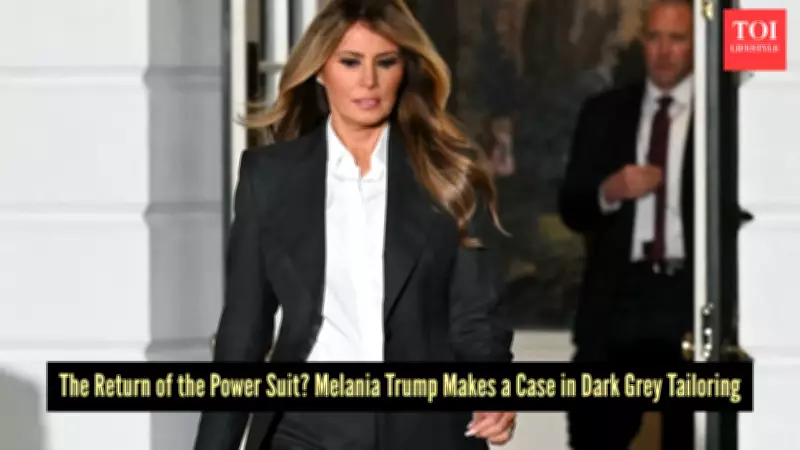
Melania Trump's Pantsuit Ignites Political Fashion Debate
In the highly scrutinized realm of politics, where every public appearance is meticulously analyzed, fashion has emerged as a powerful tool for making silent statements. First Lady Melania Trump recently demonstrated this with a striking ensemble that has reignited conversations around power dressing in political circles.
A Calculated Fashion Statement at the State of the Union
At the 2026 State of the Union address, Melania Trump stepped out in a sharply tailored dark grey pantsuit from Dolce & Gabbana, a departure from the traditional skirts often favored by first ladies at such summits. Her outfit, consisting of wide-leg trousers, a crisp white cotton shirt, and a fitted open blazer with structured shoulders, was complemented by grey flannel Manolo Blahnik stilettos. This look, characterized by its clean lines and neutral shades, projected an image of polished confidence and calculated authority.
Why This Basic Look Went Viral
The choice of a pantsuit at this high-profile event created a significant stir online, with many followers hailing it as 'iconic'. Historically, first ladies have leaned towards subtle skirts for professional settings, making Melania's sleek suit a bold deviation. Her minimal styling approach—favoring neutral tones and clean silhouettes with subtle jewelry—has long been associated with an old-money aesthetic, but this instance highlighted its potential for political messaging.

The Broader Implications for Political Dressing
Melania Trump's ensemble raises important questions about the role of fashion in politics. In an era where public figures often navigate between casual attire and formal wear, her classic power suit suggests a possible resurgence of unapologetic political dressing. This move underscores how clothing can convey control and image-making without uttering a word, challenging norms and sparking debates on gender, power, and professionalism in the political arena.
As discussions continue, Melania's fashion choice serves as a reminder that in politics, every detail—from a tailored blazer to a pair of stilettos—can become a focal point for public discourse. Whether this marks a lasting trend or a fleeting moment, it has undoubtedly left a mark on the intersection of style and statecraft.






