

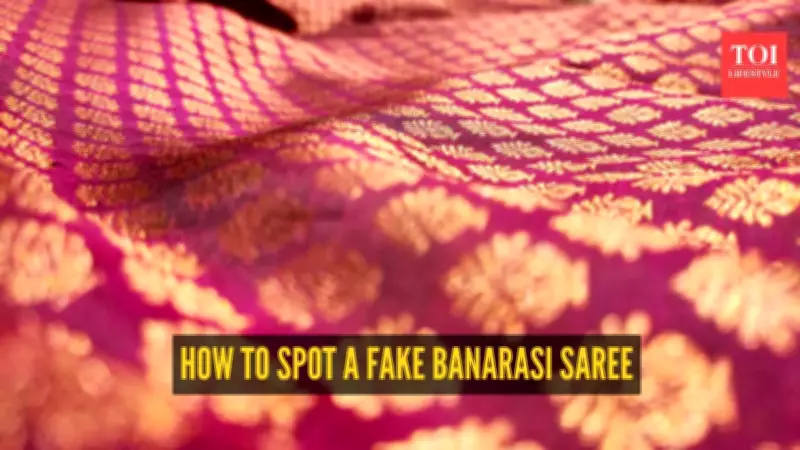
A real Banarasi saree is never just a saree. It is usually tied to a memory. A wedding morning. Your mother opening an old cupboard wrapped in newspaper and muslin cloth. A festival where everyone insisted you wear 'the good saree.' Sometimes, it is the one outfit in the family that gets passed down like jewellery.
That is what makes Banarasi sarees emotional purchases. They carry history along with the fabric. Which is why buying a fake one feels genuinely upsetting. And honestly, it is becoming easier than ever to get fooled. Markets today are packed with machine-made copies that look almost identical in photos. Online stores use bright lighting, heavy editing, and fancy descriptions that make synthetic fabrics appear luxurious. By the time the saree arrives at your doorstep, the disappointment hits.
The thing is, authentic Banarasi sarees are expensive for a reason. They take time. Skill. Patience. Some handwoven pieces take weeks to finish. Others can take months depending on the detailing. So if you are planning to invest in one, it helps to know how to separate the real deal from a clever imitation. Here are five simple ways that actually help.

Stop looking only at the shine
Most people make the same mistake while shopping for Banarasi sarees. They judge the saree by how shiny it looks. But real Banarasi sarees are not about loud shine. The beauty is usually in the weaving itself. Look closely at the motifs and patterns. Authentic Banarasi sarees often have intricate floral work, paisleys, jaal patterns, and detailed borders woven into the fabric, not printed on top of it. If you run your fingers over the design, you will usually feel a slight texture because the work is part of the weave. Fake sarees often depend on excessive shine to look 'rich.' But once you inspect them properly, the patterns can start looking flat or weirdly plastic-like. And here is something people do not realise: tiny imperfections are actually a good sign. Handmade work is never going to look factory-perfect. Small irregularities in the weave usually mean an actual artisan worked on it. Machines create perfection. Humans create character.
Flip the saree over
This old trick still works surprisingly well. Turn the saree around and look at the backside. In a genuine Banarasi saree, especially handwoven ones, you will often notice loose threads or little thread floats behind the motifs. That is completely normal because of the weaving technique used. The back will not look perfectly polished. And honestly, it should not. Machine-made sarees usually look very clean on both sides because the patterns are digitally printed or made using power looms. If the backside looks suspiciously smooth and identical to the front, take a second look before buying. Real craftsmanship leaves little clues behind.
Real zari looks rich, not flashy
A lot of fake Banarasi sarees try very hard to impress buyers with super shiny zari. But louder does not always mean better. Authentic zari has a softer glow. It looks elegant instead of screaming for attention. Traditional zari work was once made using silver threads coated with gold, though modern versions may use metallic yarns. Fake zari usually looks overly bright or coppery. Sometimes it even feels rough when you touch it. A quick trick? Rub the zari gently between your fingers. Cheap synthetic zari often feels stiff or plasticky. Good-quality woven zari feels smoother and blends naturally into the saree. Also, if the saree sparkles aggressively from every angle like a disco ball under wedding lights, there is a good chance it is compensating for poor craftsmanship. Real luxury is usually quieter.

Check for GI tags and Silk Mark certification
If you are spending serious money on a Banarasi saree, certifications matter. Many authentic Banarasi sarees come with a GI tag, which stands for Geographical Indication. It helps identify sarees connected to the original Banaras weaving tradition. Some sellers also provide Silk Mark certification for pure silk sarees. Now obviously, tags alone cannot guarantee authenticity because fake sellers exist everywhere. But proper certification still adds credibility and gives buyers more confidence. And please, if you are shopping online, do not just trust pretty pictures. Zoom into the fabric. Read the details carefully. Check reviews. Look up the seller properly. A genuine Banarasi saree is not a random impulse buy. It deserves a little patience.
Your hands can usually tell the difference
Honestly, this might be the easiest test of all. Touch the fabric. Real Banarasi silk feels rich without feeling slippery. It has weight, structure, and softness at the same time. The saree drapes beautifully, but it does not cling awkwardly or feel paper-thin. Fake versions made with polyester or synthetic blends often feel too smooth, too glossy, or strangely light. Experienced saree shoppers can often identify authentic silk within seconds just by holding it. And once you feel a real Banarasi weave properly, the difference becomes hard to ignore. A genuine saree feels luxurious naturally. It does not need to convince you.
Why fake Banarasi sarees are suddenly everywhere
Fast fashion has changed everything. Machine-made copies are cheaper, quicker to produce, and easier to sell online. A lot of buyers also want the 'Banarasi look' without paying handloom prices, so imitation sarees sell fast. But the difference between real and fake is not only about money. Authentic Banarasi weaving supports artisan families who have been preserving this craft for generations. Every real handwoven saree carries hours of labour and years of inherited skill behind it. When fake versions flood the market, traditional weavers lose work. And that is honestly the saddest part. Because machines can copy patterns. But they still cannot copy heritage.
At the end of the day, authenticity always shows
A real Banarasi saree has a certain presence. You notice it in the weave. The detailing. The softness. The fall of the fabric. Even the way it catches light when someone walks past. And once you learn how to spot real craftsmanship, identifying fake versions becomes much easier. Because true artistry does not need to scream for attention. It quietly stands out on its own.
