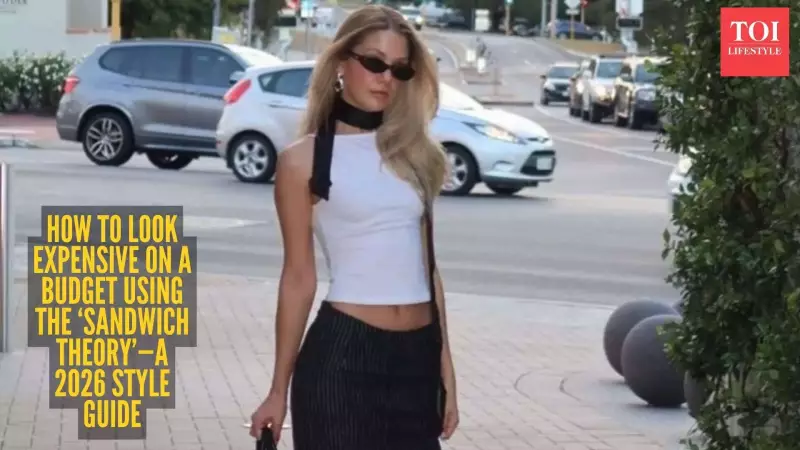
How to Look Expensive on a Budget: The Sandwich Theory for 2026 Professionals
Picture this. You step into a mirrored elevator in a corporate hub in Gurgaon or Mumbai. For thirty seconds, everyone silently scans each other's visual resumes before discussing quarterly targets. Most people blend into a sea of fast-fashion blazers. But occasionally, someone stands out. They look expensive, not flashy, but put-together. The secret isn't a hidden inheritance. It's a clever piece of visual math called the Sandwich Theory. This simple concept is currently the most efficient way to hack status in Indian boardrooms on a mid-level salary.
The Visual Bookend: Dress Like a Sandwich
The logic is straightforward. Think of your outfit as a sandwich. The top and bottom act as the bread. Your shirt, hair, or glasses form the top. Your shoes make up the bottom. These two elements must match in color, texture, or visual weight. The middle part—your trousers or skirt—serves as the filling. It provides a contrasting element that breaks the symmetry.
This trick creates a powerful optical illusion. When your shoes echo the color of your turtleneck, your entire body gets framed. It draws a clean vertical line that suggests careful curation, not a morning panic. Your brain subconsciously links this symmetry to high-end tailoring. In the chaotic humidity of a Mumbai local or a frantic office lobby, symmetry reads as expensive. Why? Because symmetry implies you had time to plan. In 2026, having time is the ultimate luxury.

The Performance of Effort Over Price Tags
This strategy isn't about expensive labels. It's about the performance of effort. Imagine pairing tan loafers from a local cobbler with a tan knit top from a high-street sale. This combination sends a stronger status signal than a mismatched designer hoodie. There's a quiet rebellion here. It's a refusal to look as harried as your day actually feels.
Our work lives grow more precarious. Our digital identities shine brightly online. How we occupy physical space matters more than ever. Looking expensive on a budget becomes a survival tool. It commands a specific type of respect in a world too busy to look deeper. This visual anchor provides stability when everything else feels weightless and disposable.
Mastering the Symmetrical Illusion
Visit a high-end mall in South Delhi. Watch the crowd. The people who stand out aren't necessarily carrying the most shopping bags. They are the ones who have mastered balance. Notice a black oversized tee, cream linen trousers, and black leather sandals. That's a sandwich of black-cream-black. It looks expensive because it appears finished.
Most budget dressing fails because it feels leaky. Colors don't communicate. Silhouettes seem accidental. The Sandwich Theory imposes a welcome discipline. It transforms getting dressed from a frantic search for clean clothes into a deliberate composition. You create a cohesive look that whispers control.
The 2026 Visual Resume: Why This Matters
Why do we care so much about this visual arithmetic? The boundaries between professional and personal life have completely dissolved. We are always on, always being perceived. Whether through a 4K webcam or a chance encounter at a Blue Tokai cafe, perception is constant.
Looking expensive acts as a shield. It suggests a life that is organized, stable, and critically, not desperate. It's a way of saying I have it under control before the first Slack notification of the day arrives. The elevator doors open. The sandwiched professional walks out with poise, suggesting they own the floor. The shoes might have been a bargain. The top could be a thrift find. But the symmetry holds. The illusion is complete.
In the end, it isn't about carats or logos. It's about balance. We are all just trying to look like the most composed version of ourselves. One well-matched pair of shoes at a time.