From Village Floor to Delhi Spotlight: Rukmini's Journey
Rukmini boarded her first flight from Kolkata to Delhi with nervous excitement. This journey marked her initial visit to India's capital city. It was only the second urban center she had ever seen beyond her small village near Kalna in Bengal.
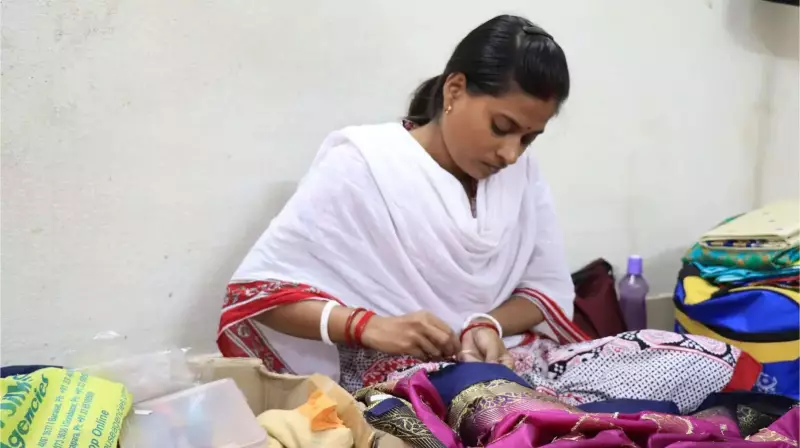
For most of her life, Rukmini sat on her home's floor stitching intricate kantha embroidery onto sarees. This meticulous work earned her mere hundreds of rupees at a time. The income barely supported her ailing mother and younger sister. She never chose this profession. Instead, she inherited it quietly from generations of women before her.
The Unexpected Invitation
When India Silk Agencies invited Rukmini to showcase her work in Delhi, surprise and fear gripped her simultaneously. Delhi felt distant, unfamiliar, and intimidating. Yet the company's name carried deep trust in her village. Founded in 1971, India Silk Agencies had collaborated with Bengal's weavers and artisans for decades.

Rukmini traveled with two other village girls to present her artistry at Omaxe Mall in Chandni Chowk. For the first time in her life, she felt visible. People requested her photograph. They inquired about her stitches, motifs, and creative process. In that profound moment, Rukmini realized something significant. Perhaps the time had finally arrived for artists like her.
The Silent Language of Kantha Embroidery
Kantha represents one of India's oldest embroidery forms. Traditionally, artisans use a simple running stitch. Born in Bengal's households, kantha began as women's method to recycle worn cotton saris into layered quilts. They embedded personal stories through motifs and patterns.
Aari work employs a hooked needle to create chain stitches. Specialized artisan groups practice this technique. In contemporary textile traditions, especially in Murshidabad and Nadia regions, both techniques often merge. Kantha's narrative softness meets aari's ornamental precision.
Memory rather than machinery unites these crafts. Knowledge passes hereditarily through observation rather than formal instruction. Young girls learn by watching older women stitch late into night after completing daily chores. No certificates or formal recognition exist. Only skill refined over decades matters.
Rukmini represents thousands of such women. Their labor quietly feeds India's handloom economy without ever receiving proper acknowledgment.
A Quiet Revolution in the Saree Industry
India Silk Agencies has created a subtle but significant shift over years. They elevate weavers and artisans from anonymous suppliers to acknowledged artists. For many outside Kolkata, the name might not sound familiar. Within Bengal's textile ecosystem, however, it stands as a legacy institution.
Sri Sumati Chand Samsukha formally founded the brand in 1971 in North Kolkata. It began as a saree store committed to promoting local artisans. The founding philosophy seemed simple yet radical for its time. High-quality, authentic pure silk sarees should remain accessible and affordable to Indian women.
In 1998, the founder's daughter Pratibha Dudhoria assumed leadership. She significantly expanded the brand's retail presence across West Bengal. Today, under CEO Darshan Dudhoria's guidance, India Silk Agencies contributes quietly toward uplifting weavers' conditions.
Lessons from Banaras: A Legacy of Fairness
Every legacy starts somewhere. For India Silk Agencies, that beginning occurred not in retail space but in Banaras. It emerged amid looms, weavers, and quiet transactions rooted in trust.
"We maintained a house in Banaras," recalls Pratibha Dudhoria fondly. "In those days, our work didn't begin in an office. It started from villages, on looms, in weavers' hands. Finally, it arrived at our home. My father understood exactly what customers desired."
"If someone requested a specific color, weave, or pattern, he transmitted it clearly and patiently. He gave weavers a promise to fulfill. Then we waited. A week later, before proper sunrise, they arrived. The box opened. My father examined every piece right there before them. Each piece received respect like fine art. Immediately, on the spot, he paid them. Not later. Not next week. Right then. It provided immediate validation for creativity."

"Our house followed another strict rule. Once the box entered, nobody touched it casually. Those pieces weren't mere 'stock.' They represented someone's week of life, long hours, tired eyes, and practiced hands. My father ensured everyone understood this without needing explanations."
What India Silk Agencies Does Differently Today
Currently, India Silk Agencies collaborates with over 15,000 artisans across India. Every pure silk saree sold includes an authenticity certificate. This document details where artisans made it, who created it, and the silk's nature along with weave specifics. The saree transforms from mere garment into documented art piece.
Soon, each saree will carry a QR code. Customers can scan it to view a video featuring the weaver who crafted that particular piece. This transparency level remains rare in an industry where anonymity long served as norm.
This approach already shows visible impact. In Banaras, evidence of reverse migration appears. Weavers who once left home to work in Surat's textile mills now return. Renewed demand for authentic handloom sarees draws them back. According to the company, this represents one of its most meaningful achievements.
Taking Sarees Directly to People
Retail never confined itself to fixed locations for India Silk Agencies. For nine months annually over two consecutive years, the company operates traveling exhibitions. They load nearly 3,000 sarees into trucks and transport them city to city every weekend.
From Maharashtra to Rajasthan, from Nashik and Pune to Tirupati and Kolhapur, these exhibitions bring handloom directly to consumers. Two parallel trucks now operate simultaneously across different country regions. This model helps spread awareness about regional craft throughout India.
Women at Craft's Center
Sustainability extends beyond materials for the brand. It encompasses community development and artisan empowerment, especially for women. In villages like Jiaganj in Murshidabad, women play central roles in kantha and hand-stitch work.
While men often operate foot looms for weaves like Baluchari, intricate hand embroidery remains predominantly women's domain. Similar communities exist across Shantiniketan, Murshidabad, Arni, Coimbatore, and Mubarakpur near Banaras.
Rising demand draws people back into traditional crafts across many locations. The cycle appears complex and often ironic. Artisans once abandoned handloom to operate machines producing imitation sarees. Years later, they return to revive the very craft those machines copied.
India Silk Agencies' effort focuses on strengthening this supply chain. They ensure artisans connect directly with markets that genuinely value their work.
Understanding the Saree Economy's Scale
Darshan, the third-generation scion, makes it his mission to bring sarees and their invisible artisans onto the global map. "To provide perspective," he explains, "India's saree industry values approximately ₹80,000 crore. Despite this scale, human labor behind sarees often remains undervalued."
"By recognizing artisans as artists, documenting their work, and placing them at narrative's center, we attempt correcting that imbalance."
A Stitch That Travels Beyond Borders
When Rukmini stood in Delhi answering questions about her embroidery, she represented more than herself. She carried generations of unnamed women who stitched without recognition. Her journey—from Kalna to Kolkata, from fear to flight, from anonymity to acknowledgement—mirrors a larger shift underway in India's handloom sector.
This transformation proceeds slowly. It moves unevenly. But stitch by stitch, story by story, it continues happening. Sometimes, it all begins with a first flight toward recognition.