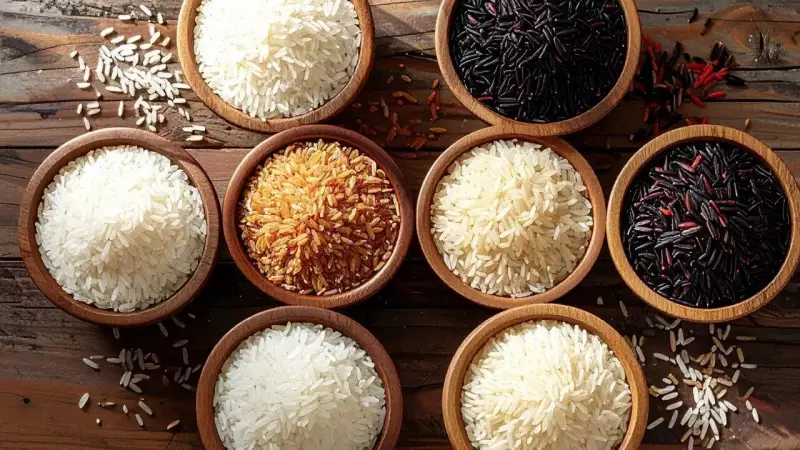
India's incredible agricultural diversity extends far beyond the common white rice found globally, offering a treasure trove of rice varieties that reflect the country's rich cultural and climatic diversity. Each region boasts unique rice types differing in grain size, aroma, texture, and nutritional value, telling stories of local traditions and culinary practices.
Himalayan Fragrance: Basmati Rice
Basmati rice grows primarily in the Himalayan foothills of northern India, particularly in Punjab and Haryana, where unique soil conditions and climate have supported its cultivation for centuries. This premium rice variety features long, slender grains that remarkably elongate during cooking while maintaining a fluffy, non-sticky texture.
The distinctive nutty and floral aroma comes from natural compounds called 2-acetyl-1-pyrroline. Nutritionally, Basmati stands out with its low fat content, gluten-free nature, and low glycemic index, making it excellent for blood sugar management and weight control. Brown Basmati variants provide additional benefits by retaining the bran layer's fiber, magnesium, and potassium content.

This aromatic rice perfectly complements flavorful dishes like biryanis, pulaos, and jeera rice, effectively absorbing spices without becoming clumpy.
Southern Staple: Sona Masoori Rice
Originating from the eastern Ghats region of Andhra Pradesh and Telangana, Sona Masoori represents a hybrid variety created by crossing Sona and Mahsuri types. This medium-grain rice earns its popularity through lightweight grains that cook to a soft, fluffy texture with minimal stickiness.
The subtle aroma and low starch content make it ideal for daily meals. Nutritionally, it delivers essential iron for oxygen transport, plus thiamine and niacin that support energy production and nerve health. Being naturally gluten-free, it suits various dietary requirements.
Common preparations include steamed rice served with curries, tangy lemon rice, and the flavorful bisibelebath, where it retains vital vitamins during cooking.
Ancient Grain Revival: Kalanamak Rice
Known as "black seed rice," Kalanamak rice comes from eastern Uttar Pradesh's swampy lands, particularly Chandauli district, with historical mentions in ancient Buddhist texts. This unique variety features a bold black husk that reveals white grains possessing a strong cinnamon-like fragrance.
Kalanamak boasts an impressive nutritional profile with 11% protein content—nearly double that of many common rice varieties—and has earned Geographical Indication (GI) tag status. Rich in iron and zinc, it helps combat anemia and strengthens immunity, while its low glycemic index (49-52%) supports diabetes management.
Traditional dishes showcasing its nutty flavor include puran poli stuffing, kalam rice pulao, and comforting khichdi preparations.
Northeastern Superfood: Chakhao Black Rice
Hailing from Manipur in northeast India with cultivation extending to Assam's valleys, Chakhao black rice has been grown for centuries by local tribes. Its deep purple-black color comes from anthocyanins, the same powerful antioxidants found in blueberries.
This rice variety offers a distinctive nutty taste and sticky texture while providing exceptional health benefits. The high antioxidant content helps fight inflammation, while abundant iron, zinc, calcium, and magnesium support immunity and bone health.
Traditional Manipuri cuisine features Chakhao in delightful dishes like chak-hao kheer (sweet pudding), black rice pongal, and fermented rice salads known as iromba.
Traditional Processing: Kaikuthal Arisi Rice
From Tamil Nadu's rural areas comes Kaikuthal Arisi, a hand-pounded rice preserving traditional processing methods. Using mortar and pestle instead of modern milling equipment, this semi-polished rice retains more natural nutrients and flavor.
The minimal processing enhances digestibility while maintaining natural aroma, fiber content, and a satisfying chewy texture. It provides dietary fiber, iron, magnesium, and various vitamins that promote gut health and easy digestion, making it ideal for sensitive stomachs.
Cultural dishes highlighting this rice include idiappam (rice noodles), sundal stir-fry, and nourishing kanji porridge.

Kerala's Fragrant Jewel: Jeerakasala Rice
Growing in Kerala's Wayanad hills, Jeerakasala rice enjoys GI-protected status from Palakkad and Wayanad regions. This small-grained aromatic rice resembles cumin seeds and yields fragrant, soft grains when cooked.
Rich in polyphenolic antioxidants, it offers significant anti-inflammatory benefits. The high fiber content contributes to a low glycemic index, making it diabetes-friendly and supportive of overall longevity.
This rice stars in iconic Malabar dishes like Thalassery biryani, neychoru (ghee rice), and puttu—steamed rice cylinders with coconut.
India's diverse rice varieties represent not just culinary preferences but centuries of agricultural wisdom and regional adaptation. From the Himalayan foothills to the southern plains and northeastern valleys, each rice type tells a story of local culture, climate, and nutritional needs, offering consumers both traditional flavors and modern health benefits.