Chef Avinash Martins: A Culinary Odyssey from the Sea to the Stove
In the serene setting of South Goa, Chef Avinash Martins stands in his kitchen, a space where memory and flavor intertwine to create dishes that tell stories of resilience and heritage. Despite the fatigue from a late-night gathering, his passion for cooking shines through as he prepares a vegetarian stew, a dish deeply rooted in his earliest food recollections.
The Early Morning Ritual: Crafting Comfort in a Pot
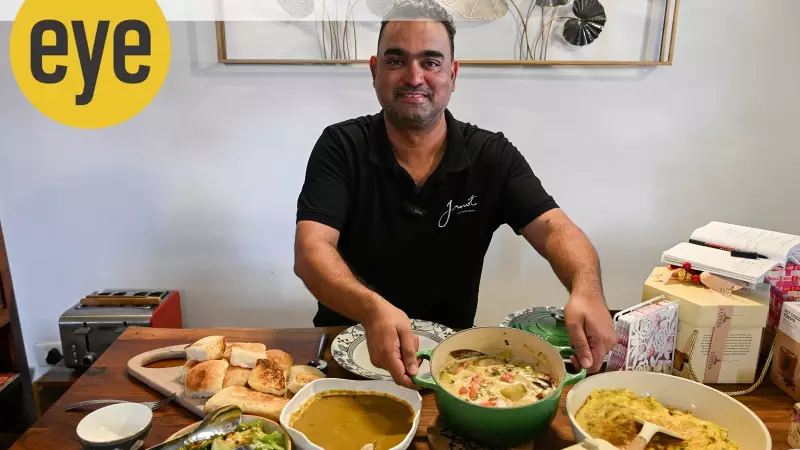
At 11:30 AM, with bags under his eyes hinting at a night that stretched past 4 AM, Martins is already in hosting mode, anticipating a busy week of festivities. He chooses to feed his guests a stew, traditionally meat-based but today made vegetarian with fresh, locally sourced ingredients. As he sharpens his knife and chops vibrant carrots, pumpkin, sweet potato, and portobello mushrooms, his weariness seems to melt away.
Ginger, onion, tomato, garlic, coriander, and curry leaves are laid out with the confidence of a chef who feels at home in the kitchen. Martins explains that his relationship with vegetables transformed during the COVID-19 pandemic, when he began working closely with farmers from his village, Velim in Salcete, South Goa. "All my produce comes from my village," he says, emphasizing the use of natural manure like cow dung over fertilizers.

A Symphony of Flavors and Teamwork
Soon, a Dutch pot is placed on the stove, oil heats up, and whole spices crackle, filling the air with an aromatic waft. A garlic-and-curry-leaves paste is added, followed by the vegetable chunks, milk, coconut milk cream, pepper, and salt. Alongside, a salad is assembled effortlessly, while Martins warms ladi pav in butter, cracks eggs for omelettes, and reheats a pre-prepared Goan curry of white peas and beans.
What stands out is the quiet rhythm between Martins and his wife, Tiz, as they work in perfect sync. In no time, the table is laid out with a generous, comforting brunch that reflects their harmonious partnership.
From Maritime Dreams to Culinary Passions
It is hard to imagine now, but Martins was once destined for a life at sea, following in the footsteps of his grandfather and father. However, the pull of the kitchen came from his grandmother, with whom he grew up. "My earliest food memories are of my granny," he recalls, sitting on the balcony of his bungalow in Gogol, surrounded by lush greenery. She was a culinarian who studied cooking at a convent school during Portuguese-ruled Goa, and at home, food was always elaborate and celebratory.
Dishes like chicken pate ankru—minced chicken stuffed with olives and baked like bread—were staples, and Martins thought such culinary delights were common in every household. His father brought North Indian influences from time spent in Mumbai, while his mother cooked traditional Goan dishes like fish curry and masala rawas, making every occasion a celebration.
The Journey to Becoming a Chef
Martins began cooking at a young age, starting with French fries and progressing to omelettes, stir-fries, biryani, chilli chicken, and fried rice. By Class 12, he was skilled enough to be called upon by his aunts to cook for guests. Despite this, the culinary world wasn't his first choice; he pursued a career as a mariner but found it unsuitable. "I'm driven by emotion, not logic," he admits, missing home during rough seas.
Returning to land, much to his family's disappointment, he decided to become a chef, facing skepticism as he transitioned from captain to bawarchi. He trained at the Swiss Asian Hotel School in Ooty and later at the Oberoi Centre for Learning and Development, where he was part of the team at 360°, one of India's earliest live-kitchen concepts. During his time there, he built strong relationships with elite guests, including the Gandhi family, Dutts, Munjals, Jindals, and Kapoors, and was praised by Mr. Oberoi in his exit interview.

Building a Culinary Empire in Goa
Instead of capitalizing on these contacts immediately, Martins chose to work internationally with Michelin-starred chefs like Georges Blanc, Gary Danko, and Thomas Keller. Upon returning to Goa in 2013, he opened his own restaurant, Cavatina, in Benaulim, a location deliberately off the beaten path. The early years were challenging, with weeks of no guests and financial struggles that forced him to break fixed deposits to pay salaries.
To survive, Martins took on various opportunities, from catering for a school canteen to managing F&B for a small hotel and opening a burger joint. "To be an entrepreneur, you need the heart of a lion," he reflects. The COVID-19 pandemic marked a turning point, as he focused entirely on Cavatina and began spending time with farmers, fishers, basket weavers, and toddy tappers, realizing the importance of telling their stories through his food.
Recognition and Expansion
One of his signature dishes at Cavatina is inspired by the Dhangar community, nomadic goat herders, featuring handmade goat's milk cheese reminiscent of French chèvre. This approach garnered attention, peaking when Martins cooked at Anant Ambani and Radhika Merchant's wedding, preparing eight vegetarian, pre-plated dishes for 800 people.
Last year, he opened Janot at the Panjim Gymkhana, overlooking the Bhausaheb Bandodkar Ground. His cuisine resists labels, being ingredient-agnostic, flavor-forward, and deeply rooted in story. For Martins, the journey from sea to stove has been anything but linear, and that, perhaps, is exactly what makes his culinary narrative so compelling.
Recipe: Vegetable Stew
Ingredients:
- Oil – 2 tbsp
- Fennel – 1 tsp
- Cinnamon – 1-inch stick
- Cloves – 6
- Bay leaf – 1 small
- Ginger (sliced) – 1-inch piece
- Green chilli (slit) – 4
- Garlic (crushed) – 6 cloves
- Curry leaf (crushed) – a few
- Onion (sliced) – 2 medium
- Pumpkin – 100 gm
- Portobello mushrooms – 100 gm
- Sweet Potato – 100 gm
- Carrot – 100 gm
- Tomato – 1 diced
- Garam masala – 1 tsp
- Coconut milk – 2 cups
- Fresh coriander – 1 handful
- Salt & pepper to taste
Method:
- Wash, peel, and cut all vegetables into large, even-sized pieces.
- Heat oil in a heavy-bottomed pot over medium heat.
- Add fennel seeds, cinnamon, cloves, and bay leaf. Let the spices roast until fragrant.
- Add sliced ginger and sauté briefly, followed by the onions. Cook until soft and translucent.
- Crush the garlic and curry leaves together using a pestle and mortar, then add to the pot along with the green chillies.
- Add all the vegetables and sauté for a few minutes, allowing them to absorb the aromatics.
- Pour in the coconut milk and bring to a gentle simmer.
- Season with garam masala, salt, and freshly ground pepper.
- Cook until the vegetables are tender but not mushy.
- Finish with fresh coriander and serve warm.