Right now, the phrase "what's cookin', good lookin'" perfectly captures the moment for Dutch ovens. These enameled cast-iron pots have evolved far beyond simple cookware. They have become a genuine lifestyle flex.
From Heirloom Kitchens to Social Media Fame
Once rooted firmly in traditional, heirloom kitchens, Dutch ovens are now embraced wholeheartedly by Gen Z and millennials. For these generations, the pots symbolize intentional, grown-up living. On platforms like Instagram and TikTok, hashtags such as #LeCreusetSlay and the cottagecore aesthetic have recast the humble Dutch oven. It is now seen as both a culinary essential and a prized design object, giving modern kitchens a distinct and photogenic look.
This shift is powerfully backed by celebrities and influencers. Heritage brands like Staub, Chasseur, and Emile Henry have seen global buying frenzies, driven by this new cultural status.

A Century in the Making
While cast-iron cookware dates back centuries, the modern enamelled Dutch oven has a more recent origin story. Le Creuset, founded in 1925, pioneered it with a single iconic shade: Volcanique, also known as Flame. The pots gained steady popularity across Europe and later in the United States. Sales truly surged in the 2000s as manufacturers introduced exciting new shapes and a rainbow of colors.
For experts like Sneha Singhi Upadayaa, a chef and food content creator, the Dutch oven is a true luxury kitchen staple. Its value lies in its longevity. "It's like an heirloom," she says. "Beyond the emotional value, it's an exceptional cooking tool. The heavy cast iron allows for even heat distribution and excellent retention. This makes it ideal for slow cooking, braising, and baking. It's a one-pot investment that consistently delivers superior results."
Aesthetic Appeal or Aspirational Object?
Think of Julia Child, bent over her stove, patiently stirring a stew in her trusty Dutch oven. Archival footage and the film Julie & Julia (2009) cemented its status as a kitchen icon. That powerful visual legacy continues to fuel the Dutch oven's appeal today. It has become cookware valued as much for its design as for its function.
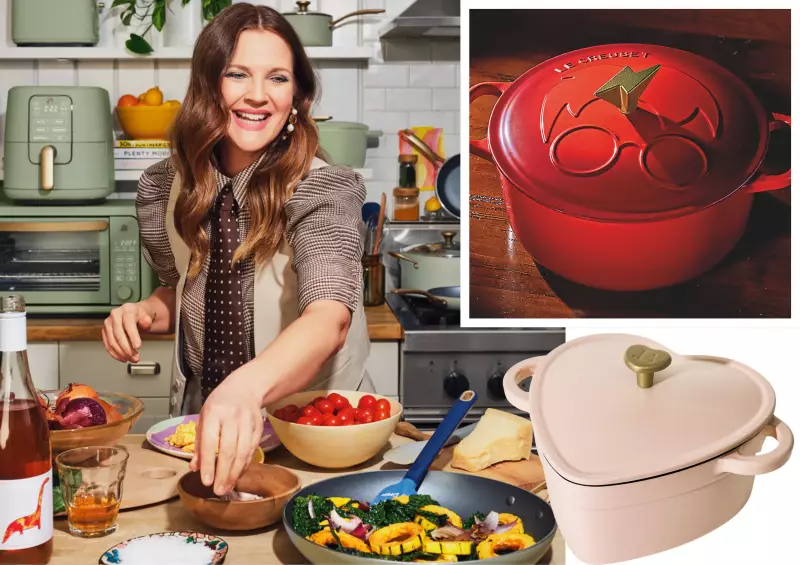
Bold hues, matte finishes, and sculptural forms turn these pots into centerpieces. Limited-edition collaborations, from Le Creuset's pink-and-green "Wicked" collection to red-and-black ombré Harry Potter editions, transform ovens into collectible statements. From deep navy to soft sage, these colors bring personality to the kitchen table, making everything unapologetically ready for the camera.
Celebrity Kitchens Fuel the Craze
Celebrity kitchens have turned the Dutch oven into an aspirational must-have item. Globally, stars like Drew Barrymore with her heart-shaped designs and Selena Gomez with her vibrant color-pop lines drive significant buzz. Jennifer Garner, Gwyneth Paltrow, Stanley Tucci, and Meghan Markle frequently profess their love for these pots, reinforcing a powerful idea: aspirational living now genuinely begins in the kitchen.
In India, this trend is also taking root. Designer Masaba Gupta's "Benares Gold" collaboration with Ember Cookware in late 2025 positioned high-end cookware squarely as an aesthetic investment.
Understanding the Price Range
The cost of a Dutch oven varies widely. Local Indian brands typically range from ₹3,000 to ₹15,000. Luxe international brands like Le Creuset and Staub command a premium, with prices from ₹30,000 to ₹75,000. Larger pots or limited-edition pieces can even cross the one lakh rupee mark.
Versatile and Sustainable: Why They Live Up to the Hype
The enduring popularity of Dutch ovens is not just about looks. Their practical benefits are substantial and explain why they resonate in today's world.

- One-Pot Versatility: Excellent even heat distribution makes them ideal for sautéing, simmering, baking, and serving. They move seamlessly from stovetop to oven to dining table. They work across cuisines, from Indian curries and dal to European stews.
- Built to Last: These pots are constructed for generations of use. This longevity strongly resonates in our current post-disposable, sustainability-minded era.
- Low Learning Curve: They reward patience over complex technique, making them beginner-friendly while still deeply satisfying for experienced cooks.
Why Gen Z and Millennials Are Buying In
For younger consumers, the Dutch oven represents more than just a pot. It embodies specific modern values.
- Intentional Adulthood: It's a significant one-time investment that signals thoughtful living—prioritizing cooking, hosting, and meal planning over merely surviving the week.
- Quiet Luxury: The design is often logo-free, yet the piece is instantly recognizable. It represents an understated, sophisticated form of luxury.
- Aesthetic Payoff: The bright and pastel colors are inherently photogenic. They look good both on camera and in everyday life, aligning perfectly with visual-centric lifestyles.
The Dutch oven's journey from a purely functional kitchen tool to a cultural and design icon is complete. It stands at the intersection of utility, sustainability, and personal expression, cooking up a storm in more ways than one.