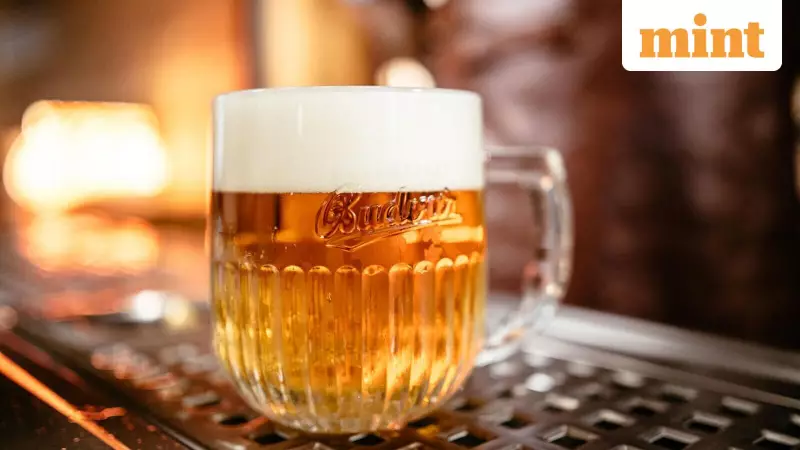
The clinking of golden Budvar lager glasses echoes through a South Bohemian village pub, accompanied by roaring toasts of "Na zdraví!"—meaning "To health!" in Czech. This vibrant scene represents just one facet of Czechia's deep-rooted beer culture, where brewing traditions span over a millennium and continue to shape national identity.
The Heart of Bohemian Brewing
Regular patrons in Czech pubs eagerly explain that the beer they're drinking is the original Budweiser, brewed in České Budějovice since 1895, not its American counterpart. This historic town, formerly known as Budweis, has served as a brewing center since the 13th century, with the original Budějovický Budvar brewery maintaining continuous production to this day.
The state-owned Budvar brewery generously shares its yeast with microbreweries, supporting a thriving ecosystem of craft beer producers. At one such family-owned establishment in Frymburk, brewmaster David Krol reveals the four essential ingredients behind Bohemian beer's distinctive character: soft water, yeast, barley malt that provides body and color, and Saaz hops that deliver the characteristic bitterness and aroma.

Czechia's Global Beer Contributions
While Budvar—slightly sweeter and more malty—represents one of the region's significant contributions to global beer culture, the other legendary creation is the 1842 pale lager from Plzeň. This revolutionary brew became the template for "pilsner" worldwide: light in color, perfectly balanced between malt sweetness and hop bitterness, and defined by its crisp finish.
Czechia's brewing heritage dates back over a thousand years, with monks at Prague's Břevnov Abbey producing beer as early as the 10th century. The country's natural advantages continue to support its brewing excellence: soft underground water, high-quality barley from Moravia, and the mild aromatic Žatec hop, now protected by European Union geographical indication.
This perfect combination of factors explains why Czechia boasts over 400 brewhouses and microbreweries, each proudly crafting its own signature beer. Even the Frymburk beer that Krol brews remains exclusive to his own restaurant, highlighting the localized nature of Czech brewing traditions.
Distinctive Brewing Techniques and Culture
The Czech beer-making process stands out for its traditional methods. Most lagers undergo bottom-fermentation and mature cold for several weeks in cellars. Brewing continues to rely on decoction mashing, a traditional technique where part of the mash is boiled separately to enhance color and malt character.
Pilsner Urquell employs triple decoction while Budvar uses double decoction. This meticulous process contributes to why "České pivo" (Czech beer) enjoys EU protected geographical indication status, with decoction mashing being among the mandatory criteria for achieving this coveted quality designation.
Visitors often misunderstand Czech beer labeling, assuming that the "10 degrees" marked on bottles refers to alcohol content. However, this actually indicates the Balling or Plato degree scale, measuring sugar content before fermentation. Higher degrees signal fuller flavors and more alcohol potential, with most Czech lagers being either 10 or 12 degrees—a system rooted in historical brewery records that locals interpret instinctively.
Beer's Gastronomic Influence and Traditions
Czechs maintain their position as the world's highest per capita beer consumers, with recent 2024 data showing an impressive 126 liters per person annually. The beverage's influence extends deeply into local gastronomy, with even beer foam having its own specialized vocabulary.
The terminology ranges from Čochtan (no foam) to Hladinka (the classic one-step pour with one-third foam) to Mlíko (a glass served almost entirely as dense, sweet beer foam). Bohemian pubs feature menus centered around meat, dumplings, and sauces—food specifically designed to complement lager's clean bitterness.

Traditional dishes like hovězí guláš—beef chunks simmered for hours in onion-rich gravy with paprika, caraway, and marjoram—and the national dish vepřo-knedlo-zelo (roast pork with fluffy dumplings and tangy sauerkraut) naturally pair with cold lager. The beer's carbonation cuts through the richness while malt sweetness balances the meat's acidity.
Lighter pub fare includes smažený sýr—fried cheese in breadcrumbs—that pairs perfectly with crisp pilsner, as the beer's dryness balances the cheese's creamy interior. Local stores throughout the South Bohemian countryside stock staple beer snacks like utopenci (pickled sausages in vinegar, onion, and pepper) and nakládaný hermelín (marinated soft cheese).
Beer Beyond the Glass: Culinary and Wellness Applications
Menus throughout the region feature sections labeled "na pivu"—indicating food cooked in beer. Pivní polévka (beer soup) transforms dark lager into a warming broth, while the same malty depth enhances beer-braised beef cheeks and pork, where caramelized sugars add color without heaviness.
Lighter lagers find their way into batters for river fish and schnitzels, creating airy crusts. Even desserts incorporate beer, with bakers folding it into chocolate cakes for moisture and a hint of delectable bitterness. For the truly adventurous, beer ice cream offers another innovative way to experience Czech brewing traditions.
The concept of beer has expanded beyond consumption to include wellness experiences. "Beer spas" have gained tremendous popularity among both locals and visitors in recent years. At Tabor's Hotel Dvořák, a former brewery adjoining the town's castle, guests can immerse themselves in warm oak tubs infused with brewer's yeast, hops, and malt—a concoction believed to soften skin and improve circulation.
The experience includes a beer tap within arm's reach offering unlimited pours, transforming the restorative treatment into a social occasion with fellow travelers. This innovative approach demonstrates how literally Czechs take their "to health" toast, integrating beer into every aspect of life from culinary traditions to wellness rituals.
As cellar tours, tavern visits, and tastings become essential components of the visitor experience in Czechia, whether for heritage stays or cultural immersion, it's clear that beer remains at the heart of Bohemian identity—a thousand-year tradition that continues to evolve while honoring its rich history.