In the heart of Lucknow's royal kitchens, a culinary miracle was born out of necessity and luxury. The Galouti Kebab, a dish so tender it literally melts in your mouth, has a fascinating origin story that dates back to the era of the Nawabs of Awadh.
The Royal Problem That Sparked a Culinary Revolution
The creation of Galouti Kebab is attributed to Nawab Asad-ud-Daula, the third Nawab of Awadh who ruled from 1775 to 1797. History tells us that the Nawab had lost his teeth but none of his passion for food. His love for kebabs remained strong, but his inability to chew traditional meat preparations left him frustrated.
The royal kitchen faced an unprecedented challenge: create a kebab so soft that it would require no chewing. After numerous experiments, the khansamas (royal chefs) perfected what would become one of India's most legendary dishes. They used finely minced meat from young goats or lambs, tenderized with raw papaya paste, and infused it with a secret blend of over 150 spices.

The Art and Science Behind the Perfect Galouti
What makes the Galouti Kebab truly extraordinary is its preparation technique. The name itself comes from the Urdu word 'galouti' meaning 'soft' or 'meltable.' The meat is pounded and minced to an almost paste-like consistency, then mixed with a precise combination of spices that includes cardamom, cloves, nutmeg, and mace.
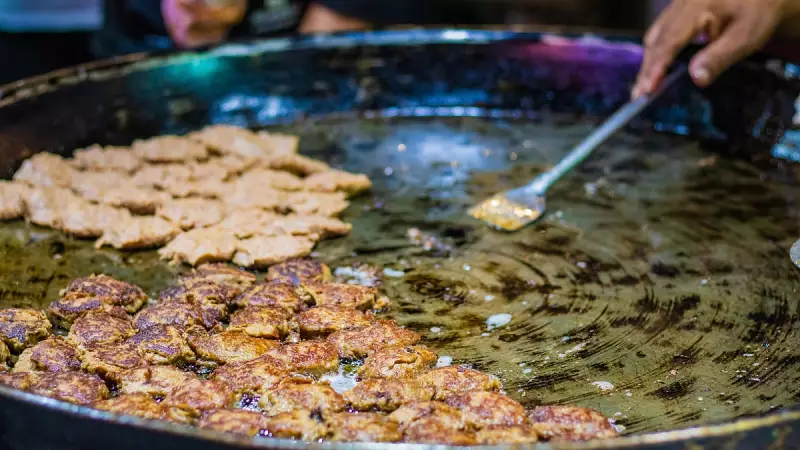
The traditional cooking method involves shallow frying on a large griddle called a 'tawa' over low heat. The kebabs are cooked in pure ghee until they develop a crisp exterior while maintaining their juicy, tender interior. The perfect Galouti should be crisp enough to hold its shape but tender enough to dissolve at the slightest pressure.
Modern chefs have preserved these ancient techniques while sometimes adapting them to contemporary kitchens. The use of raw papaya as a tenderizer remains crucial, as it contains the enzyme papain that breaks down meat fibers without altering the flavor.
From Royal Courts to Common Delight
Originally reserved for royal feasts and special occasions, Galouti Kebabs have traveled far beyond the palaces of Lucknow. Today, they're celebrated across India and internationally as a hallmark of Awadhi cuisine excellence.
The dish gained particular popularity during the Mughal era and became a staple during festive occasions like Eid and weddings. What began as a solution for a toothless Nawab has transformed into a culinary treasure that represents the sophistication and innovation of Indian royal cuisine.
Contemporary restaurants and food enthusiasts continue to honor this legacy, with many establishments in Lucknow and beyond claiming to serve the most authentic version. The competition to perfect this historic dish continues, with each chef adding their subtle variations while respecting the traditional foundation.
The enduring appeal of Galouti Kebabs lies not just in their exquisite taste but in the rich history they carry in every bite. They stand as a testament to India's culinary heritage and the innovative spirit that has characterized its food traditions for centuries.