What Himalayan Villagers Eat for Breakfast
In the Himalayan belt, breakfast is rarely designed for aesthetics. It is built for cold mornings, hard labor, long walks, thin air, and homes where the kitchen must do more than just start the day—it must steady it. Across Nepal, Tibet, Sikkim, and other mountain communities, morning food tends to be warming, filling, and practical, shaped by altitude as much as by tradition. What appears on the table is usually less about trends and more about endurance. Here is a look at some of the most common breakfast items in the region.
Butter Tea
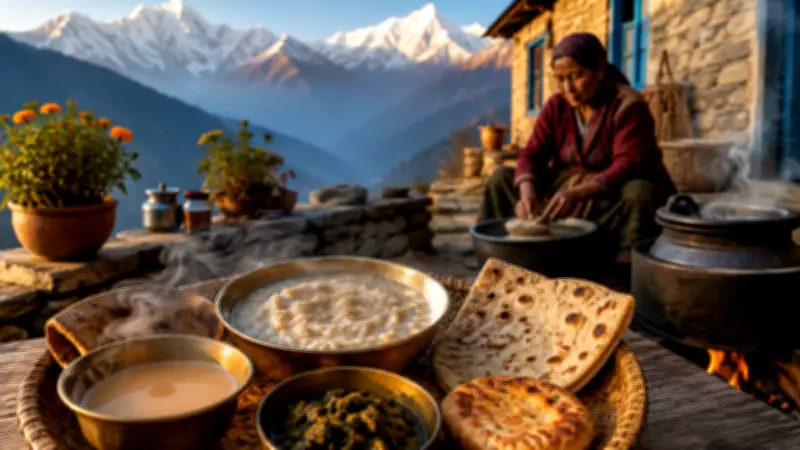
If there is one thing that captures the logic of a Himalayan breakfast, it is butter tea. Traditional Tibetan butter tea, known in many places as po cha or gur-gur cha, is made with tea, butter, salt, and often churning that gives it a rich, almost soup-like body. It is not a dainty café drink; it is a survival drink, designed for cold weather and altitude, and it often appears alongside bread or tsampa rather than replacing food entirely. In many homes, this is the first warmth of the day. A cup is not just about caffeine—it is about calories, comfort, and the feeling that the body has been gently switched on before the day begins.
Sel Roti
Move into Nepali and Nepali-speaking Himalayan communities, and breakfast often becomes a little more celebratory. Sel roti, a ring-shaped rice-flour bread that is usually fried, is one of the region’s best-known morning foods, especially during festivals and special gatherings. It is deeply tied to household cooking in Nepal and is also enjoyed in Sikkim, Darjeeling, and among Nepali communities more broadly. It is the kind of breakfast that feels both simple and ceremonial. Crisp on the outside and soft inside, sel roti often arrives with tea or with savory sides like potato curry or pickle. It is not an everyday village breakfast everywhere in the Himalayas, but where it is made, it carries the feeling of home, celebration, and a little extra care.

Thukpa
Thukpa is better known as a noodle soup, but in colder Himalayan homes, it can absolutely belong to the morning. Across Tibetan-influenced food cultures, thukpa appears as a warming bowl of noodles, vegetables, and sometimes meat, built for cold weather and serious appetite. In hill and mountain settings, it is the kind of food that seems to reach the bones before it reaches the stomach. For villagers waking before sunrise, that matters. A bowl of thukpa is not merely a meal; it is a practical answer to the question of how to stay warm and functional when the air itself feels sharp. It is also a reminder that breakfast in the Himalayas is often less sweet than many outsiders expect and far more savory, brothy, and substantial.
Gundruk
Gundruk, the fermented leafy green that appears across Nepal and Himalayan-adjacent regions, is one of the most interesting breakfast companions in the mountains. It is made by fermenting and drying leafy greens, often mustard or radish leaves, and then using them in soups, side dishes, or as part of a larger meal. In winter especially, it remains a prized household food because it preserves the season’s abundance and brings a bright, tangy edge to otherwise heavy plates. At breakfast, gundruk usually does not stand alone. It is the supporting actor that keeps the meal from feeling too dense—a sour, earthy counterpoint to rice cakes, porridge, dhindo, or bread. In mountain kitchens, that balance is the whole story: warmth on one side, sharpness on the other.
Dhindo
Dhindo is another breakfast anchor in many Himalayan households, especially in the mountain regions of Nepal and in parts of Sikkim and Darjeeling. It is made by stirring flour into boiling water until it becomes a thick, dough-like porridge, traditionally using buckwheat, millet, or corn. The dish has long been associated with rural, high-altitude life, where such grains fit the land and the climate better than rice in many places. Today, dhindo is also gaining new respect outside the villages that kept it alive. But in the mountains, it has never really left. Eaten with gundruk, curry, dal, pickle, or soft cheese, it is the kind of breakfast that feels rooted, economical, and deeply sensible—the sort of food that understands the day ahead.

Churpi and Bread
Then there are the smaller, sturdier breakfast pieces that round things out: churpi, the traditional Himalayan cheese made from yak or cow milk in various regions, and breads such as Tibetan bread or similar fried breads served with potatoes and tea. These foods may look plain to an outsider, but in a mountain kitchen they are powerfully useful—high in energy, easy to pair, and well suited to mornings that start early and run long. Taken together, these breakfasts tell a larger story. Himalayan villagers do not usually begin the day with delicacy. They begin with necessity, memory, and climate. Their food is shaped by what grows locally, what keeps in cold weather, and what can carry a person through work. That is why breakfast in the Himalayas feels less like a meal and more like a method: warm the body, steady the mind, and get moving.