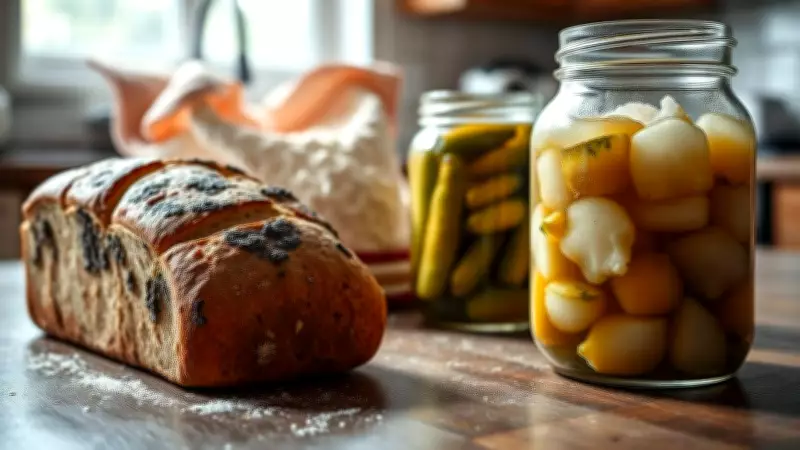
The Hidden Culprit in Your Kitchen: How Humidity Wrecks Your Food
The back of your kitchen cupboard often becomes a forgotten graveyard for half-used bags of flour, partially consumed boxes of pasta, and opened containers of dried fruits like apricots. When these items eventually emerge from their dark hiding places, they frequently appear as nothing more than moldy garbage, having long surpassed their "best by" dates. The silent, invisible enemy responsible for this widespread household waste is humidity.
The Delicate Balance Between Moisture and Food Preservation
Moisture and food maintain a delicate, tricky relationship that requires careful balance. The fundamental reason why basic staples like grains, beans, and seeds can last indefinitely is their dried state before consumption. These dried foods contain minimal water content, yet the typical kitchen atmosphere rarely provides the arid conditions they require for long-term preservation.
According to research from Utah State University, food storage proves extremely sensitive to environmental conditions. Even a slight increase in humidity can trigger the entire spoilage process. Dried foods absorb atmospheric moisture like sponges, creating the perfect environment for bacterial growth and mold development. This moisture absorption doesn't just promote spoilage—it actively degrades nutritional value.

A study published in Food Chemistry reveals that high humidity accelerates the degradation of vitamins and minerals within food products. This means that while you might have purchased a perfectly good package of rice or beans, excessive moisture could be robbing these staples of their essential nutritional content long before they reach your plate. Research further demonstrates that moisture causes dried foods to undergo respiration processes, generating heat that accelerates decomposition.
Creating the Ideal Storage Environment
To preserve dried foods for extended periods, you must create a specialized storage environment. The optimal conditions involve cool, dry locations where humidity remains consistently below 60 percent. When humidity exceeds this threshold, the effects become immediately apparent—salt develops lumps, crackers lose their crunch, and flour becomes compacted.
Airtight containers stored in cool, dry areas with humidity below 60% prove crucial for maintaining both food quality and nutritional value. Temperature plays an equally important role, as warmer air naturally contains more moisture than colder air. Positioning your pantry near heat sources like dishwashers, stoves, or dryers significantly increases risk by creating microclimates of elevated humidity.
Professional recommendations suggest maintaining storage temperatures between 40°F and 70°F for optimal food preservation. The moisture generated from steaming hot water or appliance heat can penetrate food packaging, creating breeding grounds for microorganisms that accelerate spoilage.
Practical Solutions for Moisture Control
Preventing excess moisture from ruining your food supplies doesn't require laboratory equipment—just practical adjustments to your storage methods. Many products arrive in paper or lightweight plastic packaging that allows moisture penetration over time. Transferring these items to airtight containers like glass jars or heavy-duty plastic bags creates an essential barrier against humidity.
In regions with particularly high humidity, additional measures become necessary. Small desiccant packets containing silica gel can prove invaluable for protecting moisture-sensitive items like dehydrated mushrooms or specialty flours. These packets actively absorb excess moisture from the storage environment.
Research published in "Effect of Temperature and Relative Humidity on Fresh Commodity Quality" reveals a crucial finding: maintaining consistent environmental conditions proves more important than achieving perfect parameters. Fluctuations in temperature and humidity cause "cycling" that stresses both products and their packaging, accelerating spoilage processes.

Storage placement represents the final critical element. Storing bulk grains directly on concrete floors creates problems, as concrete can draw moisture upward into food containers. Utilizing shelving that allows for proper air circulation helps maintain drier conditions. This approach isn't merely about preventing spoilage—it's about preserving the natural chemical balance and nutritional integrity within your kitchen ecosystem.
By understanding humidity's destructive effects and implementing these practical solutions, you can transform your pantry from a food graveyard into a preservation haven, reducing waste while protecting both your groceries and your household budget.