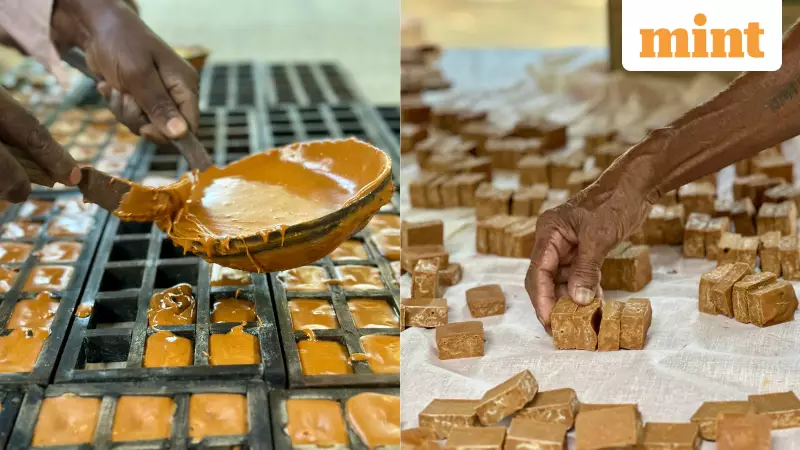
Two winters ago, Senjuti Mahato embarked on a fascinating experiment. The 41-year-old advertising professional, who co-founded the artisanal food brand Earth Story Farms (ESF) in Kolkata in 2020, sought to delve deep into the soil science and weather patterns that shape the distinctive flavor of Bengal's cherished date palm jaggery, known as nolen gur. Her goal was to produce a small, meticulously crafted batch for the season, elevating this traditional sweet to new heights.
The Cultural Resurgence of Nolen Gur
From late November through early February, nolen gur graces the shelves of every sweet shop across Bengal, where home cooks transform it into beloved treats like pithe and payesh. However, the pandemic and the power of social media have sparked a newfound fascination with this delicacy far beyond its regional roots. A wave of artisanal brands, including Kwidi, Amar Khamar, and ESF, has amplified its cultural significance by honoring the provenance and craftsmanship of the shiulis, the traditional toddy tappers who extract sap from date palm trees to create the jaggery.
A Vision of Reverence: Nolen Gur as a Luxury Product
"We aspire for nolen gur to be held with the same reverence as Manuka honey or a premier Cru champagne," asserts Mahato. Her inspiration stems from a visit last year to the family chateau of Le Clos Corbier in Champagne, France, where she interacted with generations of Champagne makers to study the region's geology. "I realized it operates on the same template as Champagne," she explains, drawing parallels between terroir-driven production methods.

The Scientific Approach to Crafting Nolen Noir
In December 2023, Mahato and her partner Abhishek Choudhury initiated their research alongside a team of 10 tappers at their farm in Segunsara, located approximately 200 kilometers from Kolkata. They meticulously classified soil types, monitored clear and sunny days, and emphasized tree resting periods, identifying these as critical factors influencing sap quality. The team demarcated areas with laal maati (red soil), bele maati (sandy soil), and moram maati (gravel soil).
Tasting and Selection: The Path to Perfection
The following winter, collaborating with chef Auroni Mookerjee, they sampled saps from about 50 trees of varying ages and soil backgrounds. The superior sap emerged from trees over 40 years old, rested for a week to 10 days, and grown on gravelly soil. Resting the trees proved essential, as continuous tapping can degrade sap quality. From this, they shortlisted around 80 trees across 3 square kilometers.
"We cooked the sap for 4.5 hours over sonajhuri wood, tasting the reduction at multiple stages," Mahato details. "We finally halted at 85 degrees Celsius to preserve the aroma and dark color." This rigorous process yielded a limited edition of 300 bottles, aptly named "Nolen Noir," available for order on their website. Its flavor profile sets it apart—featuring coconut-y and caramel notes with hints of dried nuts and smoke, distinct from the predominantly sweet common nolen gur and notably darker.
Insights from Soil Science and Production Metrics
The findings have provided valuable production insights. Mahato elucidates that gravelly soil retains optimal moisture levels, allowing roots to access mineral-rich strata that shape the sap's flavor. "This mirrors the principle behind great wine grapes: less water, more character," she notes, highlighting the intersection of agriculture and gastronomy.
Challenges in Nolen Gur Production
In recent years, nolen gur production has faced significant hurdles. Unseasonal rains, delayed and shortened winters, and high moisture levels have impacted sap extraction and tree health. Sailen Tudu, co-founder of Kwidi launched in 2020, who works with Santhal families in Bankura district, reports that this year's ideal conditions—average temperatures of 7 degrees Celsius and clear skies—have favored sap collection.
Preserving Tradition Amidst Growing Demand
As adulteration and over-tapping surge to meet rising demand for nolen gur, many producers are embracing restraint to safeguard this unique winter delicacy. Earth Story Farms exemplifies this ethos, blending scientific rigor with artisanal passion to celebrate Bengal's culinary heritage while positioning nolen gur as a premium, globally appreciated product.