

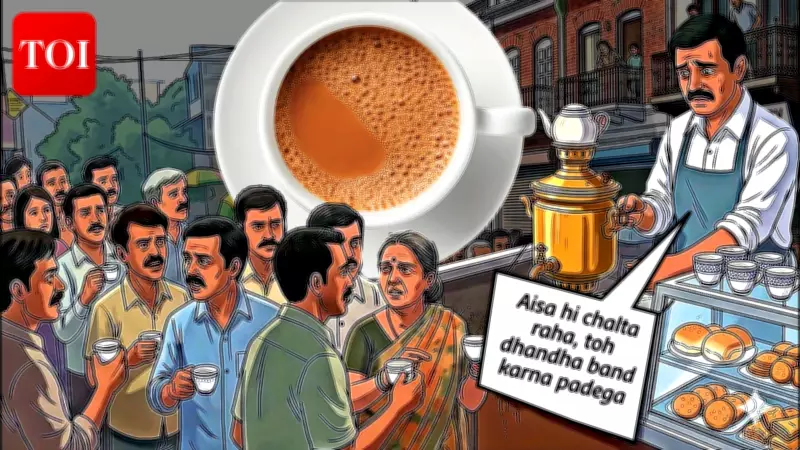
Hyderabad's Irani Chai Culture Under Strain as LPG Shortage Hits Cafés
In Hyderabad, Irani chai transcends mere refreshment; it embodies a cherished ritual, a daily routine, and a communal respite. From dawn-till-dusk office commuters to nocturnal adda sessions, the city's famed Irani cafés pulsate with the steady cadence of simmering tea, clinking glasses, and animated conversation. However, a severe LPG supply crunch is now disrupting this timeless rhythm, posing an existential challenge to a beloved tradition.
Fuel Scarcity Forces Costly Adaptations for Large-Scale Brewers
For major tea franchises, the crisis extends beyond flavor to sheer volume management. Samier Syed, founder of a prominent tea store chain with branches in Toli Chowki, Gachibowli, and Azampura, reveals the scale: "We consume approximately 100 to 150 liters of milk daily per branch, totaling around 700 to 750 liters across all locations." He emphasizes the risks of experimenting with alternatives like wood fire for milk-based brews, unlike dishes such as biryani or haleem. "If a batch goes wrong, we could waste over 100 liters of milk instantly—a risk we cannot afford."
The intrinsic nature of Irani chai exacerbates the fuel dilemma. Syed explains, "This tea requires prolonged boiling to achieve its distinctive strong, 'hard' flavor, consuming significantly more fuel than homemade varieties." In response, some cafés have turned to induction cooking for better temperature control and consistency. Yet, this shift comes at a steep price: induction units once priced at ₹15,000–₹20,000 now soar to ₹53,000. Balancing LPG and induction to preserve the tea's signature thickness, color, and taste remains a daily struggle.

Smaller Stalls Grapple with Immediate Survival Challenges
For independent tea stalls, the crisis is more acute. Mohammed Arif, a stall owner in Mallepally, laments, "Our entire operation hinges on a single LPG cylinder. Previously, we simmered tea slowly to perfect the decoction and milk thickness, but now, with uncertain and costly gas supplies, we cannot sustain that method." Price hikes of ₹2 to ₹5 per cup have followed, though loyal customers often question the increase. Arif adds, "We resort to smaller, more frequent batches, but this alters consistency throughout the day. Regulars notice immediately, commenting if the chai feels lighter or less 'kadak' than usual."
Consistency Crisis: Balancing Tradition with Modern Alternatives
At established cafés like a Persian outlet in Himayatnagar, managers like Ali Reza adopt a hybrid approach. "Maintaining consistency from morning to night is crucial, as Irani chai cannot be rushed. With LPG becoming unreliable, we use induction during off-peak hours to manage fuel," he says. However, Reza notes a subtle trade-off: "Induction heat differs from flame, affecting texture and flavor depth. While most customers might not spot it immediately, we constantly adjust between gas and induction to keep the taste familiar for our regulars."
Price Hikes and Perceptible Changes in Taste
Across Hyderabad, modest price increases of ₹2 to ₹5 per cup are reshaping the affordable essence of Irani chai. Shaheen Fatima, a 41-year-old school teacher from Tolichowki, observes, "A ₹2–5 rise adds up when you drink chai multiple times daily, but it is an indispensable part of my work-break routine." Similarly, Sneha Kulkarni, a 27-year-old marketing executive from Himayatnagar, notes, "We will pay extra out of habit, but subtle taste shifts are noticeable when brewing methods change." This underscores how the LPG shortage not only impacts costs but also threatens the sensory experience that defines Irani chai culture.
As Hyderabad's café owners navigate this fuel crisis, the future of Irani chai hangs in the balance. Will adaptations like induction cooking preserve its soul, or will the ritual lose its essence in the face of economic and logistical pressures? Only time will tell if this iconic beverage can withstand the heat of modern challenges.

