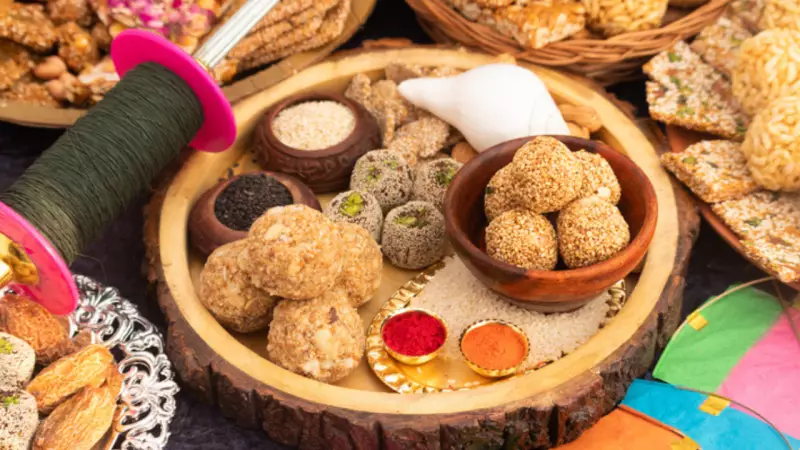
Makar Sankranti 2026: A Feast of Tradition and Warmth
Makar Sankranti arrives on January 14, 2026. This festival marks a key solar transition in the Indian calendar. The sun begins its northward journey. Winter slowly loosens its grip. Across India, people welcome this shift with prayers and special foods. These dishes carry warmth, sweetness, and deep seasonal wisdom. Almost every Sankranti food has a purpose. It nourishes the body, honors the harvest, and invites abundance for the coming months. Here are ten traditional foods that bring this festival to life. Each one is rooted in culture, climate, and quiet spiritual meaning.
Til-gud Ladoo: Sweet Balls of Goodwill
In Maharashtra and central India, Sankranti feels incomplete without til-gud ladoos. Sesame seeds and jaggery combine to form small, dense balls. They are both warming and grounding. Sesame is believed to cleanse old karmic residue. Jaggery represents sweetness and goodwill. The famous phrase “til-gud ghya, god god bola” captures the day's spirit. It means let go of bitterness and speak kindly as the year turns.
Til Chikki: Crunchy Winter Delight
This crunchy brittle uses sesame and jaggery. It is another winter favorite. Unlike ladoos, chikki is thin and crisp. This makes it easy to share and store. It is rich in natural fats, minerals, and iron. The body needs these nutrients during the coldest part of winter. Giving til chikki to friends and neighbors spreads warmth in a meaningful way.

Khichdi: The Dish of Balance
In Uttar Pradesh, Bihar, and parts of Delhi, Sankranti is also called Khichdi Parv. On this day, people prepare a simple yet powerful meal. It includes rice, lentils, ghee, and vegetables. They offer it in temples. Khichdi symbolizes balance. Grains provide energy, lentils offer protein, and ghee gives nourishment. It reflects the idea that prosperity begins with stability and simplicity.
Pongal: The Overflowing Abundance
In South India, Sankranti is celebrated as Pongal. The festival itself takes its name from the dish. Rice boils with milk and jaggery until it overflows. This symbolizes abundance. The sweet version, Sakkarai Pongal, gets flavored with cardamom, cashews, and raisins. It creates a rich, festive, and deeply comforting dish.
Til Pitha: Assam's Rice Flour Rolls
In Assam’s Magh Bihu celebrations, til pitha takes center stage. These are rice flour rolls stuffed with roasted sesame and jaggery. They are soft on the outside and nutty inside. They represent both the rice harvest and the warming qualities of sesame. Making pitha is a family activity. People often do it together, turning food into a shared ritual.
Gur ke Chawal: Fragrant Jaggery Rice
In parts of North India, especially Punjab and Haryana, people prepare jaggery rice for Sankranti. Rice cooks with ghee, jaggery, and sometimes coconut. It creates a gently sweet, fragrant dish. It is simple but festive. This reflects the idea that even basic ingredients become sacred when prepared with intention.
Ariselu: Deep-Fried Indulgence
These deep-fried sweets come from rice flour, jaggery, and ghee. They are a Sankranti specialty in Andhra Pradesh and Telangana. Ariselu are rich, dense, and indulgent. People eat them slowly and share them generously. They celebrate the rice harvest while honoring the need for warmth and energy during winter.
Bajra and Jowar Bhakri: Grounding Millet Rotis
In western and central India, millet rotis made from bajra or jowar are common. People eat them with sesame chutney, garlic, or jaggery. Millets are grounding grains. They grow well in dry winter soil and keep the body warm. Eating them on Sankranti honors both the farmers and the land that sustained them.
Kheer with Jaggery: Nourishing Dessert
Many homes prepare kheer using jaggery instead of sugar during Sankranti. Rice, milk, and jaggery come together in a slow-cooked dessert. It feels both nourishing and symbolic. Jaggery is unrefined and closer to the earth. This makes it spiritually preferred on this day of renewal.

Sugarcane and Groundnuts: Symbols of Growth
Fresh sugarcane, peanuts, and seasonal produce are offered and shared across many regions. Sugarcane represents growth and resilience. It is tall, strong, and sweet inside. Groundnuts, roasted or boiled, are rich in protein and warmth. They are perfect for winter and symbolic of nourishment from the soil.
These ten foods show how Makar Sankranti blends tradition with nutrition. Each dish tells a story of harvest, warmth, and community. As the sun moves north, these foods help people celebrate the changing season with joy and gratitude.