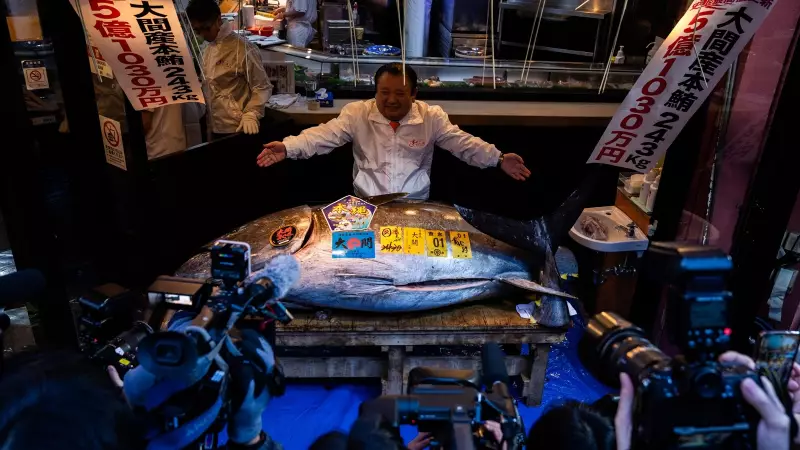
The year 2025 began with a seismic splash in the world of gourmet seafood. At the first auction of the year held at Tokyo's famed Toyosu fish market, a single, majestic Bluefin tuna commanded an eye-watering price of 114.2 million yen, which translates to approximately 28 crore Indian rupees. This sale not only continued the tradition of headline-grabbing New Year auctions but also set a new benchmark, establishing a record for the highest price paid per kilogram for the prized fish.
The King of the Auction: A 208-Kilo Giant
The star of the show was a Pacific Bluefin tuna caught off the coast of Aomori prefecture in northern Japan. Weighing in at a substantial 208 kilograms, the fish was the subject of intense bidding. The winning bid, a colossal 114.2 million yen, was placed by the owner of the popular Sushi Zanmai chain, Kiyoshi Kimura. Known as the "Tuna King," Kimura is a veteran of these high-stakes auctions and has secured the first tuna of the year multiple times in the past.
While the absolute monetary record for a single tuna remains higher—set in 2019 at 333.6 million yen for a 278-kg fish—this year's purchase made history in a different way. The price per kilogram for this 208-kg specimen soared to around 549,000 yen (roughly ₹1.34 lakh), setting a new per-kg record for the market. This highlights the immense and growing value placed on premium, fresh Bluefin tuna, especially for the symbolic first auction.

Why Does the First Tuna Command Such a Price?
The astronomical price tag is driven by a mix of tradition, prestige, and savvy marketing. Securing the first tuna of the year at Toyosu, the world's largest fish market, generates enormous publicity for the buyer. For a restaurant chain like Sushi Zanmai, the media frenzy surrounding the purchase is invaluable advertising, drawing customers eager to taste a slice of the record-breaking fish.
Kiyoshi Kimura himself acknowledged the promotional power of the buy. He stated that the price was significantly higher than he had anticipated but emphasized the importance of winning the auction to bring joy to his customers. The tuna was swiftly transported to his restaurants, where it was served to patrons, turning a costly purchase into a unique customer experience and a powerful brand statement.
Beyond the Headlines: A Symbol of Culinary Culture and Concern
This annual spectacle is a vivid testament to Japan's deep-rooted sushi culture and the revered status of Bluefin tuna, particularly the fatty "otoro" belly meat. The auction at Toyosu, which succeeded the historic Tsukiji market, is a global barometer for the luxury seafood trade.
However, the staggering sums also cast a spotlight on the pressing environmental challenges surrounding Bluefin tuna. The Pacific Bluefin tuna population has faced severe overfishing pressures. While recent international management efforts have shown signs of helping stocks recover, the species remains a concern for conservationists. The exorbitant prices at auction can incentivize fishing, making sustainable management practices crucial for the species' long-term survival.
The record-breaking sale at the Toyosu market is more than just a business transaction. It is a cultural event that blends commerce, tradition, and gastronomy. It underscores the unmatched prestige of Japanese seafood markets while simultaneously reminding the global audience of the delicate balance between culinary indulgence and ecological responsibility. The journey of this 208-kg tuna, from the waters of Aomori to a Tokyo auction block and finally to sushi counters, encapsulates a fascinating and complex story of value, both monetary and cultural.