Salt: The Surprising Household Ingredient That Transforms Dishwashing
Greasy pots and stubborn food residues can make dishwashing feel like an endless chore. Even popular commercial cleaners often fall short when dealing with adhered dirt. However, a simple, common household ingredient—salt—might elevate your dishwashing game to new heights, offering a powerful and natural solution.
Scientific Backing for Salt's Cleaning Power
Research in cleaning science supports the effectiveness of salt. For instance, a study published in MethodsX, titled A universal method for determining the detergent effect of surfactants, explains how surfactants help remove contaminants from surfaces. The research demonstrates that surfactants reduce surface tension, lifting oils and soils, and when combined with mechanical agitation like scrubbing, grease removal becomes significantly more effective.
Adding salt to dish soap enhances this process by thickening the solution, allowing it to adhere better to surfaces. The abrasive properties of salt break apart food particles, while its ions act as effective cleansing agents, contributing to grease elimination. This method delivers superior cleaning results with minimal effort, avoiding toxic chemicals.

Practical Application for Tough Grease
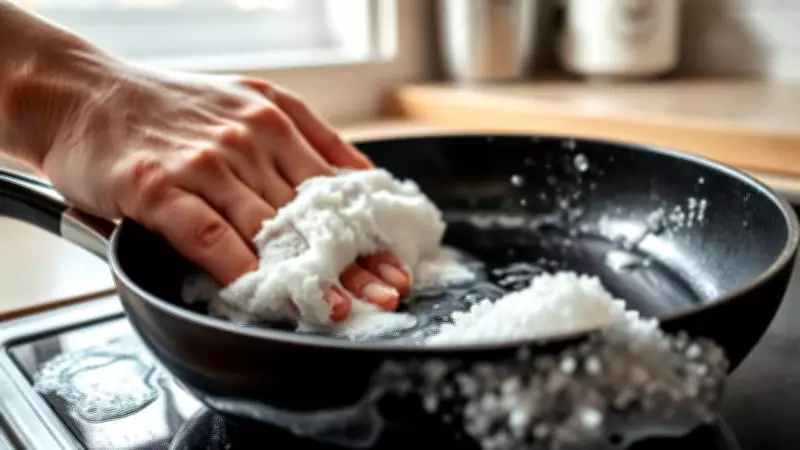
To tackle baked-on grease, create a paste with one tablespoon of coarse salt mixed with a squirt of dish soap. Apply it to cookware and let it soak for a few seconds; this gives the salt time to loosen grease bonds without damaging sensitive surfaces. Over time, this technique prevents grease film accumulation, keeping your kitchenware pristine.
Odor Neutralization and Safety Benefits
Salt does more than just remove grease. It also addresses odors from foods like fish, garlic, or onions, which can linger even after washing. The mineral absorbs odorous molecules, while the soap removes residues, leaving cookware odorless without relying on perfumed detergents.
The simplicity of this tip makes it easy to implement immediately. Moreover, rinsing with salt is generally safe for household plumbing. Research, such as a study in the Journal of Environmental Management titled The contribution of household chemicals to environmental discharges via effluents: Combining chemical and behavioural data, highlights that mild solutions like salt rinses pose minimal risk to water systems, offering an eco-friendly alternative.
Versatility and Cost-Effectiveness
Salt's abrasive nature cleans effectively without scratching materials, making it safe for porcelain, glass, steel, and even Teflon-coated cookware. It is inexpensive and readily available, improving dish soap effectiveness so you use less, reducing costs and your carbon footprint.
This method extends beyond dishes. It works well on stoves, ovens, and hood ranges, removing grease and water stains without damaging surface finishes. For example, salt can clean glass cooktops while preserving their glossiness.
Conclusion: A Simple, Proven Solution
Incorporating salt into your dishwashing routine requires no special preparation—just mix it with dish soap, wash as usual, and rinse thoroughly. It is effective, harmless, and affordable. Whether dealing with tough pan stains or maintaining overall kitchen cleanliness, this tried-and-true solution, backed by scientific evidence, offers a reliable way to keep your kitchen spotless with ease.