

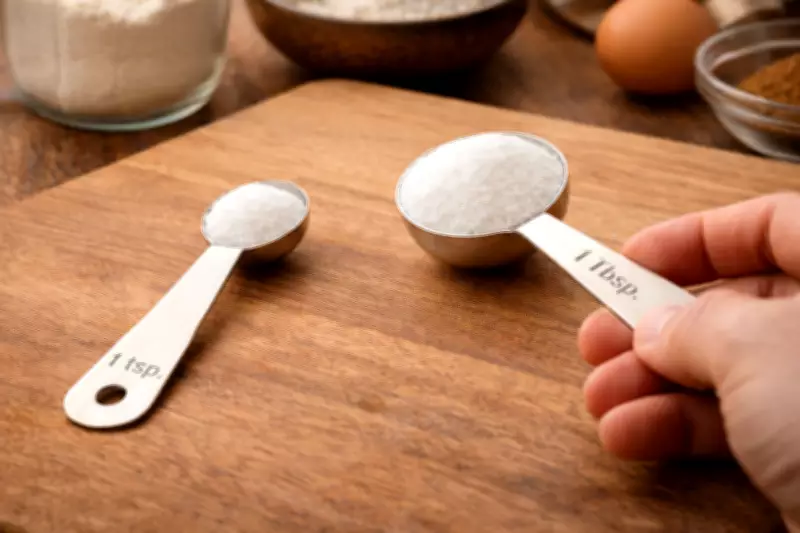
The Essential Guide to Teaspoon and Tablespoon Measurements in Cooking
If you spend any time in the kitchen, you have undoubtedly encountered recipes that switch between teaspoons and tablespoons with casual ease. These two spoons may appear similar at first glance, but they perform dramatically different roles in culinary practice. Confusing them represents one of the fastest ways to transform a carefully balanced dish into something overly salty, excessively sweet, or disappointingly bland. These measurements are absolutely not interchangeable, and comprehending the distinction between them forms a fundamental aspect of kitchen literacy rather than mere culinary trivia.
Understanding the Basic Measurements
Before exploring professional techniques for more accurate measuring, it is crucial to understand what tsp and tbsp actually represent, how they are utilized across various recipes, and why that seemingly minor difference can exert a substantial impact on flavor, texture, and overall consistency.
At their core, the measurements are defined as follows:

- 1 teaspoon (tsp) equals approximately 5 milliliters
- 1 tablespoon (tbsp) equals approximately 15 milliliters
This establishes the critical relationship: 1 tablespoon equals exactly 3 teaspoons. Therefore, if a recipe requires one tablespoon of chili powder and you accidentally add only a teaspoon, the resulting dish will be significantly milder than intended. Conversely, if you make the opposite error by adding a tablespoon when only a teaspoon is needed, the heat level can escalate to an intensity that no amount of water will adequately mitigate.
Why Precision Matters in Professional and Home Cooking
Professional kitchens prioritize consistency above all else; the same curry should taste identical whether prepared today or next week. This demand for reliability is precisely why standardized measurements exist in the first place. Teaspoons are typically reserved for specific ingredients that require careful portioning:
- Spices and dried herbs
- Baking powder or baking soda
- Vanilla extract or other flavoring essences
- Salt in smaller quantities
Tablespoons, on the other hand, come into play for larger volume ingredients:
- Cooking oils or melted butter
- Sugar, honey, or other sweeteners
- Sauces, condiments, and dressings
- Peanut butter, tahini, or other thick spreads
In baking especially, substituting teaspoons for tablespoons or vice versa can completely disrupt the delicate chemical reactions. Excessive baking powder, for instance, can cause cakes to collapse or develop a bitter aftertaste. Insufficient amounts will result in dense, poorly risen baked goods. In savory cooking, the consequences primarily affect flavor balance, causing saltiness, heat, sweetness, or acidity to swing dramatically in one direction.
The Problem with Using Everyday Cutlery
This represents a common pitfall for many home cooks: reaching for ordinary eating utensils instead of proper measuring tools. The teaspoons and tablespoons found in standard cutlery drawers are not standardized; some are deeper, some wider, and others surprisingly shallow. Depending on the specific shape and design, a so-called "tablespoon" from your dining set could hold anywhere from 10 milliliters to 20 milliliters—a substantial variation in any recipe that depends on precise balance.
This is why cookbook authors and professional chefs always refer specifically to measuring spoons, not eating spoons. Proper measuring sets are engineered with consistency in mind:
- Every teaspoon within the set maintains identical volume
- Every tablespoon consistently equals three times that volume
- Results remain dependable regardless of who prepares the dish
When precision is paramount, particularly in baking, investing in a quality set of measuring spoons represents one of the simplest yet most valuable upgrades for any kitchen.
The Level Versus Heaped Measurement Dilemma
Even with the correct measuring spoons, technique remains important. In most standard recipes, a "teaspoon" or "tablespoon" refers to a level measure—filled and then scraped flat across the top using a straight edge.

A heaped spoon, where the ingredient forms a small mound above the rim, can quietly introduce 30-50% more material than intended, especially with dry ingredients like flour, cocoa powder, sugar, or ground spices. Liquid measurements are generally more straightforward: simply pour until the liquid reaches the rim without overflowing. For dry ingredients, that quick swipe with the back of a knife or a fingertip ensures even proportions and maintains recipe integrity.
Navigating Metric and International Recipe Variations
Another consideration worth noting: while teaspoon and tablespoon sizes are broadly standardized in contemporary cooking, older cookbooks or international recipes sometimes employ slightly different volumes. For example:
- Most modern metric systems define a tablespoon as 15 milliliters
- Some older regional standards once utilized marginally different volumes
While such variations rarely ruin a dish completely, in precision baking, small differences can accumulate. When uncertainty arises, a digital kitchen scale that measures in grams and milliliters eliminates all guesswork and ensures absolute accuracy.
Expert Advice from Culinary Professionals
According to Chef Gautam Kumar, "Measurement is extremely important and in certain dishes totally unavoidable. One should always keep the following principles in mind."
- Do not frequently change your measuring spoons, as this creates imbalance and might negatively impact the final dish.
- Never use substitutes in baking. A tablespoon can never be properly substituted with two teaspoons; the precise ratio must be maintained.
- Avoid plastic spoons when possible and invest in good quality, durable measuring spoons for long-term accuracy.
Mastering the distinction between teaspoons and tablespoons transforms cooking from a guessing game into a precise science. By understanding these fundamental measurements, utilizing proper tools, and applying consistent techniques, home cooks can achieve restaurant-quality results with confidence and reliability.
