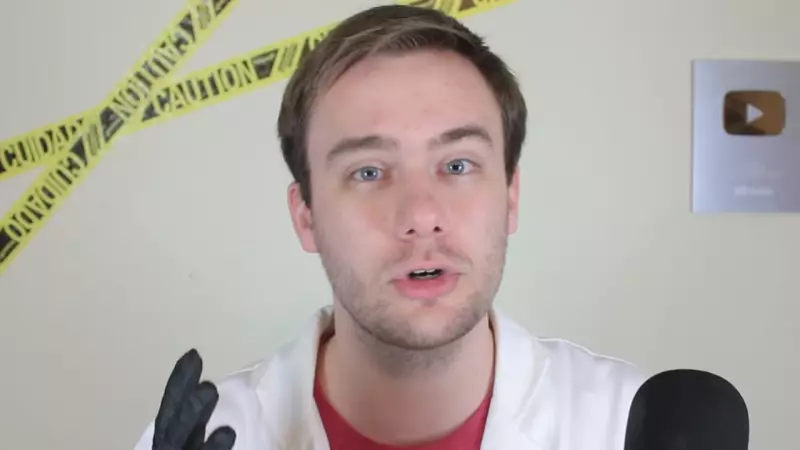
A science-focused YouTuber has sent the internet into a frenzy with an astonishing claim: he has successfully decoded the legendary taste of Coca-Cola. The creator, known as LabCoatz, posted a detailed video titled "Perfectly Replicating Coca Cola (It Took Me A Year)," where he asserts that after twelve months of rigorous scientific experimentation, he has produced a beverage indistinguishable from the real thing.
The Scientific Quest to Unlock a Century-Old Secret
LabCoatz begins his journey by addressing the common belief that replicating Coke's unique flavor is an impossible task. He notes that many publicly shared imitation recipes have consistently fallen short. His approach, however, diverged completely from kitchen guesswork. He employed advanced laboratory techniques, specifically mass spectrometry, to chemically analyze the beverage. This method helps identify the precise molecules and compounds present in a liquid.
To achieve this, he collaborated with two other science YouTubers who possess mass spectrometers, one of whom is also a university professor. The known ingredients of Coca-Cola—sugar, caffeine, phosphoric acid, caramel color, and carbonated water—were straightforward. The true challenge lay in the enigmatic "natural flavors" that give the drink its signature profile.

Months of Trial, Error, and a Surprising Discovery
The process was far from simple. LabCoatz conducted numerous tests with various essential oils, including lemon, lime, cinnamon, nutmeg, coriander, and vanilla. Initial attempts resulted in flavors that were too spicy, too floral, or simply wrong. Through painstaking iteration, guided by the spectral data and a research paper from the Journal of Agricultural and Food Chemistry, he began to narrow down the critical components.
A key breakthrough was his hypothesis that minute quantities of vinegar and wine tannins contribute to Coke's characteristic sharp and tangy aftertaste. This insight, combined with the precise balancing of other flavors, gradually led him closer to his goal.
The Final Taste Test and Legal Implications
After a full year of experimentation, LabCoatz created his final version. He states emphatically that in blind tastings, he himself could not tell his replica apart from authentic Coca-Cola. He further conducted blind tests with others, where many participants mistakenly identified his concoction as the genuine product, with some even rating it as high as 9.5 out of 10.
In his video, LabCoatz also addresses the legal aspect, clarifying that while Coca-Cola fiercely guards its formula as a trade secret, it is not patented. He argues that replicating the taste for educational and experimental purposes is legal, provided no trademarked branding is used to sell the product. The video has ignited widespread discussion across social media, food industry circles, and the scientific community, raising questions about the power of modern analysis to demystify closely held corporate secrets.