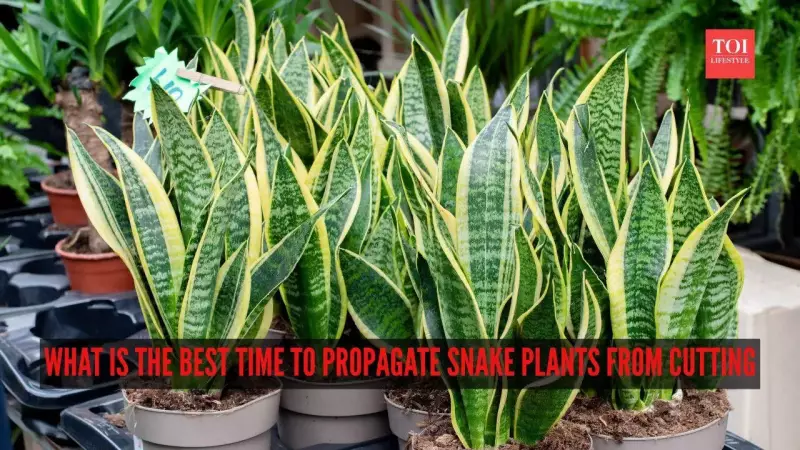
For countless plant enthusiasts across India, the resilient and elegant snake plant, often called mother-in-law's tongue, is a favourite indoor companion. Its striking, upright leaves and legendary tolerance for neglect make it a perfect choice for busy urban dwellers. One of the most rewarding aspects of owning this plant is propagation – the process of creating new plants from cuttings. However, the secret to thriving new snake plants lies not just in the method, but crucially, in the timing.
Why Season Matters for Snake Plant Propagation
Snake plants are succulent perennials originating from tropical West Africa. Like most flora, they follow a natural cycle of active growth and dormancy. The plant's metabolic processes accelerate significantly during active growth, driven by warmer temperatures and increased daylight. This surge fuels the rapid development of both foliage and roots, creating the perfect internal environment for cuttings to establish themselves.
Conversely, during the cooler months with shorter days, the plant enters a semi-dormant state. Growth slows, energy production dips, and the capacity for root development diminishes. Attempting propagation in this period, such as winter, often leads to delayed rooting, a higher risk of rot, or outright failure. For Indian homes, understanding and replicating this natural rhythm is key to propagation success.

The Ideal Propagation Window: Spring and Early Summer
The absolute best time to propagate snake plants from cuttings is during spring or early summer. This period aligns perfectly with the plant's natural growth spurt. Warmer ambient temperatures, typically ranging between 18–27 °C (65–80 °F) indoors, and longer daylight hours work in harmony to boost metabolic activity.
During these favourable conditions, leaf cuttings or divisions heal faster, initiate roots more readily, and establish themselves with robust vigour. This active phase significantly reduces common pitfalls like slow development or fungal rot, which are more prevalent in the stagnant, cool air of winter. While propagation can be attempted year-round, aligning your efforts with the growing season offers a sure-fire path to success.
Effective Methods and Seasonal Tips for Success
Several reliable methods exist for multiplying your snake plant, each benefiting from the spring-summer boost.
Leaf Cuttings in Water or Soil: A popular method for beginners involves cutting a healthy leaf into sections and placing them in water or well-draining soil. In the growing season, roots typically begin to appear within a few weeks.
Division via Rhizomes: This is a faster and more dependable technique. Separating the plant at its roots or underground stems (rhizomes) yields new plants that already have some root structure. This method is also essential for preserving the variegated patterns on certain snake plant varieties.
Separating Pups or Offsets: Small offshoots, known as pups, that emerge around the base of the mother plant offer the easiest propagation route. Gently separating and potting these in spring is almost guaranteed to succeed, as they come with their own nascent root system.
Pro Tips for Spring Propagation
To maximise your chances during the optimal season, follow these practical steps. Always use a healthy, disease-free leaf from the mother plant. After making a cut, allow the wound to dry and form a callus for a day or two before planting; this simple step dramatically reduces the risk of rot. Plant your cuttings in a well-draining potting mix, such as one formulated for cacti or succulents, to prevent waterlogging. Place them in bright, indirect light, avoiding the harsh, direct afternoon sun that can scorch the cuttings. Most importantly, practice patience. Even in ideal conditions, snake plants are not speedy rooters, and full establishment may take several weeks to months.

In summary, for gardeners in India looking to expand their collection of these hardy plants, timing is a powerful ally. By scheduling your propagation projects for the warm, bright days of spring and early summer, you leverage the plant's innate growth cycle. This strategic approach, combining the right season with the correct method, transforms propagation from a hopeful experiment into a confident and rewarding gardening success.