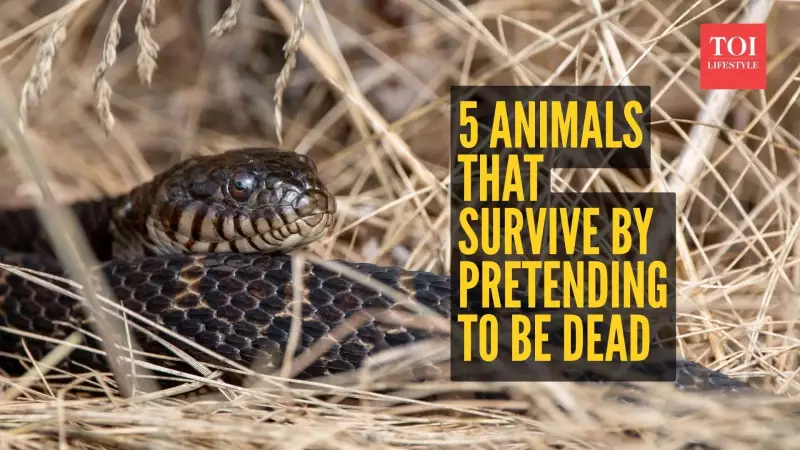
5 Clever Animals That Escape Danger by Faking Their Own Death
In the wild, survival often depends on clever tricks rather than brute strength. Many animals have developed a fascinating defense mechanism: pretending to be dead. When predators think an animal is already deceased, they frequently lose interest and move away. This simple yet effective strategy saves countless lives across various species.
Virginia Opossum: The Master of Playing Dead
The Virginia opossum is perhaps the most famous animal for this behavior. When threatened, it dramatically collapses onto its back. The opossum opens its mouth wide, bares its teeth, and often drools. It may even emit an unpleasant odor. To any watching predator, this convincing display makes the opossum appear dead or severely ill. In reality, this is simply its instinctive method of self-preservation.
Texas Indigo Snake: The Stillness Expert
The Texas indigo snake employs a similar tactic. Sensing danger, it suddenly becomes motionless. Its body goes completely limp, and its mouth might hang slightly open. Even if touched or prodded, the snake remains virtually unresponsive. This convincing act of being dead causes predators to lose interest, allowing the snake to escape unharmed once the threat passes.

Ducks: The Feathered Escape Artists
Certain duck species, including mallards and wood ducks, also use this survival trick. When attacked by a predator like a fox, a duck may suddenly drop to the ground and stop moving. The fox, believing the duck is dead, might even pick it up. At the perfect moment, when the predator's attention wavers, the duck springs back to life and flies swiftly to safety.
Lemon Shark: The Apex Pretender
Even powerful creatures like sharks utilize this behavior. If a lemon shark is flipped onto its back, it enters a state of tonic immobility. The shark becomes very still, breathing slowly and sometimes exhibiting slight tremors. Though lemon sharks have few natural enemies, this lifeless appearance helps them navigate risky situations in their aquatic environment.
Rabbits: The Frozen Fear Response
Rabbits demonstrate this behavior when extremely frightened. They suddenly freeze in place, becoming completely motionless. To an observer, the rabbit might seem calm or relaxed, but this is misleading. Internally, the rabbit experiences high stress levels. Experts identify this as a fear response, often a last-ditch effort to avoid detection by predators.
These examples highlight the incredible adaptability of wildlife. Playing dead is a smart, energy-efficient strategy that bypasses the need for physical confrontation. It showcases how evolution favors clever solutions for survival in nature's challenging arena.