Greenland exists in the global imagination as a place of extreme remoteness, a vast white expanse often synonymous with ice and emptiness. Yet, this perception overlooks a profound truth: for millennia, it has been a homeland. Arctic hunters navigated its frozen seas, communities thrived along its deep fjords, and rich languages evolved from an intimate dialogue with snow and ocean. Today, this colossal island maintains a rhythm distinct from the frenetic pace of the modern world, a place where silence holds meaning and light behaves in extraordinary ways.
A Land Between Worlds: Political and Geological Identity
Greenland's identity is a fascinating puzzle of contradictions. Politically, it is part of the Kingdom of Denmark, sharing a monarch and delegating matters of foreign policy and defence to Copenhagen. However, a significant shift occurred in 2009 when Greenland assumed expanded self-rule, granting its local parliament, the Inatsisartut, control over most domestic affairs. This move cemented its unique status as a largely self-governing territory within the Danish realm.
Geologically, the story takes a different turn. The island is physically part of the North American continent, resting on the same ancient bedrock as Canada. A shallow underwater ridge connects it to the mainland. This blend—politically European, geographically North American—creates a national consciousness that is neither fully inside nor outside conventional categories. This in-betweenness permeates daily life, fostering a culture that is resilient and self-reliant.

The Dominance of Ice and Climate
It is impossible to understand Greenland without acknowledging the omnipresent force of its ice. Approximately 80% of the island is smothered by a massive ice sheet, second in size only to Antarctica's. In some areas, this frozen mantle is several kilometres thick, its immense weight pressing the bedrock below sea level. This is not a static landscape; it is a slow-moving river of ice. Snow accumulates, compresses, and gradually flows outward toward the coasts.
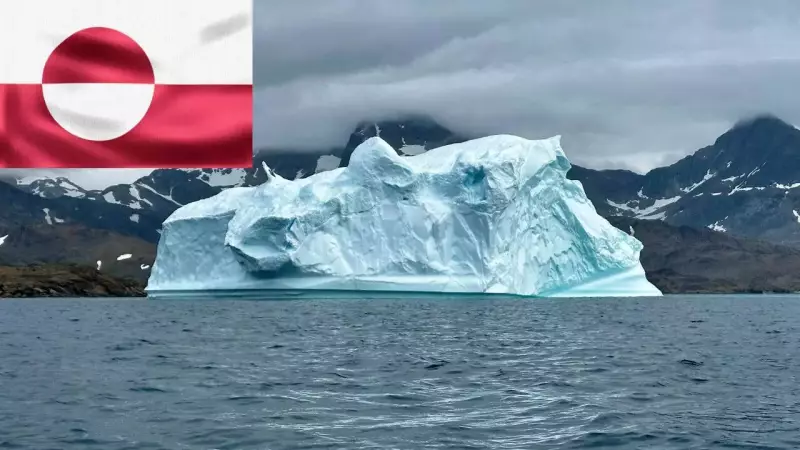
Glaciers like the famous Jakobshavn can surge forward by tens of metres in a single day. Where ice meets the ocean, colossal chunks break off in a process called calving, giving birth to the majestic icebergs that drift silently through fjords, sometimes for months. Beyond the ice, the terrain reveals barren rock, hardy low-lying vegetation, and sweeping, uninhabited valleys. With minimal arable soil, life here adapts to the land rather than attempting to conquer it.
The climate, firmly polar, dictates the rhythm of existence. While interior winters can plunge to a bone-chilling -50 degrees Celsius, coastal areas are moderated by the sea. Summers are brief and cool, with temperatures seldom exceeding 15°C. In the capital, Nuuk, the annual average temperature hovers just above freezing. Wind is a constant factor, often more impactful than the cold itself, carving through landscapes and settlements with equal force. Here, planning around the weather is a way of life, and patience is not a virtue but a necessity.
The Phenomenon of the Midnight Sun and Inuit Heritage
One of Greenland's most magical natural spectacles is the midnight sun. This is not an abrupt event but a gradual unveiling. As spring turns to summer, daylight stretches further until night disappears entirely. The experience varies by location: in the far northern settlement of Qaanaaq, the sun does not set for nearly four months, from late April to late August. Further south, in towns like Ilulissat, the period of constant daylight is shorter, typically from May to July. This eternal daylight, a result of the Earth's axial tilt, bathes mountains and water in a perpetual, soft golden glow, creating days that feel endless and open.

This dramatic landscape has been inhabited for around five thousand years. Today, the majority of the population are Inuit Greenlanders. Greenlandic (Kalaallisut) is the official language, used in everyday life, education, and media. Danish is also widely spoken, particularly in administrative contexts, and bilingualism is common. Communities are small and tightly-knit, clustered along the rugged coastline where travel is by sea or air, not road. Traditions of hunting and fishing coexist with modern amenities, and a deep connection to the environment—its wildlife, water, and immense quiet—remains central to the Greenlandic way of life. It is a society that does not feel the need to loudly explain itself; it simply endures, shaped by ice, illuminated by extraordinary light, and defined by a profound, intentional stillness.