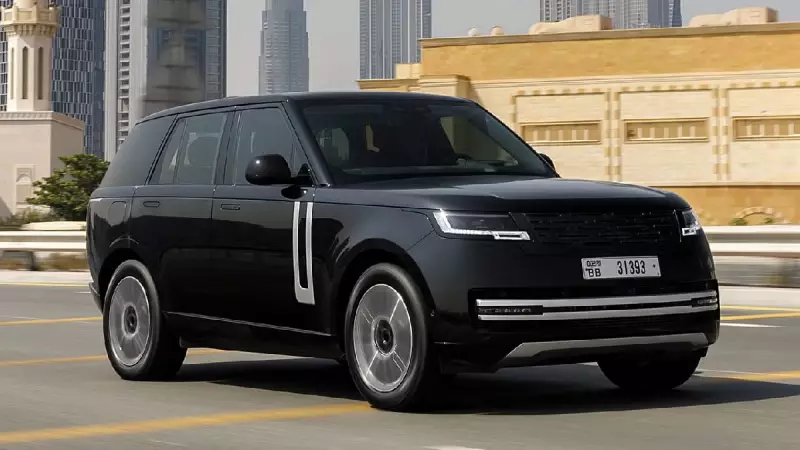
The Indian luxury car market is gearing up for a significant transformation, with two major global players, Jaguar Land Rover (JLR) and Lexus, charting aggressive expansion plans for the country. According to industry reports, both automakers aim to substantially enrich their Indian portfolios by the year 2026, introducing a mix of new and updated models, including crucial electric vehicles (EVs). This strategic move is set to intensify competition in the premium automotive space, offering affluent Indian consumers a wider array of cutting-edge choices.
Jaguar Land Rover's Electrified Roadmap for India
Jaguar Land Rover, under the ownership of Tata Motors, is preparing to redefine its presence in the Indian market. The British marque is expected to discontinue several existing models to make way for a new generation of vehicles built on modern, electrified architectures. A key highlight of this strategy is the anticipated launch of the all-electric Range Rover Velar in 2026.
This move aligns with JLR's global 'Reimagine' strategy, which focuses on electrification and modernization. The new Velar EV is likely to be based on the brand's flexible Modular Longitudinal Architecture (MLA), designed to accommodate pure electric, plug-in hybrid, and mild-hybrid powertrains. This launch will mark a pivotal step in JLR's electric journey in India, catering to the growing demand for sustainable luxury.

Furthermore, the iconic Land Rover Defender is also slated for a major update around the same period. The refreshed model is expected to feature significant design tweaks, enhanced technology, and more efficient powertrain options, solidifying its position as a rugged yet refined offering in the luxury SUV segment.
Lexus Aims to Strengthen Its Niche with New Launches
On the other side of the ring, Toyota's luxury division, Lexus, is also sharpening its focus on India. The brand, known for its hybrid prowess and exceptional build quality, plans to expand its relatively compact lineup to attract a broader set of buyers. A major launch on the horizon is the next-generation Lexus UX crossover, expected to arrive in 2026.
The new UX will likely undergo a comprehensive redesign, potentially moving to Toyota's advanced TNGA (Toyota New Global Architecture) platform. This shift promises improvements in driving dynamics, interior space, and overall efficiency. Given Lexus's commitment to electrification, the updated UX is expected to offer strong hybrid, and possibly even a pure electric variant, providing Indian customers with eco-conscious luxury mobility solutions.
Lexus's strategy appears to be one of calculated growth, focusing on introducing vehicles that blend performance, luxury, and sustainability—a combination that resonates well with modern, discerning Indian consumers.
Impact on India's Evolving Luxury Car Landscape
The planned expansions by JLR and Lexus signal a vote of confidence in the long-term potential of India's luxury automobile market. Despite its relatively small volume compared to mass-market segments, the premium category is witnessing steady growth, driven by increasing affluence and a desire for advanced technology and distinctive brands.
The introduction of new models, especially electric ones, will accelerate the adoption of EVs in the luxury space. It will also force other established players like Mercedes-Benz, BMW, and Audi to further innovate and localize their offerings to maintain market share. For the Indian consumer, this heightened competition translates to more choices, better technology, and potentially more competitive pricing in the long run.
In conclusion, the years leading up to 2026 are poised to be transformative for luxury car aficionados in India. With Jaguar Land Rover and Lexus committing to a fresh wave of products, the market is set to become more dynamic, innovative, and environmentally conscious than ever before.