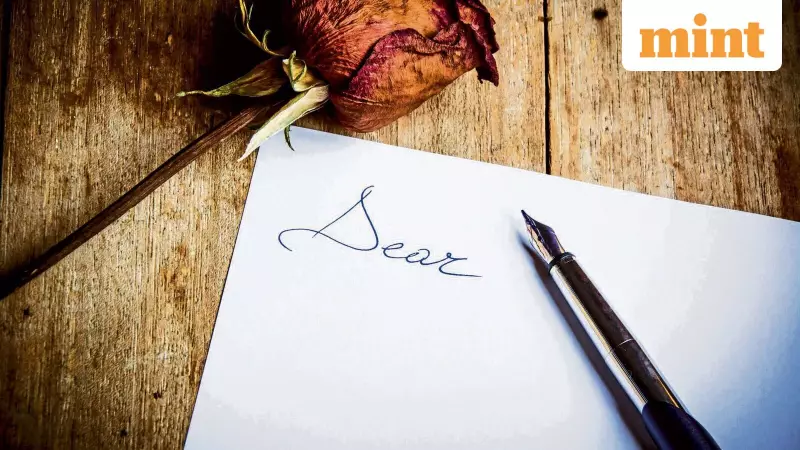
As the year 2025 neared its end, a season for introspection, I attempted to write a letter to myself. The process halted abruptly after the word "Dear." I found myself utterly confused about how to address the person I was writing to. This simple struggle opened a profound window into the complex relationship we have with our names and, by extension, our identities.
The Shifting Landscape of Our Names
For many Indians, our earliest identity is often a pet name. Known as ghar ka naam in Hindi or daak naam in Bangla, this intimate title is used by family long before we learn our official, 'good' name for the outside world of school and formalities. This nickname represents our first social self.
However, as we grow older and often move away from our childhood homes, the circle of people who use that name shrinks dramatically. New social circles introduce new labels. Friends create affectionate variants, adding vowels like 'u,' 'i,' or 'ie' to shortened forms. Colleagues adopt convenient abbreviations for efficiency. The original pet name can begin to feel like a relic, a key to a room we seldom visit.

Nicknames Are More Than Just Labels
A nickname is not merely what someone calls you. It is a reflection of how they perceive you and, in turn, influences how you see yourself within that relationship. While a specific study on losing this early identity link may be scarce, sociolinguistics firmly establishes the role of nicknames in forging our sense of self.
A 2024 study published in the Swiss journal MDPI examined street children in south-western Nigeria. It revealed that the act of nicknaming themselves and their peers was a conscious strategy for building identity and resilience. It helped them construct a stable sense of self despite living in oppressive conditions.
Another 2024 report from Harvard Business Review delved into workplace dynamics. It found that when employees give nicknames to their supervisors (upward nicknaming), it can foster feelings of psychological safety and respect among the staff. Conversely, when a supervisor nicknames a subordinate without consent (downward nicknaming), it often negatively impacts the employee's well-being.
Gogol, Nikhil, and the Bridge to Memory
The literary world offers a powerful exploration of this theme. In Jhumpa Lahiri's celebrated novel The Namesake, the protagonist Nikhil Ganguli spends years rejecting his pet name, Gogol. He prefers his formal 'good name,' seeing 'Gogol' as a burden from his past.
It is only after his father's death that Nikhil begins to comprehend the profound weight and history carried by the name Gogol. He understands its connection to his father's survival and past. Ultimately, the name transforms from a burden into a poignant bridge to his father's memory and his own heritage.
This narrative raises a haunting question: when the people who used our childhood names fade from our daily lives, do we lose a vital portal to our younger selves? Psychology emphasizes the importance of staying connected to the 'inner child'—the authentic self that existed before we learned to perform for the world. Could our childhood nickname be the voice code that activates that version of ourselves?
The hesitation over how to address myself in a simple letter was, therefore, about much more than a salutation. It was a confrontation with a fundamental question: Who do I believe I am when I speak to myself? Am I the person known by the official name or the one called by the childhood pet name? Within that confusion lies a quiet fear—the fear that a part of my identity, a part that only that old nickname could summon, might have slipped away, waiting to be called back into being.