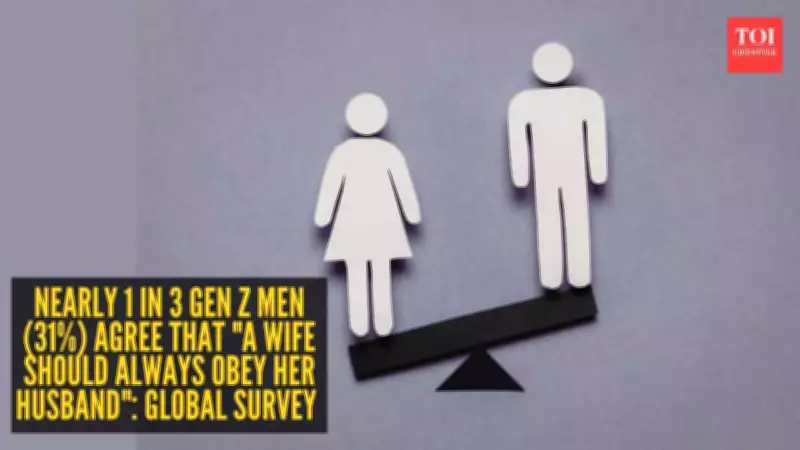
Gen Z Men Double Down on Traditional Gender Norms, Survey Exposes Unexpected Trend
In an era where digital connectivity and inclusive education define youth culture, one might assume Generation Z would champion progressive values. However, a groundbreaking survey released on March 5, coinciding with International Women's Day, has unveiled a startling contradiction. Conducted by King's College London and Ipsos across 29 countries, the study reveals that Gen Z men, born between 1997 and 2012, are reinforcing traditional gender roles more strongly than their fathers or grandfathers. This finding challenges the perception of a "woke" generation and signals a significant societal shift.
The "Obedience" Gap: A Surprising Preference for Hierarchy
The survey's most striking statistic indicates that nearly one in three Gen Z men, or 31%, agree that "a wife should always obey her husband." In contrast, only 13% of Baby Boomers hold this view. This disparity suggests that young men today are more inclined toward hierarchical relationships than those who lived through earlier decades marked by rigid gender norms. Meanwhile, just 18% of Gen Z women support this notion, creating a profound sociological divide. Experts attribute this trend to a "backlash" effect, where some men seek to reclaim control in response to women's increasing independence and societal uncertainty.
The "Boss Babe" Paradox: Conflicting Desires in Modern Partnerships
Gen Z men exhibit contradictory attitudes toward women's roles. The survey found that 41% of them find career success and ambition in women highly attractive, the highest rate among all age groups. They appreciate partners who contribute financially to households. Yet, a twist emerges: 24% of these same men believe women should not appear "too independent" or "self-sufficient," and 21% think a "real woman" never initiates sex, a rate triple that of Boomers. Kelly Beaver, head of Ipsos UK, describes this as the "great re-negotiation," where men desire the benefits of dual-income setups while expecting partners to adhere to traditional subservience, fueling dating burnout and emotional labor imbalances.

The "Tough Guy" Prison: Self-Imposed Restrictions on Male Vulnerability
These regressive views not only limit women but also confine Gen Z men themselves. Approximately 30% of young men believe men should not express affection by telling friends "I love you," compared to only 20% of Boomers. Julia Gillard, chair of the Global Institute for Women's Leadership, notes that many Gen Z men are trapping themselves within restrictive gender norms. Influenced by "hustle culture" and online forums promoting stoicism as strength, they face increased loneliness and anxiety, isolating themselves by suppressing emotions in pursuit of perceived toughness.
The Ghost of Social Pressure: Misreading Progressive Societal Norms
A curious aspect of the survey highlights a disconnect between reality and perception. Globally, just 21% of people actually believe men should dominate household decisions, yet 31% perceive societal pressure to conform to this traditional role. Professor Heejung Chung, director of the Global Institute for Women's Leadership, terms this "false pressure," driven by polarized voices on social media that create an illusion of widespread conservatism. This gap underscores the need for honest, in-depth conversations beyond superficial online interactions to align perceptions with actual progressive trends.
Implications for the Future: Beyond Dating to Broader Societal Issues
This trend extends beyond relationship dynamics, impacting workplaces, mental health, and societal cohesion. As women increasingly seek egalitarian partnerships, a growing segment of men yearn for a return to tradition, risking widespread resentment. Addressing this divide requires curiosity rather than judgment, emphasizing that gender equality benefits all by alleviating financial burdens, allowing emotional expression, and fostering genuine partnerships over subordinate roles. Bridging this gap is crucial for a harmonious future, where mutual respect replaces outdated hierarchies.