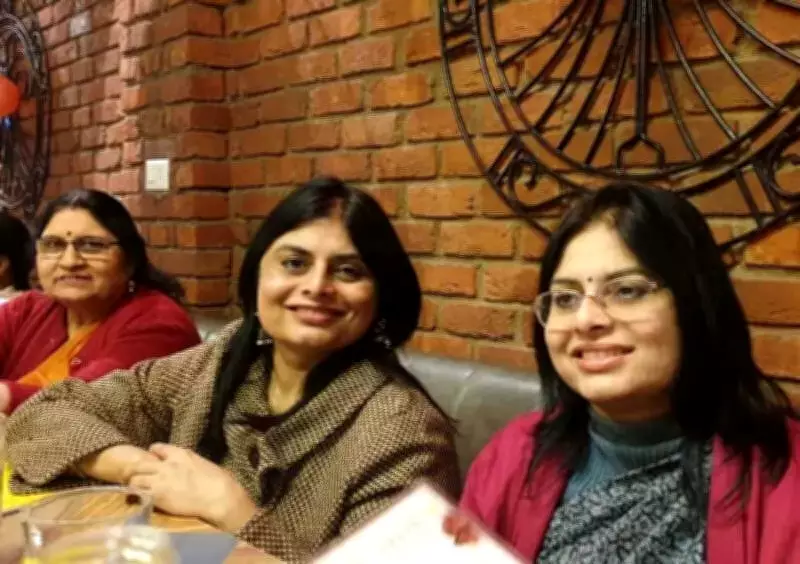
Redefining Family Bonds: Indian Mothers-in-Law Champion Daughters-in-Law's Ambitions
In a society where the mother-in-law and daughter-in-law relationship is often caricatured through jokes about kitchen conflicts and subtle sabotage, a powerful counter-narrative is emerging. Across India, numerous women are actively dismantling these stereotypes, forging bonds built on mutual respect, love, and unwavering support. These stories highlight a transformative shift in family dynamics, where maternal figures become pillars of empowerment rather than sources of tension.
Manju Dixit: The Early Morning Superhero
Manju Dixit, a 67-year-old resident of Ghaziabad, exemplifies this new paradigm. Despite battling acute rheumatoid arthritis, she begins her day at 4 AM, preparing meals for her daughters-in-law and grandchildren. This daily act of dedication allows her talented daughters-in-law, Ritvija and Manisha, to focus entirely on their demanding careers as an ophthalmologist and an architect, respectively.
"My mother-in-law is a rockstar," declares 45-year-old Ritvija. "She showers us with love, support, and friendship. It is crazy how society focuses on the drama, but our family has a different vibe. I'm treated like a daughter, and this has made our household super loving." Manju herself challenges the stereotype, stating, "Not all in-laws are conservative who want their ‘bahus' to pull a ‘ghoonghat' (veil) or touch their feet in the morning."

Vibha Dube: Sacrificing Business for Family
In Prayagraj, 62-year-old Vibha Dube made a significant personal sacrifice to support her daughter-in-law's aspirations. She permanently closed her decade-old creche business to manage household responsibilities and care for her two-year-old grandchild. This decision enabled her daughter-in-law, Toshi, to pursue a career in law without the burden of childcare.
"Real-life relationships are way more different from what we see on television," Toshi recalls. "Closing a decade-old creche was not easy, but my mother-in-law did it for me despite my husband's opposition." This act underscores a profound commitment to familial support over traditional expectations.
Gayatri Agnihotri: A Bold Financial Decision
Gayatri Agnihotri, 67, from Lucknow's Vrindavan Yojana, took an even more drastic step. Following her husband's death in 2021, she sold her house in Prayagraj, one of her primary sources of livelihood, to finance her daughter-in-law's relocation to Mumbai. This move was crucial for her daughter-in-law to advance her career in scriptwriting, a field requiring opportunities in metropolitan centers.
Gayatri's rationale was simple yet powerful: "If it were my daughter, I would not have hesitated. Why should it be different for a daughter-in-law?" By going against her family's wishes, she prioritized her daughter-in-law's professional dreams, redefining the boundaries of maternal support.
The Broader Impact on Societal Perceptions
These narratives collectively challenge the pervasive media portrayal of in-law relationships as inherently contentious. They demonstrate that:
- Mothers-in-law can be invaluable allies and confidantes.
- Personal sacrifices, whether daily routines or major life changes, can catalyze career growth for younger women.
- Familial bonds can thrive on empowerment rather than control.
As Ritvija notes, "Growing up, I was surrounded by stories of the stereotypical mother-in-law – the one who is nagging and controlling. I even saw it happening around me, and in movies and TV serials. But my mother-in-law proved that this relationship can also be positive and loving." These stories serve as a beacon, encouraging a reevaluation of deep-seated cultural norms and celebrating the strength found in supportive, unconventional family structures.