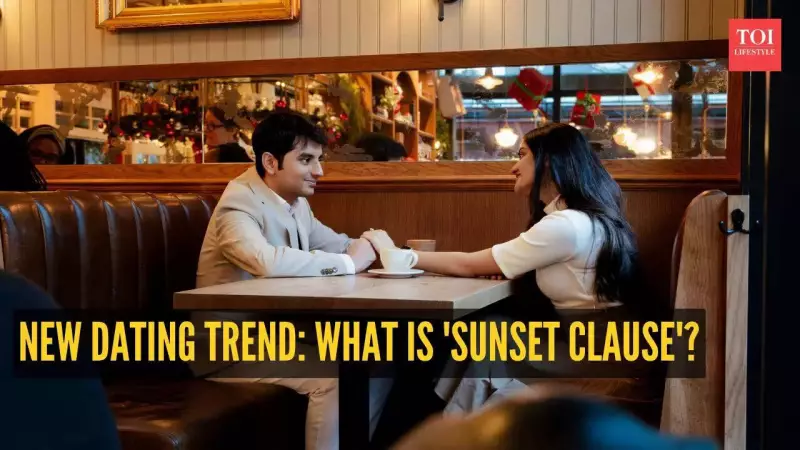
Are you exhausted by the endless cycle of swiping, matching, and ghosting on dating apps? A significant shift is reshaping the romantic landscape for young Indians, moving from aimless chats to purpose-driven connections. Welcome to the era of the "Sunset Clause," a new trend where singles are proactively setting expiration dates on their matches and even the apps themselves to safeguard their time and emotional energy.
What Exactly Is the Sunset Clause in Dating?
Picture this: you connect with an interesting person online. Instead of letting the conversation drift indefinitely or fizzle out over months, you both mutually agree on a trial period—say, six months or a year. If the relationship hasn't progressed to a committed stage or shown significant potential by that deadline, you part ways amicably. This is the core of the Sunset Clause.
Inspired by timelines in business contracts, daters are now importing this concept into their love lives to prevent years of ambiguous "situationships." A recent survey by the dating app QuackQuack, as reported by MidDay, provides concrete data on this shift. The poll, which involved 7,583 singles between the ages of 22 and 35 from Tier 1 to Tier 3 Indian cities, revealed that a substantial 37% are now practicing some form of time-bound dating.

Commenting on this cultural pivot, QuackQuack's CEO, Ravi Mittal, noted that users are increasingly seeking "outcome-based dating" rather than engaging in perpetual, directionless chatting. Whether viewed as a pragmatic strategy or a cold-hearted approach, the Sunset Clause forces individuals to seek clarity about their romantic futures.
Why 2026 is Being Called the Sunset Clause Era
The trend is a direct response to the widespread dating fatigue that set in post-2024. A generation of singles, weary of being ghosted, subjected to lukewarm communication, and stuck in never-ending "talking stages" that last years, has declared war on wasted time. The pandemic served as a stark reminder that time is precious, pushing people to protect their emotional bandwidth.
Mittal elaborated that young daters have evolved from seeking casual flings to pursuing calculated compatibility. The focus has shifted towards aligning on foundational life aspects. Career goals and similar lifestyles are now often prioritized over mere chemistry or shared hobbies. For many, dating apps are now tools with a specific purpose, not platforms for procrastination.
The Potential Pitfalls of Putting Love on a Clock
However, this transactional approach to romance is not without its critics. A significant downside of the Sunset Clause is that it can make relationships feel like a business deal, stripping away the organic, unpredictable nature of falling in love. Critics argue that genuine connection cannot be forced into a rigid timeline, and what is meant to be will find its own way, irrespective of deadlines.
The key question remains: Does this method of time-boxing romance fast-track people toward meaningful, lasting love, or does it doom potential relationships by imposing artificial pressure? The data suggests it's a popular experiment among India's urban and suburban youth, aiming to bring intention back into the digital dating game.