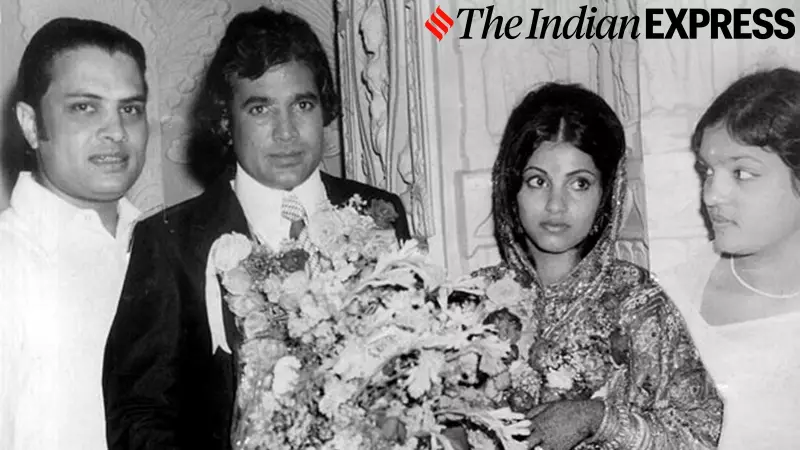
The iconic but turbulent marriage of Bollywood's first superstar Rajesh Khanna and teenage sensation Dimple Kapadia is often remembered for its dramatic beginning and painful end. A key point of conflict, as recently recalled by a veteran journalist, was Khanna's firm restriction on Kapadia's acting career after their wedding.
The Clash of Expectations in a Fairytale Wedding
In 1973, a 16-year-old Dimple Kapadia, fresh from the massive success of her debut film Bobby, married 32-year-old superstar Rajesh Khanna. Her promising career came to an abrupt halt as Khanna, at the peak of his fame, banned her from working in films. Veteran journalist Pooja Samant, who interviewed Khanna in the 1980s, recently shed light on his mindset. She recalled that Khanna believed his wife's primary duty was to manage the household and his family.
"He was at the top of the game, and he was a superstar, and he wanted a wife who would take care of everything," Samant stated in an interview with Hindi Rush. She explained that Khanna did not see the need for his wife to earn, as he had ample wealth. This perspective directly clashed with Dimple's own awareness of her talent and her desire to work, a divergence Samant cites as a fundamental reason for their eventual separation in 1984.

Psychological Impact of Restrictive Marital Roles
How do such differences in expectations around career and domestic roles affect a marriage's health? Licensed rehabilitation counsellor and psychotherapist Sonal Khangarot explains that these roles are full-time responsibilities consuming daily life. When one partner's contribution clashes with the other's expectations, it can lead to deep-seated issues.
"It can lead to feelings of being undervalued or 'doing nothing'," Khangarot tells indianexpress.com. This mismatch often breeds frustration, remorse, and agitation, eroding the sense of belonging within the relationship. Over time, it can fuel unhealthy comparisons and create significant emotional distance. The expert emphasises that open communication, flexibility, and mutual respect are crucial to balancing these roles without building resentment.
Navigating Personal Ambitions and Relationships
For couples facing similar dynamics, Khangarot suggests practical steps. Acknowledging that both personal ambitions and family responsibilities are valid and demanding is the first step. Using "I feel" statements instead of blame can reduce defensiveness and open space for vulnerability. Regular check-ins, rather than waiting for frustration to peak, allow for adjustments as circumstances change.
Psychologically, it's vital to recognise that imbalance is not always permanent. There will be seasons where one partner's career needs more focus, while at other times, family responsibilities may take priority. For asserting independence within a relationship, Khangarot advises beginning with self-awareness and setting clear, non-negotiable boundaries around career aspirations.
Assertive, non-confrontational communication helps the partner understand without escalating defensiveness. Reframing the conversation to show how personal growth can strengthen the family's overall well-being—financially and emotionally—can be more effective than directly challenging traditional views.
Dimple Kapadia eventually returned to cinema years after the separation, rebuilding a celebrated career on her own terms. The story of their marriage remains a poignant case study in how rigid gender roles and unmet personal aspirations can strain even the most glamorous of unions, highlighting timeless lessons on compromise and respect in partnerships.