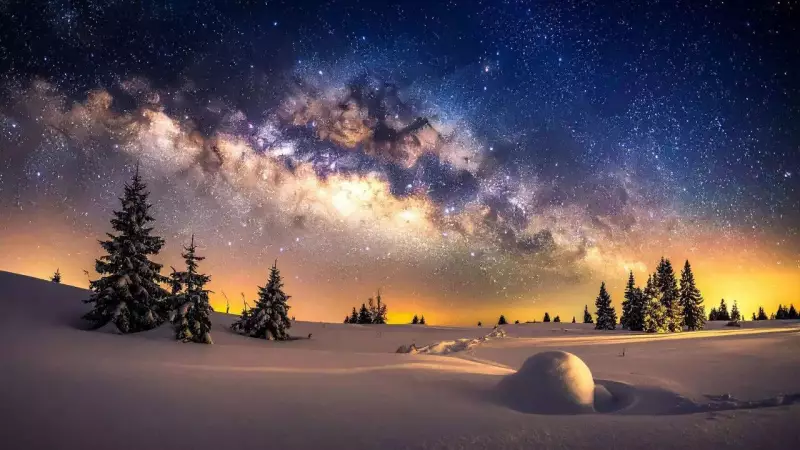
For countless generations, the shimmering band of the Milky Way arching across the night sky has captivated humanity. This breathtaking view of our own galaxy, a river of stars, nebulae, and cosmic dust, remains a profound experience that unites professional astronomers and casual stargazers. To truly appreciate this celestial wonder, one must escape the pervasive glow of city lights and seek out remote sanctuaries of darkness, often found in high-altitude mountains or vast, uninhabited deserts.
World's Premier Stargazing Sanctuaries
From the deserts of Chile to the glaciers of New Zealand, specific locations around the globe offer unparalleled clarity for observing the Milky Way. These sites combine high elevation, minimal light pollution, and often dramatic landscapes that create the perfect foreground for both observation and astrophotography. Here is a curated list of the ten best global destinations for an immersive galactic experience.
1. Arches National Park, USA
Located in Utah, Arches National Park is a premier stargazing location in the United States. Its high desert plateau, sitting above 5,000 feet, offers a clean, dry atmosphere far from urban light pollution. The park's iconic sandstone formations, like Delicate Arch and Balanced Rock, provide surreal and photogenic backdrops against the Milky Way, creating otherworldly compositions for photographers.

2. Banff National Park, Canada
Nestled in the Canadian Rockies in Alberta, Banff National Park boasts some of North America's finest Milky Way views. Locations along the Icefields Parkway, at elevations above 6,000 feet, are particularly pristine. The combination of towering mountain peaks, ancient glaciers, and exceptionally dark skies makes this a remote and ideal setting for capturing the galaxy's grandeur.
3. Roque de los Muchachos, La Palma, Spain
The Canary Island of La Palma is an international hub for astronomy. Roque de los Muchachos, its highest peak at nearly 8,000 feet, rises above the cloud layer, ensuring crystal-clear skies. Strict local lighting laws combat light pollution, and the site is home to a world-class astronomical observatory, underscoring its stellar credentials.
4. The Dolomites, Italy
While Europe struggles with light pollution, the Dolomites in Italy offer a dark-sky refuge. Isolated alpine villages and peaks reaching 10,000 feet guarantee exceptionally dark conditions. Landmarks such as Tre Cime di Lavaredo allow observers to witness the Milky Way's core amidst breathtaking alpine scenery.
5. The Sahara Desert, Tunisia
The vast, empty expanses of the Sahara Desert, particularly in regions of Tunisia, deliver some of the darkest skies on Earth. The immense distance from population centers means virtually zero light interference, allowing the Milky Way to shine with uninterrupted brilliance. The endless sandy landscapes offer simple, powerful foregrounds for astrophotography.
6. Mount Bromo, Indonesia
In East Java, the volcanic landscape of Mount Bromo (7,500 feet) provides a unique and dramatic stage for the Milky Way. The active volcano's ash plains and rugged peaks create compelling foregrounds, while its remote location ensures dark skies. This destination is a favorite among astrophotographers in Asia.
7. Namib Desert, Namibia
As one of the oldest deserts on the planet, the Namib Desert offers exceptionally clear skies in the Southern Hemisphere. Its giant sand dunes and ancient, skeletal trees create iconic and haunting silhouettes against the starry canvas. The region's long observing season and pristine conditions attract photographers worldwide.
8. Atacama Desert, Chile
Renowned as the driest non-polar desert, Chile's Atacama Desert is arguably the best place in the Southern Hemisphere to view the Milky Way. At altitudes around 8,000 feet, it enjoys an astonishing 330 clear nights per year. It hosts major observatories like ALMA and Cerro Tololo, and its arid, thin atmosphere provides razor-sharp views of the galactic center.

9. Wollemi National Park, Australia
This remote wilderness in New South Wales, part of the Greater Blue Mountains UNESCO World Heritage Area, features vast, light-pollution-free skies. The inaccessibility of much of Wollemi National Park protects its darkness, making it a premier destination for Australian stargazers to observe the galactic band in solitude.
10. Tasman Glacier, New Zealand
The South Island of New Zealand, with its sparse population, offers excellent dark skies. The area around the Tasman Glacier provides a high-elevation, glacial landscape that serves as a stunning foreground for the Milky Way. Despite the glacier's retreat, the site remains accessible for unforgettable night-sky viewing.
How to Find Dark Skies Near You
Traveling to these global hotspots may not always be feasible. However, you can still locate worthwhile stargazing sites closer to home by following a few key strategies.
First, consult light pollution maps, which use a color code: black and blue areas indicate excellent dark skies, green is moderate, yellow and orange are poor, and red zones mean the Milky Way is essentially invisible.
Secondly, seek higher ground. Elevation reduces atmospheric interference, leading to clearer, steadier views of the stars. Finally, actively avoid artificial lights. Position yourself outside city limits, away from streetlights, buildings, and any other source of glare that can wash out the faint glow of our galaxy.
By combining these methods—using light pollution maps, choosing elevated locations, and minimizing exposure to artificial light—amateur astronomers and night-sky enthusiasts can successfully find local sanctuaries to enjoy and photograph the magnificent Milky Way.