Recently, a 7.8 magnitude earthquake shook the Philippines. Earthquakes are among the most unpredictable natural disasters, often associated with destruction and loss of life. However, some places on Earth have been transformed by powerful quakes into geological wonders, memorials, and landscapes that now draw curious travelers from around the globe. Here is a look at 10 such locations.
1. Earthquake Lake, Montana, U.S.
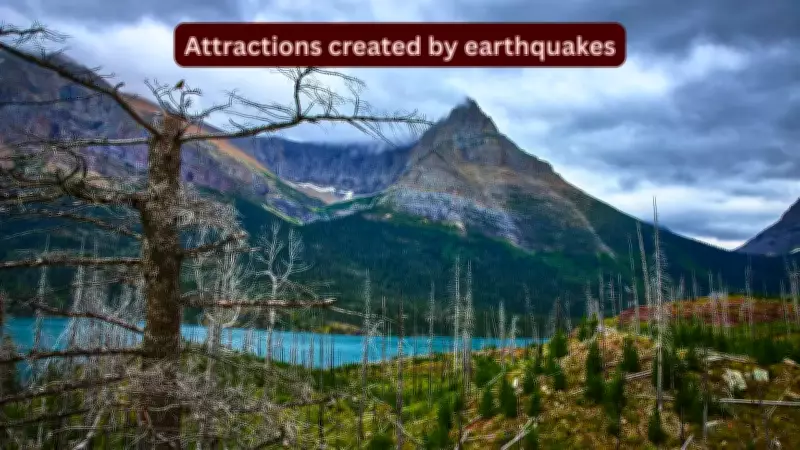
Also known as Quake Lake, this scenic body of water was formed on August 18, 1959, when a magnitude 7.3 earthquake triggered a massive landslide that blocked the Madison River. The lake was created overnight. Today, visitors enjoy recreational activities such as boating and hiking in the area.
2. Allah Bund, Rann of Kutch, Gujarat, India
Allah Bund, meaning “Dam of God,” is a natural embankment nearly 80 kilometers long, created by the 1819 Kutch earthquake. Although much of it has eroded over time, the remaining structure stands as a spectacular example of how earthquakes can reshape landscapes.

3. Lake Sarez, Tajikistan
Lake Sarez was formed in 1911 when a powerful earthquake caused a landslide that blocked the Murghab River valley in the Pamir Mountains. Surrounded by towering peaks, the lake now attracts adventurous travelers seeking remote natural wonders.
4. Kaikōura, New Zealand
The 2016 magnitude 7.8 earthquake on New Zealand’s South Island created multiple faults and is considered one of the most complex earthquakes ever studied. Parts of the coastline were uplifted by several meters, exposing reefs. This geological phenomenon draws both tourists and scientists.
5. San Andreas Fault, California, U.S.
At the San Andreas Fault, one of the world’s most famous fault lines where the Pacific and North American tectonic plates meet, visitors can walk, hike, and even stand astride the boundary. It is a premier destination for geology enthusiasts.
6. Tangshan Earthquake Memorial Park, China
Built in memory of the devastating 1976 Tangshan earthquake, this park serves as a site for reflection and education. It attracts history buffs and those interested in disaster heritage.
7. Port Royal Archaeological Site, Jamaica
Port Royal was a notorious pirate hub known as the “Wickedest City on Earth.” During a 1692 earthquake, much of the city sank into the sea. Today, it is a fascinating underwater archaeological site, drawing divers and historians.
8. Fault Scarp Trail, California, U.S.
The Fault Scarp Trail follows dramatic fault scarps created during the 1872 earthquake. Visitors can witness displaced sections of Earth’s crust, making it a popular attraction for those interested in geology.
9. Kobe Earthquake Memorial Park, Japan
Located in HAT Kobe, this memorial park preserves a section of waterfront damaged during the 1995 Great Hanshin Earthquake. It serves as a powerful reminder of the disaster’s impact.
10. Wairarapa Fault, North Island, New Zealand
The Wairarapa Fault was formed during the 1855 Wairarapa earthquake, which created one of the world’s most visible fault scarps. Parts of the landscape still clearly show the effects of the earthquake, attracting geologists and tourists alike.