10 Strangest Trees in the World and Where Travelers Can Find Them
Some trees are so unusual that they appear to belong more to a fairy tale than to the plant kingdom. From umbrella-shaped canopies to bottle-like trunks, giant mushroom forms, and roots that seem to grow upside down, these botanical marvels are scattered across the globe. Many have survived for centuries in harsh climates, while others are steeped in myth, spirituality, and mystery. These remarkable trees are not merely botanical curiosities; they have become destinations in their own right, attracting photographers, hikers, nature enthusiasts, and adventure travelers from around the world. Below is a curated list of ten weird yet awe-inspiring trees that travelers can encounter in various corners of the planet.
The Dragon’s Blood Tree
This tree features an umbrella-like crown and twisted branches, resembling something from a science fiction film. Its most peculiar characteristic is the dark red sap known as “dragon’s blood,” which was historically used as dye, medicine, incense, and varnish. The tree’s distinctive shape evolved as an adaptation to its habitat on Socotra Island. Where to find it: Socotra Island, Yemen.
Baobab
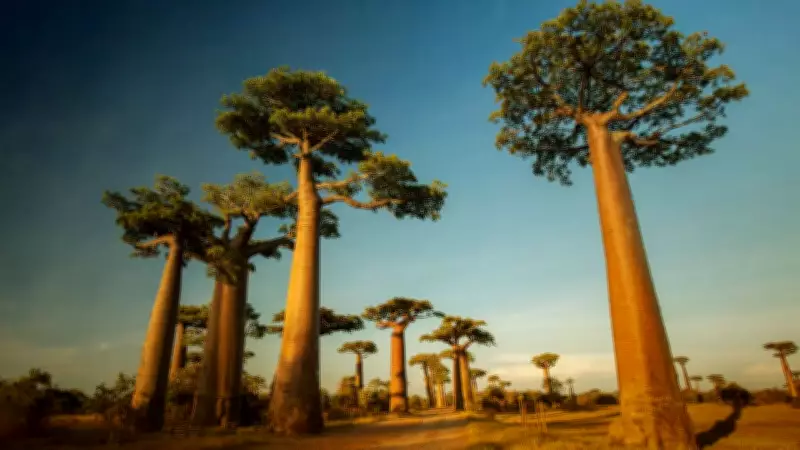
One of the most iconic trees, the baobab is renowned for its swollen trunk and branches that resemble roots reaching skyward, earning it the nickname “upside-down tree.” Baobabs can live for over a thousand years by storing thousands of liters of water in their trunks to endure prolonged dry spells. In Madagascar, the Avenue of the Baobabs is one of the most photographed locations in the country. Where to find it: Madagascar, mainland Africa (Tanzania, Botswana).

Rainbow Eucalyptus
The rainbow eucalyptus appears artificially colored as its bark peels away to reveal stripes of green, blue, orange, maroon, and purple. These colors continuously change over time. Native to tropical regions, this fast-growing tree can reach impressive heights. Its painted-looking trunk has made it a favorite among travelers. Where to find it: Philippines, Indonesia, Hawaii.
Giant Sequoia
The giant sequoia is one of the largest living organisms on Earth by volume. It can grow up to 250 feet tall and live for over 3,000 years. Standing beside one feels more like being near a natural monument than a tree. The General Sherman Tree in Sequoia National Park is the largest living single-stem tree by volume. Where to find it: California, United States.
Walking Palm
According to popular myth, the walking palm can move from place to place. Its unique root structure helps it stand firm in rainforest mud and creates the illusion of walking. Where to find it: Costa Rica and parts of the Amazon Rainforest.
Great Banyan
India’s banyan tree is famous for its extensive root system, making a single tree appear like an entire forest. The Great Banyan in Kolkata covers several acres. Remarkably, it survived even after its main trunk was removed due to disease in the 19th century. Where to find it: Kolkata, India.
Cannonball Tree
The cannonball tree produces heavy, round fruits resembling rusty cannonballs that hang directly from the trunk. When they fall, they split open with a strong odor that attracts wildlife. The tree is also valued for its fragrant flowers and is often planted near temples in South Asia due to its significance in Buddhism. Where to find it: Sri Lanka, India, and South America.
Crooked Forest
Near the Polish town of Gryfino lies the Crooked Forest, where hundreds of pine trees are dramatically bent at the base. The cause of this unusual shape remains a mystery; theories range from intentional human intervention during World War II to natural factors like heavy snow or gravity. Where to find it: Poland.
The Boab
Australia’s boab tree has a thick, swollen trunk that stores moisture during droughts. The largest specimens have such wide diameters that ancient people used them as shelters from rain. Their unique appearance stands out starkly against the Australian landscape. Where to find it: Kimberley region, Western Australia.

Kapoks in Ta Prohm
The sight of gigantic kapok tree roots enveloping the ruins of Ta Prohm is one of the world’s most awe-inspiring tourist attractions. The massive roots wind around ancient stone structures, creating the impression that the jungle is slowly consuming the temple complex. This site gained global fame through films and photographs, making Ta Prohm a must-visit destination in Cambodia. Where to find it: Near Angkor Wat, Cambodia.