

12 Strangest Place Names in the World and Their Fascinating Stories
Geographic names often serve serious purposes, defining boundaries and reflecting cultural heritage, but they can also be a source of amusement and curiosity. From the icy expanses of Antarctica to the coastal regions of Turkey, many places boast names that offer adventure seekers unique photo opportunities and historians rich narratives to explain. While these names might provoke laughter in English, each carries a deep history rooted in language, accidental origins, or the legacy of the people who settled there. Some names stem from 19th-century marketing attempts, others from mistranslations of ancient dialects, and a few from the quirks of colonial societies.
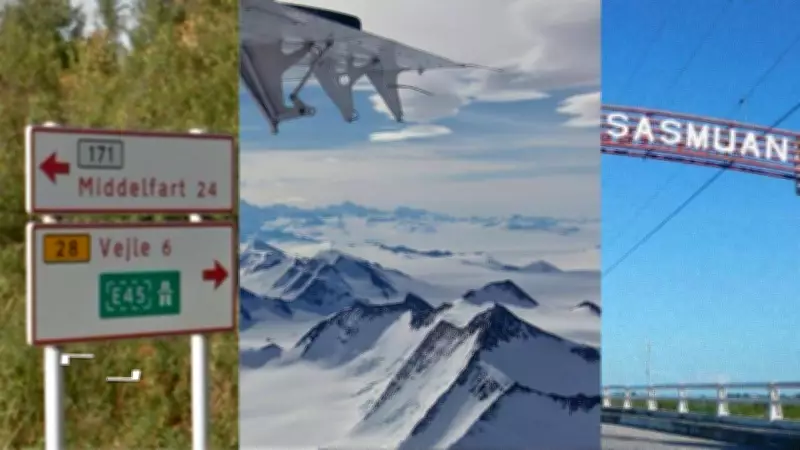
The following destinations prove that reality can be stranger—and often funnier—than fiction. This journey takes us from the remote peaks of the Executive Committee Range in Antarctica to the shores of Useless Harbour in Australia, revealing the intriguing stories behind these bizarre monikers.
Gobbler’s Knob, USA
The world-famous weather-predicting groundhog, Punxsutawney Phil, calls Gobbler’s Knob in Punxsutawney, Pennsylvania, his home. Groundhog Day was first formally celebrated here on February 2, 1887, drawing on German folklore that if a groundhog sees its shadow, winter will persist for six more weeks. Today, this site has evolved into a major cultural landmark, attracting tourists from across the nation to witness this quirky tradition.

Executive Committee Range, Antarctica
Discovered by the United States Antarctic Service Expedition in 1940 in Marie Byrd Land, this mountain range was named after the committee that oversaw the expedition. Four of its five main peaks—Mount Hampton, Mount Cumming, Mount Hartigan, and Mount Waesche—honor individual members of the U.S. government from different departments, while the fifth peak, Mount Sidley, was named by explorer Richard Byrd.
Disappointment Islands, French Polynesia
British explorer John Byron named the Napuka and Tepoto atolls the Disappointment Islands in 1765 after encountering a hostile reception from the local inhabitants and struggling to find a suitable landing spot or fresh water. Located in the Tuamotu Archipelago, these atolls remain among the most pristine and untouched inhabited locations in the Pacific Ocean.
No Name, USA
In Garfield County, Colorado, the community of No Name got its unusual title from a bureaucratic mishap during the construction of Interstate 70. Legend has it that either a blank space was left on government paperwork or residents jokingly provided "No Name" when asked for their community's name. The Wyoming Department of Transportation adopted this on highway exit signs, and it eventually became the official name, much to the delight of passing drivers.
Monster, Netherlands
Despite its ominous sound, the name Monster originates from the Latin word monasterium, meaning monastery. In the 13th century, the area was a religious center, leading to the Old Dutch term Monstier for "large church." Today, known as Westland, this region is globally recognized for its extensive greenhouse horticulture production and beautiful North Sea beaches.
Llanfairpwllgwyngyllgogerychwyrndrobwllllantysiliogogogoch, Wales
With 58 letters, this village on Anglesey, Wales, holds the record for the longest place name in Europe. Created in the 1860s by a local tailor to attract customers to a pub near a new railway station, the name translates to "St. Mary's Church in the Hollow of the White Hazel, near to a Rapid Whirlpool, and St. Tysilio's Church."
Sasmuan (Formerly Sexmoan), Philippines
The municipality of Sasmuan in Pampanga was renamed in 1991 from Sexmoan to avoid misunderstandings. The new name, derived from a Kapampangan word meaning "to meet or place of meeting," reflects the site's historical role as a gathering point for early inhabitants. This coastal community continues to thrive as a vital hub for fishing and aquaculture.

Pee Pee Township, USA
Pee Pee Township in Pike County, Ohio, takes its name from Pee Pee Creek. Local lore suggests that an early settler with the initials P.P. carved them into a beech tree along the creek bank, leading to the creek's name and, subsequently, the township's. Established in the early 19th century, it was among the first settled areas in the region.
Batman, Turkey
The city and province of Batman in Turkey derive their name from the Batman River, a tributary of the Tigris River. While it evokes the superhero Batman from DC comics, the name likely comes from an Ottoman weight unit or the nearby mountain, Bati Raman, abbreviated. After oil was discovered here in the late 1940s, Batman became a key player in Turkey's oil production and distribution.
Silly, Belgium
Silly, a municipality in Belgium, is named after the Sille stream (called Zulle in Dutch). Though it may amuse English speakers, the name simply describes the local geography. Known as a rural community, Silly is also home to Brasserie de Silly, a brewery that has been serving the area since the mid-1800s.
Useless Harbour, Australia
French explorer Henri-Louis de Freycinet named this site Havre Inutile in 1801 out of frustration with a sandbar blocking the harbor entrance. Now called Useless Loop, it has transformed into a productive commercial location for solar salt production. Situated in the UNESCO World Heritage-listed Shark Bay, it is celebrated for its ecological diversity.
Middelfart, Denmark
Middelfart, recorded since at least 1231, comes from old Danish words mæthal (middle) and far (way/passage), referring to its central location on a ferry route from Funen island to Jutland. Today, it is a charming coastal town renowned for its maritime history and numerous bridges.





