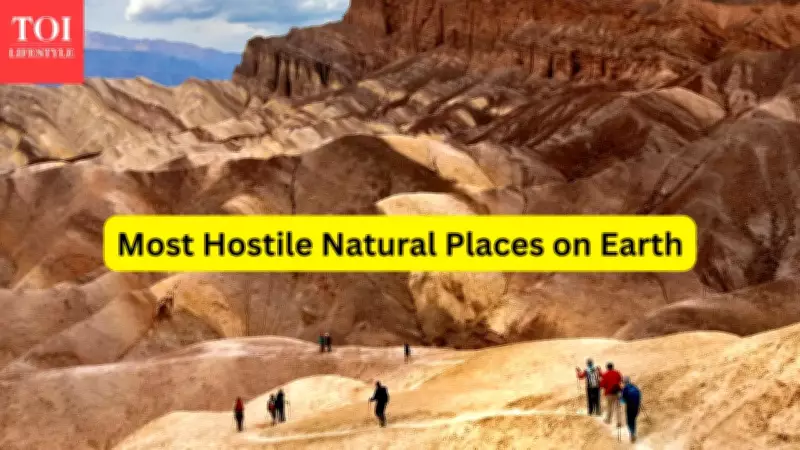
There are some places on this planet that are so harsh that survival over an extended period can be tough, even for professionals. Yet many of these locations remain popular with adventurers, photographers, researchers, and daredevils from around the globe. The appeal may stem from natural wonder, the challenge of reaching them, or the rare experience of seeing nature in its rawest form.
Death Valley
Death Valley ranks among the locations where the highest temperatures on Earth have been recorded. Temperatures have exceeded 56°C, making conditions deadly within hours during summer. The valley features salt flats, sand dunes, rocky canyons, and a complete lack of natural shade and water sources. Despite these challenges, tourists are drawn by the stunning scenery and landscapes. Key attractions include Badwater Basin, the Mesquite Flat Sand Dunes, and some of the darkest night skies in North America.
Danakil Depression
This depression is one of the most inhospitable areas for life on Earth. Located in the lowlands of Ethiopia's Afar region, it suffers from extreme heat, toxic air, salty waters, and colorful rock formations from volcanic activity. Temperatures normally exceed 45°C. However, the surreal landscapes, often likened to extraterrestrial terrain, attract travelers. Neon sulfur fields, volcanic lakes, colorful salt flats, and volcanic areas make it a top adventure destination in Africa.

Mount Everest
Everest remains one of the most dangerous tourist destinations. The Death Zone above 8,000 meters lacks oxygen, leading to gradual organ deterioration. Many climbers have perished due to avalanches, severe weather, high altitude, and overcrowding. Nevertheless, mountaineers worldwide aspire to conquer Earth's highest peak. Those without climbing skills can trek to Everest Base Camp to admire Himalayan beauty and learn about Sherpa culture.
Antarctica
Antarctica is the coldest, windiest, and driest continent, with temperatures dropping to minus 50°C. Sea ice and strong winds isolate it for most of the year, making medical emergencies difficult to manage. Despite this, tourist visits have grown recently. People are attracted by unique icebergs, vast penguin colonies, whales, and other wildlife.