5 Karnataka Temples Showcasing Ancient India's Architectural and Scientific Genius
Karnataka's temples transcend their role as mere religious sites, standing as breathtaking architectural wonders that seamlessly blend art, science, and technology from bygone eras. From delicate soapstone carvings resembling lace to sanctums hewn directly from rock, these structures exhibit craftsmanship and technological prowess that continue to inspire awe. What truly sets them apart is the profound intelligence embedded in their design, reflecting an advanced understanding of materials, acoustics, and astronomy. Here are five temples in Karnataka renowned for their unique architectural and scientific features.
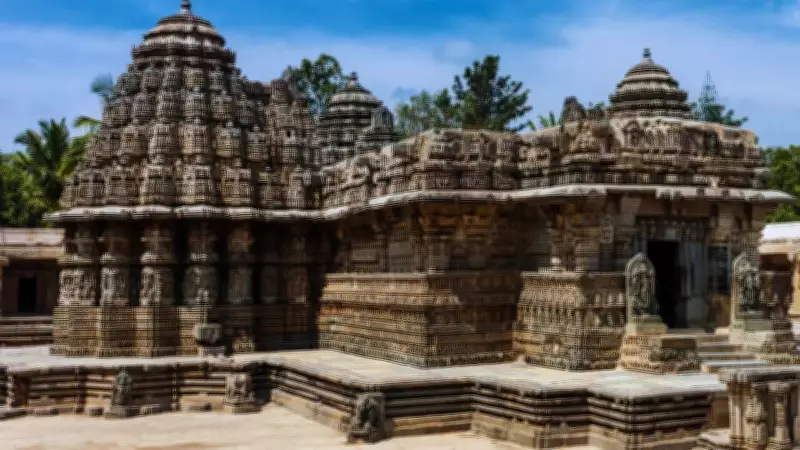
Chennakesava Temple: Mastery of Soapstone Carvings
Dating back to the 12th century, the Chennakesava Temple is celebrated for its use of soapstone, also known as chloritic schist. This remarkably soft stone allowed artisans to execute intricate carvings with unparalleled precision. Every surface, from walls to ceilings and pillars, is adorned with delicate designs that mimic lace rather than stonework. The temple rests on a star-shaped foundation, a hallmark of Hoysala architecture, which provided sculptors with multiple perspectives to enhance their artistic expressions.
Badami Cave Temples: Architectural Marvels Carved into Cliffs
The Badami Cave Temples, constructed in the 6th and 7th centuries, stand apart as they are not built but carved directly into sandstone cliffs. Unlike conventional temples that use bricks, stones, and mortar, these structures were created by meticulously removing rock to form columns, chambers, and sculptures. This technique allowed for the seamless integration of architectural and sculptural elements, bringing images of Hindu and Jain deities to life from the very rock itself.

Virupaksha Temple: The Ancient Pinhole Camera Effect
Located in Hampi, the Virupaksha Temple is not only a functioning place of worship but also a site of historical and scientific significance. Within its confines lies a dark room that projects an inverted image of the temple's gopuram (tower), functioning similarly to a pinhole camera. Architecturally, the temple impresses with its massive gateways and expansive courtyard, showcasing the grandeur of ancient Indian design.
Vijaya Vittala Temple: The Enigma of Musical Pillars
Famous for its iconic stone chariot, the Vijaya Vittala Temple's most fascinating feature is its musical pillars. It is believed that gentle tapping on these pillars—though now prohibited—would produce distinct musical notes, demonstrating a sophisticated understanding of acoustics. Carved from granite, these pillars represent an intricate fusion of art and technology that remains difficult to replicate even with modern advancements. The temple complex itself is a testament to exceptional spatial planning.
Gavi Gangadhareshwara Temple: Precision Astronomical Alignment
This cave temple is renowned for its exact alignment with sunlight, an event that occurs annually during Makara Sankranti. During this time, the setting sun's rays pass through strategically placed stone discs to illuminate the lingam within the cave. The precision required for this astronomical feat highlights the temple's architectural ingenuity, making it a rare example of ancient India's advanced knowledge in this field.