

Exploring the Nile River: Six Iconic Destinations Along the World's Longest River
The Nile River, stretching over 6,600 kilometers through northeastern Africa, stands as the longest river on Earth. This majestic waterway has been the lifeline of ancient civilizations, transforming arid deserts into fertile lands that sustained life and culture for millennia. Known as the "giver of life," the Nile offers a unique blend of historical significance and modern vibrancy from its source near Lake Victoria to its delta in the Mediterranean Sea.
Cairo: The Bustling Capital of Egypt
Cairo, Egypt's bustling capital, is the most renowned city along the Nile's banks. Here, ancient history and contemporary life coexist harmoniously, with the river flowing gently past a skyline adorned with minarets and high-rise buildings. Beyond the metropolitan area, the legendary pyramids of Giza await exploration. Within the city, vibrant markets, world-class museums, and historic mosques reflect a civilization that thrived thanks to the Nile's waters. A sunset felucca ride on the river provides a timeless and unforgettable experience.
Luxor: The World's Greatest Open-Air Museum
Luxor, often called the world's greatest open-air museum, sits serenely on the Nile's banks. Once the ancient Egyptian city of Thebes, capital of the New Kingdom, it now houses the famed Valley of the Kings and the Karnak Temple Complex. The Nile divides Luxor into the East Bank, symbolizing life, and the West Bank, representing death, mirroring ancient Egyptian beliefs. This division offers a profound insight into the cultural and spiritual heritage of the region.

Aswan: A Serene and Scenic Escape
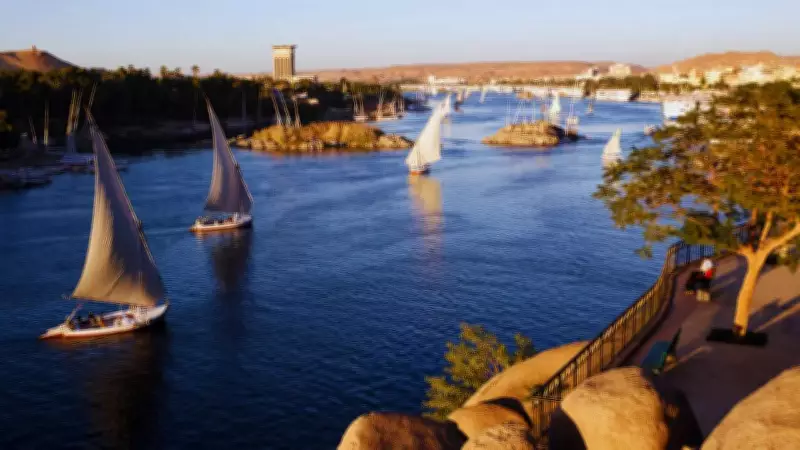
Further south, Aswan offers a slower, more serene Nile experience. Known for its breathtaking scenic beauty, the city features granite rocks and picturesque islands. The river here is wider and calmer, ideal for traditional boat cruises. Aswan also serves as a gateway to Nubian culture, with colorful and unique villages that showcase a distinct aspect of Egypt's diverse heritage.
Jinja: The Adventure Capital of East Africa
Jinja, located in Uganda near the Nile's source at Lake Victoria, holds a special place in East Africa. Dubbed the "adventure capital of East Africa," it offers thrilling activities like white-water rafting, kayaking, and bungee jumping. Beyond adventure, Jinja marks the starting point of the Nile's epic journey northward, making it a symbolic and exciting destination for travelers.
Khartoum: Where Two Niles Meet
Khartoum, the capital of Sudan, is uniquely situated at the confluence of the Blue Nile and the White Nile, where these two great rivers merge to form the Nile. This geographical and symbolic highlight of the river's journey blends African and Arabian cultures. The city's markets, museums, and riverfront evoke a rich cultural heritage, offering visitors a glimpse into its historical significance.
Alexandria: The Mediterranean Endpoint
Alexandria, at the northernmost point of the Nile's journey, marks where the river empties into the Mediterranean Sea. Founded by Alexander the Great, it was once a great center of culture and learning. While much of its ancient glory has faded, modern structures like the Bibliotheca Alexandrina pay tribute to its illustrious past. This coastal city provides a different setting for the Nile, symbolizing its culmination and enduring legacy.
These six destinations along the Nile River highlight its role as a cradle of civilization and a source of endless fascination. From Cairo's dynamic energy to Alexandria's historical echoes, each stop offers a unique perspective on this iconic river's journey through time and terrain.






