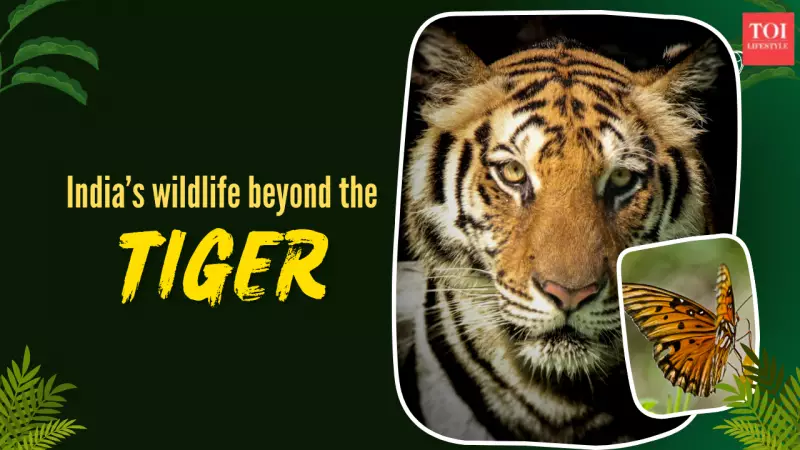
When planning a wildlife trip in India, the majestic tiger often takes center stage. However, the country's ecological tapestry is far richer and more diverse, offering spectacular experiences where other species and pristine ecosystems are the true stars. Here are eight iconic wildlife reserves where you can immerse yourself in nature's wonders without the tiger dominating the narrative.
Sanctuaries for Rare and Endemic Species
India's conservation efforts extend far beyond its famous big cats, protecting some of the world's most unique and threatened creatures in specialized habitats.
The Great Indian Bustard Sanctuary in Maharashtra is a prime example. Located in the dry scrub grasslands of Solapur, it serves as the last stronghold for the critically endangered Great Indian Bustard, a bird endemic to India. This arid landscape, adapted to harsh conditions, also supports thriving populations of blackbucks, Indian wolves, and various migratory birds.

Meanwhile, in the vast, surreal expanse of Gujarat's Little Rann of Kutch lies the Wild Ass Sanctuary. This is the only remaining habitat for the Indian wild ass. The terrain transforms dramatically with the seasons—a cracked, white salt desert in the dry months and a flourishing wetland during the monsoon, attracting flocks of flamingos and pelicans. The absence of large predators allows herbivores and avian life to flourish prominently.
Avian Paradises and Floral Kingdoms
For birdwatchers and botany enthusiasts, India boasts world-class destinations where flora and feathered creatures create unforgettable spectacles.
Keoladeo National Park in Rajasthan, a UNESCO World Heritage Site, is globally renowned as a bird sanctuary. Its mosaic of wetlands, marshes, and woodland patches hosts over 350 bird species, including spectacular congregations of migratory waterfowl from Central Asia. The habitat is unsuitable for large cats, making it a pure paradise for ornithology.
In the high Himalayas of Uttarakhand, the Valley of Flowers National Park offers a different kind of magic. Also a UNESCO site, it is celebrated for its breathtaking summer bloom of alpine flowers like the gentian and the Himalayan blue poppy. The meadows, set against a dramatic mountain backdrop, come alive with butterflies, birds, and small mammals, proving that wildlife tourism can be profoundly beautiful even without megafauna.
Unique Ecosystems from Rainforests to High Deserts
From tropical evergreen forests to cold deserts, these reserves protect fragile and distinct ecosystems with their own charismatic inhabitants.
Deep within the Western Ghats in South India, Silent Valley National Park safeguards one of India's last tracts of pristine tropical evergreen rainforest. Its rich biodiversity includes rare primates like the lion-tailed macaque and the Nilgiri langur, alongside birds such as the black-and-orange flycatcher. With minimal human disturbance and no traditional safari culture, the focus here is squarely on conservation.
In the stark, high-altitude landscape of Ladakh, Hemis National Park stands as India's largest national park. This cold desert environment is home to the elusive snow leopard, though sightings are rare. Visitors are more likely to be awed by the vast plateaus, alpine meadows, and sightings of blue sheep. Conservation here is deeply intertwined with local communities.
On the eastern coast, Gahirmatha Marine Sanctuary in Odisha shifts the focus to marine ecology. It holds international importance as the world's largest nesting ground for Olive Ridley sea turtles. The annual mass nesting phenomenon, known as an arribada, draws conservationists and nature lovers to witness thousands of turtles arriving to lay eggs in a spectacular natural event.
Finally, Khangchendzonga National Park in Sikkim presents a holistic conservation model. This UNESCO-listed park encompasses an incredible range of ecosystems, from subtropical rainforest to high-alpine tundra. Its slopes are home to the charming red panda, the sturdy Himalayan tahr, and numerous bird species, blending immense spiritual and ecological value into one protected landscape.

These eight reserves collectively highlight that India's natural heritage offers profound and diverse experiences beyond the tiger trails, inviting explorers to discover the country's full ecological splendor.