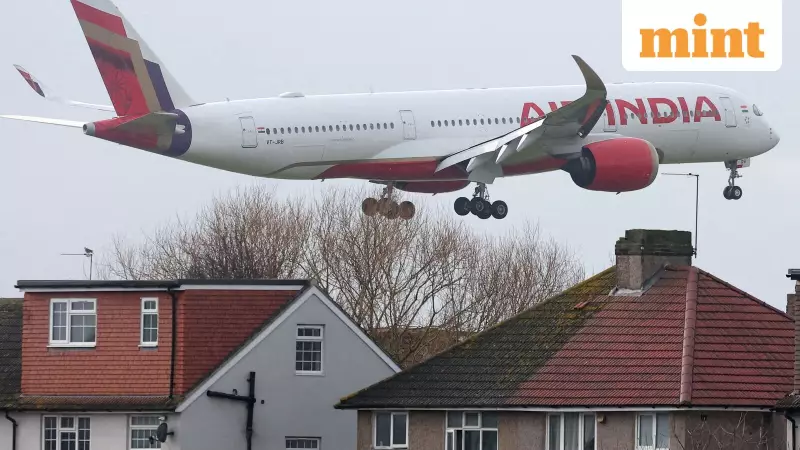
In a significant blow to direct air connectivity between two global technology nerve centers, Air India has decided to discontinue its non-stop flights between Bengaluru and San Francisco. The service will cease operations at the end of February 2026, marking the end of a direct aerial bridge that linked India's Silicon Valley with its American counterpart.
The Rise and Fall of a Key IT Corridor
The story of this route is one of ambition, pandemic disruption, and operational hurdles. The initial promise came in February 2020 when American Airlines announced plans to connect Seattle with Bengaluru starting October that year. The global lockdowns that followed weeks later scuttled those plans. Subsequently, United Airlines announced its longest-ever flight from San Francisco to Bengaluru in 2021, but it too never materialized.
Stepping into the void, the then government-owned Air India launched flights between the two IT hubs in January 2021 under an air bubble agreement. After a brief suspension in early 2022, Air India relaunched the route, capitalizing on American carriers' inability to use Russian airspace due to the Ukraine war and its own acquisition of additional aircraft.

The route found a loyal customer base. For the 12 months ending September 2025, a total of nearly 150,000 passengers traveled between the two cities. Air India carried over 63,000 of these passengers, capturing about 43% of the total traffic on the sector, with the rest opting for one-stop alternatives via other carriers.
Why is Air India Pulling the Plug?
The core reason for the shutdown is a critical shortage of suitable aircraft. The Bengaluru-San Francisco route is among the world's longest, requiring specific long-range planes like the Boeing 777-200LR. Air India's fleet of these aircraft has dwindled. It started with three legacy B777-200LRs and added five more former Delta Air Lines planes. However, all the legacy jets and two ex-Delta aircraft are now out of the fleet, with the airline unable to extend their leases.
Compounding the problem is the ongoing closure of Pakistani airspace for Indian operators since April 2025. This has forced Air India to introduce technical stops for refueling on its San Francisco-bound flights. Currently, the outbound flight operates via Delhi, and the return journey halts in Kolkata. This adds significant travel time, negating the primary advantage of a non-stop service, making it less attractive for passengers and more costly for the airline due to additional take-offs and landings.
The route was particularly popular with IT professionals and VFR (Visiting Friends and Relatives) traffic, especially elderly parents visiting families in the Bay Area who preferred a direct, hassle-free journey over complex connections in Europe.
What Are the Alternatives for Travelers?
While withdrawing from Mumbai and Bengaluru for this route, Air India is augmenting its service from its Delhi hub. Frequency from Delhi to San Francisco will increase to 10 times a week from the current seven. Passengers from Bengaluru will be offered connections via Delhi, but with a key inconvenience.
Currently, on the outbound journey, passengers clear immigration in Bengaluru before a halt in Delhi. Post-March 2026, the process changes. The return journey will involve a technical stop in Vienna, followed by a stop in Delhi, where passengers must complete immigration and customs formalities before catching their connecting flight to Bengaluru, adding layers of complexity.
This development opens a significant opportunity for competing carriers. European airlines like British Airways, Lufthansa, Air France, KLM, and Virgin Atlantic, which offer connections through their European hubs to both cities, stand to gain. Middle Eastern carriers like Emirates and Qatar Airways, often preferred by passengers for their hub efficiency, are also poised to capture more market share. Notably, Lufthansa has already increased capacity to Bengaluru post-pandemic with flights from Munich.

Broader Implications and Future Outlook
This decision comes as Air India nears four years under the Tata Group's ownership. Its expansion plans have faced headwinds, partly due to global supply chain issues delaying new aircraft deliveries. The closure forces a moment of introspection for the airline and Indian aviation.
The situation highlights a strategic vulnerability. With Pakistani airspace access uncertain and the need for ultra-long-haul routes growing, Indian carriers may need to consider investments similar to Qantas's Project Sunrise to operate non-stop flights to distant destinations like the US East Coast and Europe. Such a move, however, comes at a high cost, ultimately passed on to consumers.
All eyes are also on the Russia-Ukraine war. A ceasefire could reopen Russian airspace, potentially allowing United Airlines to finally launch its long-planned San Francisco-Bengaluru flight. If that happens, Air India risks handing over a market it painstakingly built to a well-equipped foreign competitor.