

Caravan Tourism Sees a Surge in Popularity Across India
Caravan tourism is experiencing a significant rise in popularity, fueled by a growing community of travelers who are bypassing conventional hotels and overly curated experiences in favor of journeys at their own pace. This trend involves swapping room service for spontaneity, as more people embrace the freedom of life on the road.
Embracing Nature and Freedom
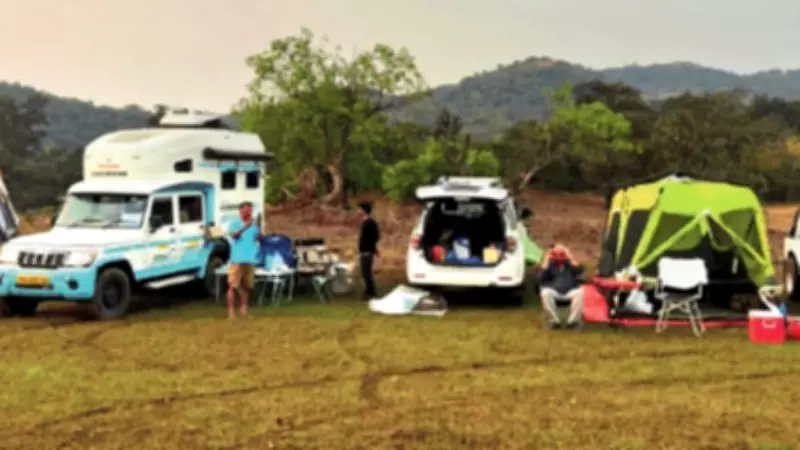
Just after sunrise, nestled between the misty curves of Igatpuri and the Sahyadri ridges, Vaibhav Surve unlatches the door of his caravan and steps out barefoot. There are no hotel corridors, reception desks, or buffet timings to worry about—only gently undulating hills stretching into the distance, birdsong breaking the silence, and a kettle boiling inside a compact kitchen on wheels.
"You wake up to nature in its raw, untouched form," Surve says of his December road trip with friends. "That's something a hotel room can never offer."

Across India, a small but steadily increasing number of travelers is discovering the joys of caravan tourism, characterized by unhurried and immersive travel. While this form of tourism is not new globally, it is gaining fresh traction in India, largely led by urban explorers from Maharashtra who have abandoned crowded resorts, rigid itineraries, and over-curated experiences.
Control and Cost in Modern Travel
From sunrise drives along the Konkan coast to offbeat halts in the jungles of Tadoba or the winding ghats of Goa, caravans provide something rare in modern travel: control. Travelers decide where to stop, how long to stay, and when to move on. Depending on the location and proposed circuit, renting a caravan costs between Rs 12,000 and Rs 15,000 per day. Although not inexpensive, this freedom is addictive for those who can afford it.
Muted Promotion and Growing Market Demand
This surge in interest is occurring despite poor and patchy promotion by governments. Policies and incentive schemes exist, but on the ground, awareness is primarily driven by word of mouth, social media, and early adopters.
"Mumbai is emerging as a major market for caravans," says Prateek Athalye of The Vacay Vans, a well-known caravan provider in Maharashtra. "Travellers are opting for everything—from raw camping to luxury city-to-city journeys. After six years of managing vans, I've seen how rising awareness alone is driving strong demand."
Demand spans various age groups:
- Young professionals seek road trips without the hassle of hotel bookings.
- Families prioritize safety, hygiene, and flexibility.
- Elderly travelers appreciate having their bed, toilet, and kitchen always close at hand.
- Women travelers and pet owners, often underserved by conventional options, find caravans liberating.
Akshay Mhadik, who recently traveled in a rented caravan, describes it as "the perfect blend of adventure and home-like comfort." He recalls a spacious bed, a compact kitchen for quick meals, and the luxury of choosing destinations on a whim. "If you've ever dreamed of picking a spot on the map and heading there without worrying about hotels or packing light, this is the way to go," he says.
Why Maharashtra Fits the Caravan Dream
Maharashtra is particularly well-suited for caravan tourism due to its 720km coastline, dense forests, heritage towns, wine trails, highways, and hill ranges. Pre-pandemic, in 2018-19, the state recorded 12.4 crore visitors, translating to roughly 3.1 crore traveling groups annually. Industry estimates suggest that catering to even 1% of this market would require around 1,725 caravans, potentially generating nearly Rs 465 crore annually in rental revenues at current rates.
The state government has rolled out a caravan tourism policy with incentives to attract private players and young entrepreneurs. However, industry insiders note that execution remains uneven, leaving much of the momentum to the private sector.

Rahul Soman, director of Wacation On Wheels (WOW), which started caravan rentals in Maharashtra in 2016 as the first to do so, explains: "The private sector is brimming with ideas to ramp up caravan travel, but is hamstrung by a lack of finance options. Individual investors are now willing to invest in caravans, since the Mahindra Caravahn is being offered with a bank finance option. But the business as such still does not fit into any of the finance schemes of financial institutions."
The organic growth of the market has led WOW Caravans to set up a network of dedicated parking spots at tourist locations across the state. This initiative will provide all caravan operators access to amenities such as hygienic sewage disposal facilities, water, and power supply at scenic spots near lakes, beaches, forests, forts, hillsides, or riverbanks. "However, funding to set up this caravan ecosystem is hard to come by without collateral," Soman adds.
Expanding Interest Beyond Maharashtra
Another state witnessing growing interest in caravan holidays is Rajasthan, which enthusiasts say offers freedom, raw beauty, and cultural immersion. Aman Verma, who recently rented a caravan to travel the state, recalls evenings spent around campfires, listening to folk music, and watching Kalbeliya dances. Waking up to the golden hues of the Thar Desert near Jaisalmer or spending nights under a star-studded sky felt truly magical, he notes.
"We savoured local sweets and explored havelis," Verma says. "Our caravan became a cosy home on wheels, letting us pause wherever the scenery called—whether it was wild camping in quiet desert spots, near ancient temples, or pulling over for spontaneous chai with hospitable locals, who shared stories. Rajasthan in a van or caravan isn't just travel—it's living the rhythm of India's royal, colourful heart, one open horizon at a time." Verma shares his experiences on a YouTube travel channel.
Private Initiatives Driving Growth
One of the most significant initiatives in the caravan sector comes from the private player Campervan Group, which has signed MoUs with the Tamil Nadu government. The company has committed Rs 185 crore over the next three to five years to develop caravan infrastructure and support entrepreneurs. This project is expected to create 300 direct entrepreneurs and nearly 3,000 indirect jobs.
Industry-watchers believe Maharashtra could be next for such partnerships, given Mumbai's large base of road-trip enthusiasts and the state's natural advantages. Similar collaborations could unlock economic value if policy intent translates into action.
Campervan also recently announced a nationwide CARS (Caravahn-As-Rental-Service) entrepreneurship program, aiming to transform caravan tourism into a structured industry rather than just a niche travel fad. Founder and director K M Vandhan states: "The goal was to establish caravan tourism as a large-scale industry in India." The company has contributed to state tourism policies and the drafting of the national AIS 207 Trailer Caravan Guidelines, which are currently awaiting notification.
To support operators and travelers, Campervan has developed Travelkeet, a booking platform that connects caravan renters with operators and safe parking locations—from farmhouses and homestays to resorts and private land. Agri-tourism, in particular, is seen as a win-win, providing farmers with an additional income stream.
The Personal Appeal of Caravan Travel
For travelers like Surve, the appeal of caravan tourism remains deeply personal. "It's not just about the destination," he says. "It's about waking up with the hills, sharing meals under open skies, and feeling like a part of the landscape."
In a country racing toward faster and flashier tourism, caravan travel advocates for something slower, softer, and perhaps more meaningful. On India's long highways, this argument is finding more listeners by the day, as the trend continues to grow and evolve.





