

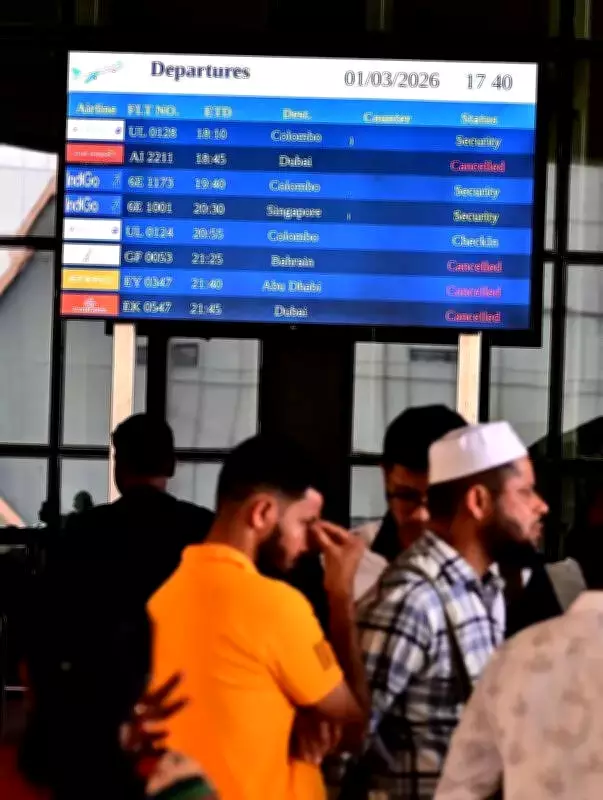
Chennai-Gulf Flight Operations Disrupted for Third Consecutive Day Amid Regional Tensions
Flight operations from Chennai to the Gulf region continued to face significant disruptions for the third consecutive day on Monday, as regional tensions, including reported attacks and airspace closures, impacted travel. Airlines such as Emirates announced a limited resumption of services after Dubai partially reopened its airport, but widespread cancellations persisted across multiple carriers.
Extensive Cancellations and Airline Responses
The disruptions included 14 arrivals and 16 departures cancelled, affecting key destinations like Dubai, Doha, Abu Dhabi, Sharjah, and Bahrain. Major airlines, including Emirates, Etihad, Air India, IndiGo, and Air Arabia, have suspended or adjusted their flight schedules in response to the airspace closure. IndiGo, for instance, has cancelled flights to Abu Dhabi and Doha until Wednesday as a precautionary measure, anticipating that regional tensions might ease within two days.
In a statement, Emirates indicated it would begin operating a limited number of flights starting Monday. "We are accommodating customers with earlier bookings as a priority, and those who were rebooked to travel on these limited flights will be contacted directly by Emirates," the airline said. This move aims to mitigate the impact on passengers, though full normalcy remains elusive.

Stranded Tourists and Operational Challenges
The ongoing disruptions have left at least a few thousand foreign tourists stranded in Chennai, unable to return to their home countries. With airports like Dubai shut due to the conflict, many travelers are facing extended stays in India, leading to risks of overstaying visas and additional burdens on tour operators who must host them longer than planned.
D Karunanidhi, a Chennai-based tour operator, highlighted the challenges: "There are flights that avoid the Gulf airspace and take routes via Ethiopia or Mauritius from places such as Chennai, Bengaluru, and Mumbai. But the costs are almost thrice the regular fare." He compared the situation to pandemic times, describing it as a travel nightmare for many.
Broader Regional Context and Future Outlook
The flight disruptions occur against a backdrop of heightened regional tensions, including reports of attacks and military actions in areas like Iran, Kuwait, Bahrain, Dubai, Doha, and Beirut. These events have prompted Gulf nations to vow self-defense measures, further complicating air travel logistics.
Karunanidhi expressed hope that the situation would normalize by mid-March, coinciding with the period when outbound tourists typically travel to European countries for summer holidays. However, the current instability underscores the fragility of international travel in conflict zones.
Key points from the situation include:
- Continued suspension of flights by multiple airlines due to airspace closures.
- Stranded tourists facing high alternative travel costs and visa overstay risks.
- Limited resumption of services by Emirates, with priority given to earlier bookings.
- Anticipation of eased tensions within days, but uncertainty remains.
This disruption serves as a stark reminder of how geopolitical conflicts can swiftly impact global connectivity, leaving travelers and operators in a precarious position.






