Ask any well-traveled individual to name India's greatest urban centers, and you'll ignite a lively debate. Many champion Mumbai's relentless energy, others praise Kolkata's intellectual soul, while Bengaluru is celebrated for its contemporary vibe. However, when measured by the sheer magnitude of its population, historical depth, and physical expanse, one city stands unrivalled: Delhi.
The Colossal Scale of India's Capital
Officially known as the National Capital Territory (NCT) of Delhi, this city is far more than just the nation's political heart. It is a vast, breathing metropolis that has expanded over centuries, absorbing countless stories within its bounds. The NCT spans approximately 1,483 square kilometers, creating a single, continuous urban fabric that stitches together ancient settlements, modern administrative centers, residential neighborhoods, and historic villages. This immense scale solidifies Delhi's status as India's largest city—not merely a dense core, but a sprawling landscape where antiquity and modernity coexist.
For visitors, Delhi defies simple definition. It is profoundly complex, demanding more time and engagement than perhaps any other Indian destination. The city feels like multiple cities stacked atop one another, each representing a distinct era yet all functioning vibrantly in the present day.

A Journey Through Millennia of History
A traveler's first encounter with Delhi can be overwhelming. The relentless traffic, immense crowds, and symphony of sounds and scents create an intense, even chaotic, introduction. But beneath this dynamic surface lies an extraordinary historical depth. Delhi is one of the world's oldest continuously inhabited cities, with a legacy of power that spans over two millennia.
Few capitals have been so repeatedly reshaped by successive rulers. Hindu kings, Islamic sultans, Mughal emperors, and British colonials have all held court here, each leaving an indelible mark on the city's architecture, culture, and identity. This rich past is visibly layered across the metropolis.
In the north lies Old Delhi, originally Shahjahanabad, founded in the 17th century by Mughal Emperor Shah Jahan. Here, life moves at a compressed, fervent pace. The majestic Jama Masjid, one of India's largest mosques, offers panoramic views of this eternally bustling district. Exploring Old Delhi is less about sightseeing and more about a full-sensory immersion—discovering generations-old culinary secrets, witnessing master artisans at work, and seeing traditions endure amid urban change.
A short distance but a world away sits New Delhi, the meticulously planned capital built by the British. Its wide, tree-lined avenues, symmetrical layouts, and imposing government buildings speak of order and authority. The grand vista from India Gate to Rashtrapati Bhavan underscores its role as the nation's administrative center. The dramatic contrast between these two Delhis, experienced within minutes, is a phenomenon few global cities can offer.
Cultural Tapestry and Urban Green Lungs
Delhi's significance is further magnified by its incredible concentration of heritage. The city is dotted with UNESCO World Heritage Sites that chronicle India's long narrative. The soaring Qutub Minar marks early Indo-Islamic rule, while the sublime Humayun's Tomb previewed the architectural genius of the Mughal era. The Red Fort remains a powerful symbol of the nation's sovereignty. Visiting these sites is a journey through the forces that shaped modern India.
The city's vastness is mirrored in its people. Communities from every corner of the country have made Delhi home, bringing a stunning array of languages, festivals, and cuisines. Delhi's food scene is a delicious microcosm of India itself, offering everything from regal Mughlai feasts and hearty Punjabi meals to delicate Bengali sweets and flavors from the South and Northeast.
Despite its size and density, Delhi harbors serene escapes. Forested ridges, heritage parks, and numerous green spaces provide a counterbalance to the urban intensity. These areas reveal a city that values the harmony between development and nature, offering residents and travelers alike precious moments of calm.

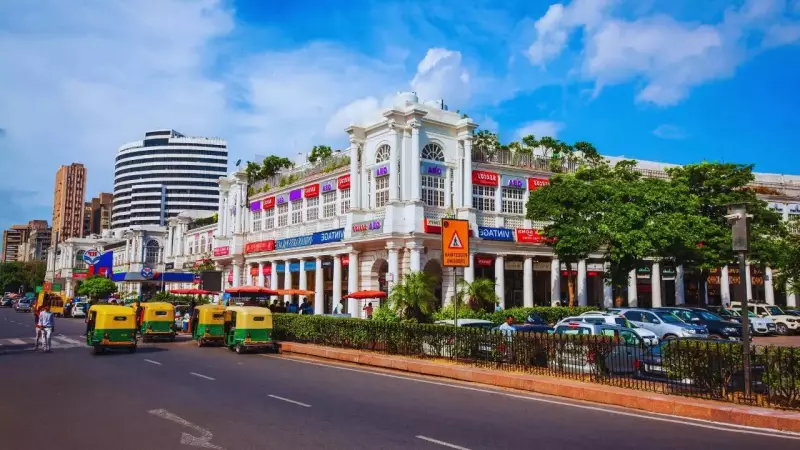
From centuries-old bazaars to gleaming contemporary malls, Delhi's markets also tell the story of a city that both preserves its past and embraces global trends. Furthermore, as India's primary gateway, Delhi is superbly connected by air, rail, and road, serving as the perfect launchpad for explorations into North India, from the Mughal trail in Uttar Pradesh to the Himalayan heights of Himachal Pradesh and Uttarakhand.
The ideal time to explore this magnificent metropolis is during the cool winter months, when the city becomes more walkable. The famous winter haze lends monuments a surreal quality, and the crisp evenings are perfect for heritage walks and culinary adventures. Delhi, in its immense and layered entirety, is a city that reveals new secrets with every visit, forever cementing its title as India's largest and most historically rich urban wonder.