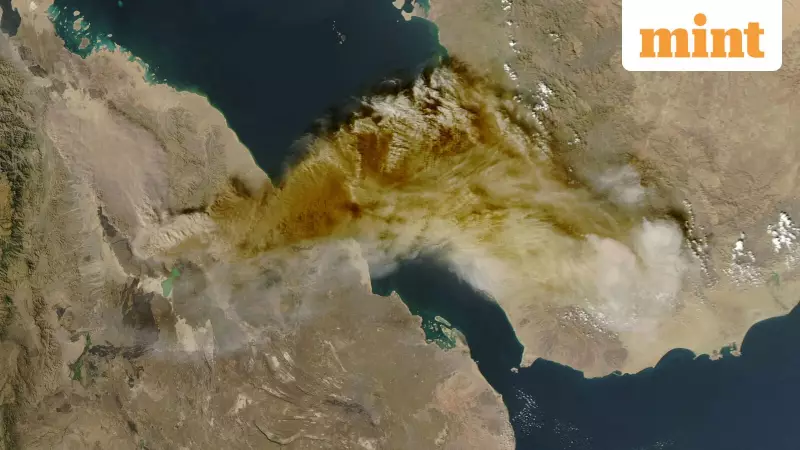
Ancient Ethiopian Volcano Awakens, Sends Ash Towards India
After remaining dormant for approximately 12,000 years, Ethiopia's Hayli Gubbi volcano has violently returned to life, creating significant aviation disruptions across Asia, including India. The sudden eruption on Sunday sent massive ash plumes high into the atmosphere, forcing multiple airlines to cancel or divert flights as aviation authorities scrambled to respond to the developing situation.
Eruption Details and Immediate Impact
The explosive eruption began around 8:30 am UTC (13:30 IST) on Sunday, according to monitoring agencies. The Hayli Gubbi volcano, located within Ethiopia's Erta Ale Range in the geologically active Rift Valley, propelled thick plumes of smoke and ash an astonishing 14 kilometres into the sky. This massive eruption column quickly spread across international boundaries, affecting air travel thousands of kilometres from its source.
The Toulouse Volcanic Ash Advisory Centre (VAAC) confirmed that while the eruption has now ceased, a large ash plume continues to move toward northern India, prompting meteorological agencies across the region to closely monitor its trajectory. The volcano's last known eruption occurred between 10,000 to 12,000 years ago, making this reactivation particularly significant from a geological perspective.

Indian Aviation Response and Flight Disruptions
India's aviation regulator, the Directorate General of Civil Aviation (DGCA), has issued formal advisories to all airlines operating in the region. The regulatory body has instructed carriers to avoid affected regions and altitudes where ash clouds have been detected, while also recommending adjustments to flight planning, routing, and fuel considerations.
Several major airlines have already responded to the volcanic threat. Akasa Air, IndiGo, and KLM are among the carriers that have cancelled select flights due to the hazardous ash conditions. SpiceJet has specifically warned passengers traveling to and from Dubai (DXB) to monitor their flight status closely, noting that ash activity may significantly impact operations for aircraft flying through affected regions.
Mumbai's Chhatrapati Shivaji Maharaj International Airport has proactively issued a passenger advisory, acknowledging that the volcanic eruption may impact some international routes. Airport authorities have advised travelers to contact their respective airlines to confirm flight status before heading to the airport.
Airline Statements and Safety Measures
While Air India reported that none of its flights have been impacted thus far, the carrier acknowledged that ash clouds have been observed over certain geographical regions and confirmed they are monitoring the situation continuously.
Akasa Air released a detailed statement emphasizing their commitment to passenger safety: "We are closely monitoring the volcanic activity in Ethiopia and its potential impact on flight operations in nearby regions. Our teams will continue to assess the situation in compliance with international aviation advisories and safety protocols and take necessary actions as required. At Akasa Air, passenger safety and well-being are our utmost priority."
IndiGo similarly assured passengers that their teams are monitoring the drifting ash clouds and that they are fully prepared with all necessary precautions to ensure safe and reliable operations despite the challenging conditions.
As the volcanic ash cloud continues its movement across Asia, aviation authorities and airlines remain on high alert, prioritizing passenger safety while managing the inevitable disruptions to air travel patterns across multiple countries.