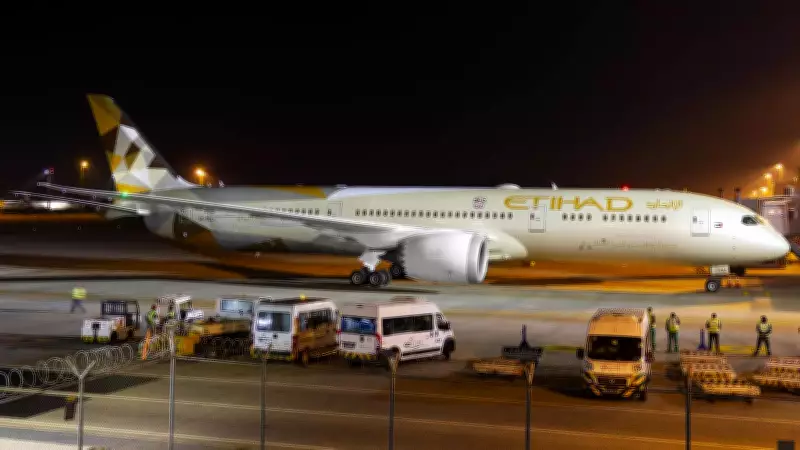
Etihad Airways Halts Abu Dhabi Departures Amid Regional Airspace Closures
In a significant disruption to global air travel, Etihad Airways has announced the temporary suspension of all departures from Abu Dhabi's Zayed International Airport until 2:00 p.m. UAE time on Sunday, March 1, 2026. This unprecedented move comes as escalating military strikes by the United States and Israel on Iran have triggered widespread airspace closures across the Gulf region and beyond, leaving thousands of passengers facing cancellations, reroutes, and uncertain travel plans.
Immediate Impact on Flight Operations
The airline, which operates an extensive global network from its hub in the UAE capital, confirmed that no outbound flights will depart Abu Dhabi during the suspension window. Additionally, arrivals scheduled before this cutoff time have been cancelled outright. Flights expected after 2:00 p.m. are "expected to operate, subject to operational conditions," highlighting the fluid and rapidly evolving nature of the situation.
Etihad has instructed aircraft already en route to Abu Dhabi to return to their origin airports where required, further compounding disruption for travelers worldwide. The airline is proactively reaching out to affected passengers with rebooking options and hotel accommodation support as needed, urging all travelers to regularly check their flight status on the airline's official website or mobile app before heading to the airport.

Safety Concerns Behind the Suspension
The suspension of Abu Dhabi flights is not occurring in isolation. Across the Middle East, airspace has been temporarily closed or restricted following a series of strikes by the United States and Israel on Iran, which triggered retaliatory missile launches by Tehran and subsequent military responses. These developments have prompted neighboring countries to pull civilian aircraft out of harm's way, prioritizing passenger and crew safety above all else.
In its official statement, Etihad emphasized that "the safety of Etihad's guests and staff is our highest priority." With military activity raising significant risks for civilian aircraft, especially when air defense systems are active, airlines and aviation authorities have both a legal and operational mandate to withdraw services from potentially unsafe areas. This precautionary approach mirrors established global aviation protocols, where temporary grounding and rerouting are standard responses to conflict-related airspace threats.
What Passengers Need to Know
For travelers affected by the suspension, Etihad has outlined several critical points:
- Outbound flights from Zayed International Airport are suspended until at least 2 p.m. on March 1, 2026, affecting dozens of Etihad services.
- Arrivals scheduled before this cutoff have been cancelled, meaning travelers heading to Abu Dhabi on early morning flights may need to rebook or wait for later services.
- Flights scheduled to arrive after the suspension may operate, but only if airspace restrictions and schedules allow.
- Travellers who booked connecting flights via Abu Dhabi risk being denied boarding at their first departure airport if their onward segments are cancelled.
- Etihad is offering rebooking options, refunds, or hotel stays for impacted passengers, though support levels may vary depending on fare conditions and booking channels.
The airline has also warned that connecting passengers whose onward sectors have been cancelled will not be permitted to board at their departure points, even if the initial flight segment remains scheduled. Passengers are strongly advised to ensure their contact details are up to date so airlines can communicate changes promptly.
Broader Regional Aviation Impact
The suspension at Etihad reflects a broader regional aviation shutdown as airlines and regulators prioritize flight safety amid geopolitical volatility. Other major airports, including Dubai International Airport and Hamad International Airport in Doha, have also halted operations, diverted flights, or cancelled services entirely due to the same airspace closures.

Authorities across the UAE, Qatar, Kuwait, and Bahrain have closed or restricted their skies, prompting massive travel disruptions that have reverberated globally. Gulf carriers such as Emirates and flydubai have similarly seen operations paused or adjusted due to these airspace restrictions.
Global Travel Disruption
International airlines from Europe to Asia have also been affected, with several carriers cancelling or suspending flights to Gulf hubs. The airspace closures have forced aircraft to avoid large swathes of the Middle East, complicating long-haul routes that normally transit the region's air corridors and leaving passengers stranded in cities from London and Paris to Mumbai and Singapore.
This has created a logistical ripple effect, with thousands of passengers stranded at hubs around the world and flights being rerouted through longer paths to avoid restricted airspace. By suspending departures and closely coordinating with national authorities, Etihad aims to minimize risk while monitoring conditions that will allow a safe resumption of normal operations once the situation stabilizes.