

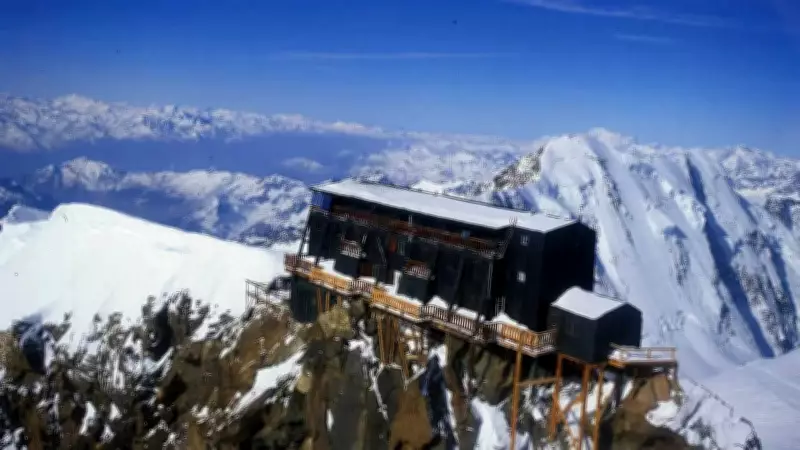
Europe's Loftiest Refuge: The Margherita Hut at 15,000 Feet
Perched dramatically at 4,554 meters (14,941 feet) on Punta Gnifetti, the Margherita Hut stands as Europe's highest building and a formidable testament to human resilience in extreme environments. Known officially as Capanna Regina Margherita, this copper-clad structure has defied gravity and the punishing effects of extreme hypoxia for over 130 years, serving as both a mountaineering sanctuary and a world-class research facility in the thinnest air on the continent.
The Treacherous Journey to an Alpine Masterpiece
Reaching this "alpine masterpiece" demands a grueling expedition across the treacherous Monte Rosa Glacier, where climbers must navigate hidden crevasses and unpredictable storms that have historically claimed lives. The ascent requires technical mountaineering skills, with climbers using crampons and ice axes to traverse the Lys Glacier. These so-called 'hidden crevasses'—gaps in the glacier concealed by snow—present invisible dangers that have caused numerous fatal accidents in Alpine environments.
The altitude presents additional hazards beyond physical obstacles. The lack of oxygen at this extreme elevation can severely impair judgment and physical coordination, making negotiation of steep, icy slopes particularly dangerous where a single misstep can prove fatal.

A Royal Legacy Born in 1893
The hut's origins trace back to royal ambition. In 1893, Queen Margherita of Savoy ascended to the summit and personally inaugurated the structure that would bear her name. According to the Swiss Alpine Club (SAC), the hut was initially constructed in the valley below, then painstakingly disassembled and transported piece by piece to the summit using a human chain of porters along what became known as the 'man line.' Today, it stands preserved as a cultural heritage site while simultaneously functioning as the world's highest permanent laboratory for research on human survival under conditions of subacute hypoxia—a distinction recognized by the National Library of Medicine.
The Biological Toll of Extreme Altitude
While serving as a hotel for mountaineers, the Margherita Hut's primary significance lies in its role as a premier research facility for high-altitude medicine. Research conducted at the hut's laboratory has revealed startling physiological effects:
- Universal Brain Swelling: Studies published by the German Aerospace Centre (DLR) demonstrate that 100% of visitors who do not properly acclimatize experience measurable brain swelling (vasogenic oedema) on MRI scans.
- High Incidence of Acute Mountain Sickness: More than half of all visitors show evidence of Acute Mountain Sickness (AMS), with the extreme hypoxia affecting nearly every system in the human body.
- Gastrointestinal Damage: Research published in High Altitude Medicine & Biology documents that 60.9% of mountaineers staying at the hut develop mucosal lesions and clinically significant ulcers in their gastrointestinal tract due to oxygen deprivation.
- Disrupted Sleep Patterns: According to the British Mountain Medicine Society (BMRES), sleep at this altitude is frequently interrupted by 'periodic breathing' episodes where the brain struggles to regulate carbon dioxide levels, causing sleepers to momentarily stop breathing before gasping for air.
A Sanctuary in the World's Thinnest Air
Despite its dangers, the Margherita Hut remains a powerful sanctuary for those passionate about high-altitude climbing. The structure has withstood more than a century of extreme weather conditions, serving as both a research hub and a symbol of human determination. Its dual identity—as both refuge and laboratory—makes it unique among high-altitude structures worldwide, offering scientists unprecedented opportunities to study human physiology under conditions that simulate space travel and extreme environments.
The Margherita Hut continues to stand as both a monument to mountaineering history and a living laboratory where researchers unravel the mysteries of human survival at the very edge of physiological possibility.






