How a Japanese Town Near Nagasaki Transformed Bus Stops into Symbols of Joy and Resilience
In a region forever marked by one of history's most difficult chapters, a gentle form of joy has emerged through an unexpected medium: fruit-shaped bus stops. The Konagai area of Isahaya City, located about an hour by train from Nagasaki, has become one of Japan's most charming roadside attractions thanks to these colorful, whimsical shelters that line Highway 207.
From Atomic Devastation to Agricultural Celebration
Nagasaki's name is inextricably linked to tragedy, as one of the two Japanese cities devastated by atomic bombs in 1945. While Konagai itself was not the epicenter of the blast, it shares in Nagasaki Prefecture's broader narrative of loss, recovery, and rebuilding. In the decades following the war, the region worked diligently to reshape its identity, striving to be known not only for its painful past but also for its remarkable resilience and vibrant daily life.
The fruit-shaped bus stops, introduced in the late 1990s, represent this transformation in a quiet yet powerful way. Officially named the Tokimeki Fruit-shaped Bus Stop Avenue, these structures serve as both practical shelters and profound symbols of local renewal.

Sixteen Fruity Marvels Along the Coastal Road
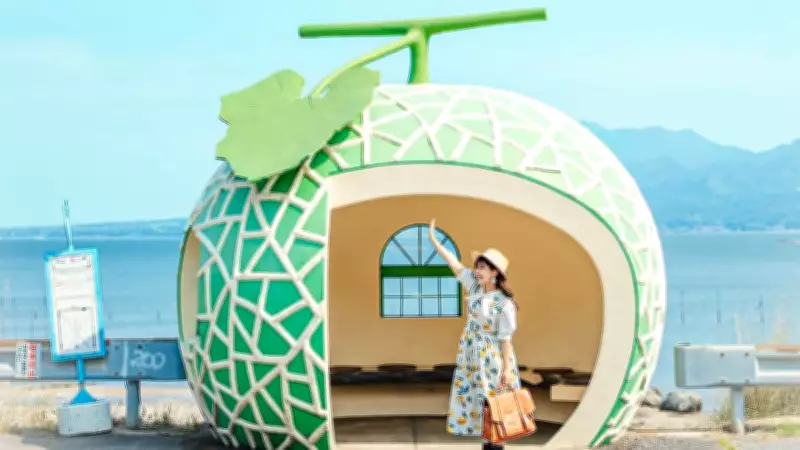
Sixteen distinct fruit-shaped bus stops dot the coastal landscape, each designed as both functional infrastructure and public art. The collection includes vibrant representations of watermelon, strawberry, rockmelon, orange, and tomato, with their smooth, rounded forms creating easily recognizable landmarks visible from considerable distances.
These particular fruits were chosen with deliberate purpose – they represent what Nagasaki Prefecture cultivates best. The area's mild climate, fertile flatlands, and rich soil create ideal conditions for fruit cultivation, with strawberries and oranges holding particular agricultural significance. Rather than erecting flashy tourist signs, Konagai adopted this subtle approach to showcase what the community grows, consumes, and values most deeply.
The Evolution from Practical Project to Beloved Landmark
Originally constructed as part of a regional development initiative connected to an agricultural exhibition, these bus stops have evolved far beyond their initial practical purpose. What began as infrastructure improvement has transformed into cherished local landmarks, meticulously maintained and frequently photographed by both residents and visitors.
Despite their playful appearance, these structures function identically to conventional bus shelters. Commuters wait patiently inside tomatoes and watermelons for their daily transportation, experiencing that distinctive Japanese blend of utility and delight that enhances everyday life without disrupting it.
Experiencing the Fruit Bus Stop Route
Finding these unique bus stops proves remarkably straightforward. From Konagai Station, a short walk toward Highway 207 reveals the first bright strawberry-shaped shelter. Fourteen of the sixteen stops cluster along this coastal section, with the remaining two located slightly further along the route.
For the complete experience, visitors can board a bus heading toward Saga Prefecture. This journey follows the shoreline, offering panoramic sea views on one side and the cheerful procession of fruit shelters on the other. The route invites travelers to slow down, appreciate the scenery, and reflect on how communities can transform practical infrastructure into expressions of cultural identity and hope.
These fruit-shaped bus stops stand as testament to how public design can serve multiple purposes – providing shelter, celebrating agricultural heritage, and offering visual delight while quietly acknowledging a community's journey from devastation toward renewal.