

Gujarat's Water Tourism Triumph: A Blueprint for Punjab's Riverfront Revival
Despite being famously known as the 'Land of Five Rivers', Punjab today sees only three—the Sutlej, Ravi, and Beas—flowing through its territory. While the state boasts abundant water resources on paper, it has consistently failed to harness them for tourism and recreational purposes. In stark contrast, Gujarat, traditionally a water-scarce region, has masterfully integrated water management into its tourism and environmental strategies, creating a compelling model for others to follow.
Punjab's Underutilized Aquatic Assets
Punjab's identity is deeply intertwined with its rivers, which have shaped its fertile agricultural landscape for centuries. However, tourism planners in the state have largely overlooked these natural assets. Unlike Gujarat, which actively promotes riverfronts, boating, and water-based activities, Punjab's lakes, canals, and rivers remain largely undeveloped for tourism. Notable examples like Harike Lake and the Sirhind Canal, though picturesque, suffer from a lack of essential infrastructure, hospitality services, and year-round recreational programming, attracting only occasional picnickers rather than sustained tourist flows.
Proposed water tourism initiatives in Punjab have often faltered due to poor planning and execution. A costly project to introduce amphibious buses at Harike, for instance, cost the state over Rs 8 crore but operated for merely a few days before being shut down. This highlights a systemic issue in leveraging water resources effectively.

Mounting Water Stress and Management Challenges
Compounding the tourism shortfall, Punjab faces escalating water stress. While rich in water resources theoretically, its groundwater levels have sharply declined, with over-exploitation rampant across the state. Out of 153 blocks, 115 have been declared over-exploited, raising alarms about sustainability. Experts warn that rivers are becoming increasingly seasonal and polluted, further diminishing their potential as vibrant tourism hubs.
Recent devastating flood events in Punjab have displaced thousands and exposed critical gaps in water management. These disasters underscore the state's lack of comprehensive planning for water, let alone its promotion as a tourist attraction. Dr Balvinder Singh, former head of the Guru Ram Das School of Planning at Guru Nanak Dev University, Amritsar, and Adviser to the Indian Heritage Cities Network (IHCN), notes, "For any tourist project, there are three steps: identification, infrastructure, and marketing. We have failed on all three fronts in developing water-based tourism, and even in marketing our rich heritage."
Gujarat's Innovative Water Tourism Model
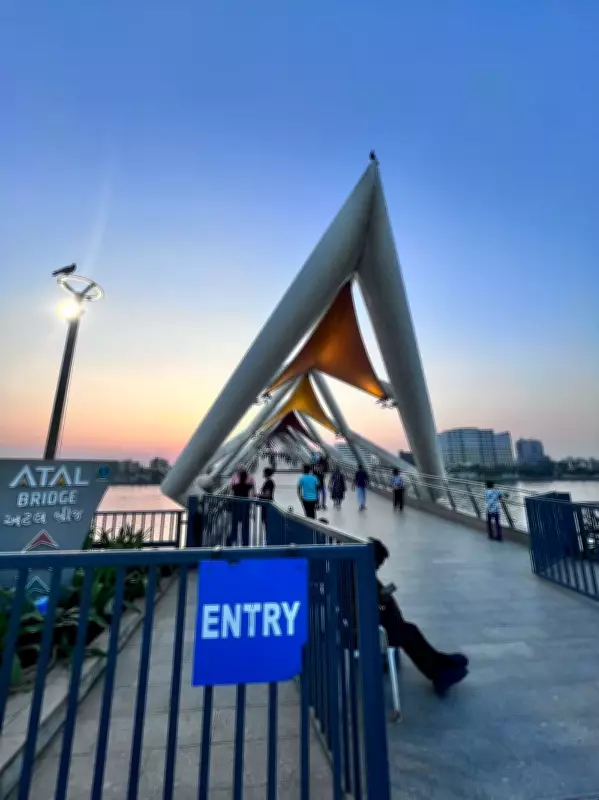
In contrast, Gujarat has transformed its limited water bodies into thriving tourist attractions through innovative approaches. The state boasts a 2,340-km coastline—the longest in India—and has developed several iconic water-based destinations. From Kankaria Lake in Ahmedabad, with its carnival-like atmosphere, to the Atal Setu on the Sabarmati, and Lakhota Lake in Jamnagar, Gujarat has skillfully turned its water resources into major tourism assets.
The success extends to the Narmada district, home to the Statue of Unity and over 27 other attractions, including a zoological park. Additionally, a National Maritime Museum Complex being developed on 400 acres of land is set to become a major landmark. Gujarat's commitment to water conservation adds a unique dimension to its tourism, with initiatives like the Jal Utsav festival, which blends cultural events with water sustainability activities, drawing over 1,25,000 visitors annually.
Eco-Tourism and Strategic Planning
Gujarat's eco-tourism offerings, such as the Khijadiya Bird Sanctuary—a Ramsar site—attracted more than 52,000 visitors in 2024-25, reflecting growing interest in nature-based tourism connected to water ecosystems. Meanwhile, Punjab's Harike Wetland, another Ramsar site, receives only a fraction of that number, highlighting a missed opportunity.

Even in areas with limited natural water availability, Gujarat has succeeded by building strategic attractions around dams, such as adventure festivals and water-based activities at Dharoi Dam. This proves that effective planning can foster tourism regardless of natural water constraints. While not all projects have succeeded—the ambitious seaplane initiative, for example, was a failure—overall, Gujarat demonstrates that with careful planning, conservation, and infrastructure, even a region with limited freshwater resources can create compelling water-based tourism experiences.
Call to Action for Punjab
Punjab continues to view its rivers primarily as resources for irrigation and agriculture, rather than as potential drivers of tourism and economic growth. Experts emphasize that if Punjab hopes to harness the full potential of its waterways, it must develop a clear vision that integrates water management with tourism planning. Without this strategic shift, the rivers that have defined the state for centuries may remain overlooked as engines of growth and leisure, perpetuating a cycle of underutilization and environmental decline.





