

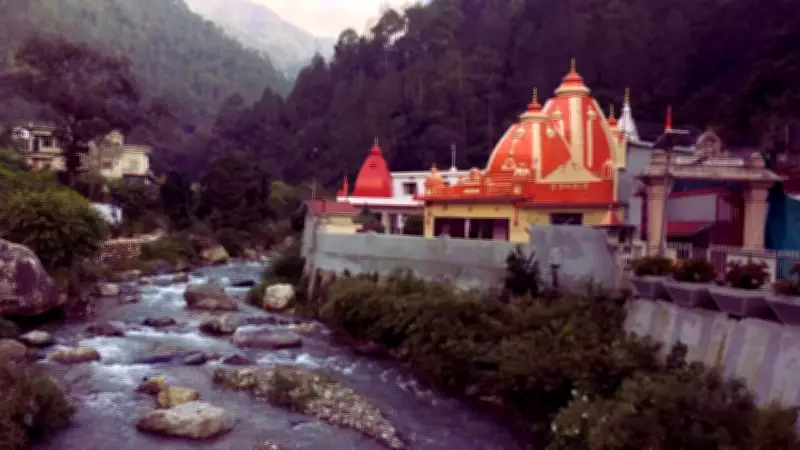
From Secluded Ashram to Economic Powerhouse: The Rise of Uttarakhand's Neeb Karoli Corridor
Nestled in the serene hills of Uttarakhand, the Kainchi Dham Ashram dedicated to Neeb Karoli Baba has undergone a remarkable transformation over recent years. Once a peaceful retreat visited only by devoted followers seeking meditation and prayer, this vibrant red and yellow painted ashram is now at the heart of what many are calling the "Neeb Karoli Corridor"—a burgeoning economic ecosystem that is reshaping the region's landscape.
The Spiritual Foundation That Started It All
Built in the 1960s, Kainchi Dham quickly established itself as a significant spiritual landmark, attracting devotees from across India and around the world. The ashram's global recognition received a substantial boost when technology icons Steve Jobs visited in the 1970s during his period of self-discovery, and later Mark Zuckerberg followed on Jobs' recommendation. These high-profile visits helped cement the ashram's reputation as a destination for clarity, reflection, and spiritual grounding, quietly setting the stage for increased visitation over subsequent decades.
Visitor Surge and Demographic Shifts
According to a comprehensive study conducted by Uttarakhand's state tourism department to assess carrying capacity, Kainchi Dham has experienced a dramatic increase in visitors over the past five years. The research reveals that 64% of devotees visit the Dham exclusively for day trips, returning the same day without overnight stays. The visitor demographics show a predominance of younger pilgrims, with 67% belonging to the 15-30 age group, followed by 26% aged 30-45, and 6% in the 45-60 bracket. Remarkably, 82.4% of the total footfall comprises devotees arriving from various parts of India.

This surge reflects a broader trend across Uttarakhand, where religious tourism continues to play a central role in the state's economy. Known traditionally as "Devbhoomi" or Land of the Gods, the state has long attracted millions of visitors to its pilgrimage circuits annually.
Economic Transformation and Infrastructure Development
The growing visitor numbers have created substantial demand for food, lodging, and recreational activities in the region. While the majority of visitors (64%) still don't stay overnight—highlighting both a gap and opportunity in the hospitality sector—this void is rapidly being filled by entrepreneurs and investors.
The Bhowali-Nainital area is witnessing the emergence of:
- Boutique hotels with panoramic mountain views
- Specialized yoga and meditation retreats focused on wellness
- Contemporary cafés catering to younger, urban tourists
- Short-term rental accommodations for spiritual tourists
This development pattern represents a departure from traditional hill station tourism, characterized instead by low-density, experience-driven growth that emphasizes authenticity, tranquility, proximity to the ashram, and a slower pace of life.
Government Initiatives and Industry Perspectives
In response to the rapid increase in visitors, the Uttarakhand government has implemented several infrastructure improvements, including plans for expanded parking facilities accommodating 450 vehicles and road widening projects to alleviate traffic congestion. Authorities are also exploring long-term solutions such as visitor caps and enhanced traffic management during peak periods, signaling the area's transition from an informal pilgrimage site to a planned tourist destination.
Anshuman Magazine, Chairman & CEO for India, Southeast Asia, Middle East & Africa at CBRE, observes: "Religious tourism in India has outpaced overall domestic travel in several states over recent years. Government initiatives like PRASHAD and Swadesh Darshan, aimed at improving connectivity and infrastructure around pilgrimage destinations, are encouraging developers and hospitality players to look beyond traditional metros toward emerging spiritual towns."

Magazine further notes that locations surrounding these destinations are experiencing increased footfall, translating into interest from hotel operators, homestay platforms, and second-home developers. He estimates that by 2030, more than 9,000 new hotel rooms could be developed across India's key spiritual tourism markets, creating a broader economic ecosystem encompassing branded accommodations, retail streets, local supply chains, and residential developments.
The Second-Home Market and Future Outlook
As spiritual tourism converges with lifestyle travel, demand for second homes and retreat properties is growing significantly. Buyers, particularly from Delhi-NCR, are increasingly interested in weekend homes near nature, rental income opportunities, and long-term appreciation driven by tourism growth.
Kush Kapoor, CEO of Roseate Hotels & Resorts, comments: "We believe the next wave of hospitality growth in India will be driven significantly by spiritual tourism, as travelers increasingly prefer organized, high-quality branded accommodation in temple towns. These spiritual hubs are emerging not only as pilgrimage centers but also as vibrant lifestyle destinations."
The Kainchi Dham belt offers distinct advantages over crowded markets like Mussoorie or Nainital, providing early-entry opportunities for investors. Land parcels, village homes, and hillside plots are being transformed into carefully planned living spaces, organically creating what is becoming known as the Neeb Karoli Corridor—a natural convergence of spiritual, hospitality, and residential developments that promises sustained economic growth for the region.





